Repair Cafés: Fixing Cherished Objects Together
A practical guide to visiting a Repair Café: choosing an item, preparing for a shared repair, checking safety and access, and learning when a professional repairer is the better choice.
A compatible device voice is not available. You can still read this article on screen.
 Community & Connection
Detailed article
Use the text-size control at the top for larger text, or switch back to Easy Read at any time.
The Timeless Rhythm of Repair Cafés: Fixing Cherished Objects Together
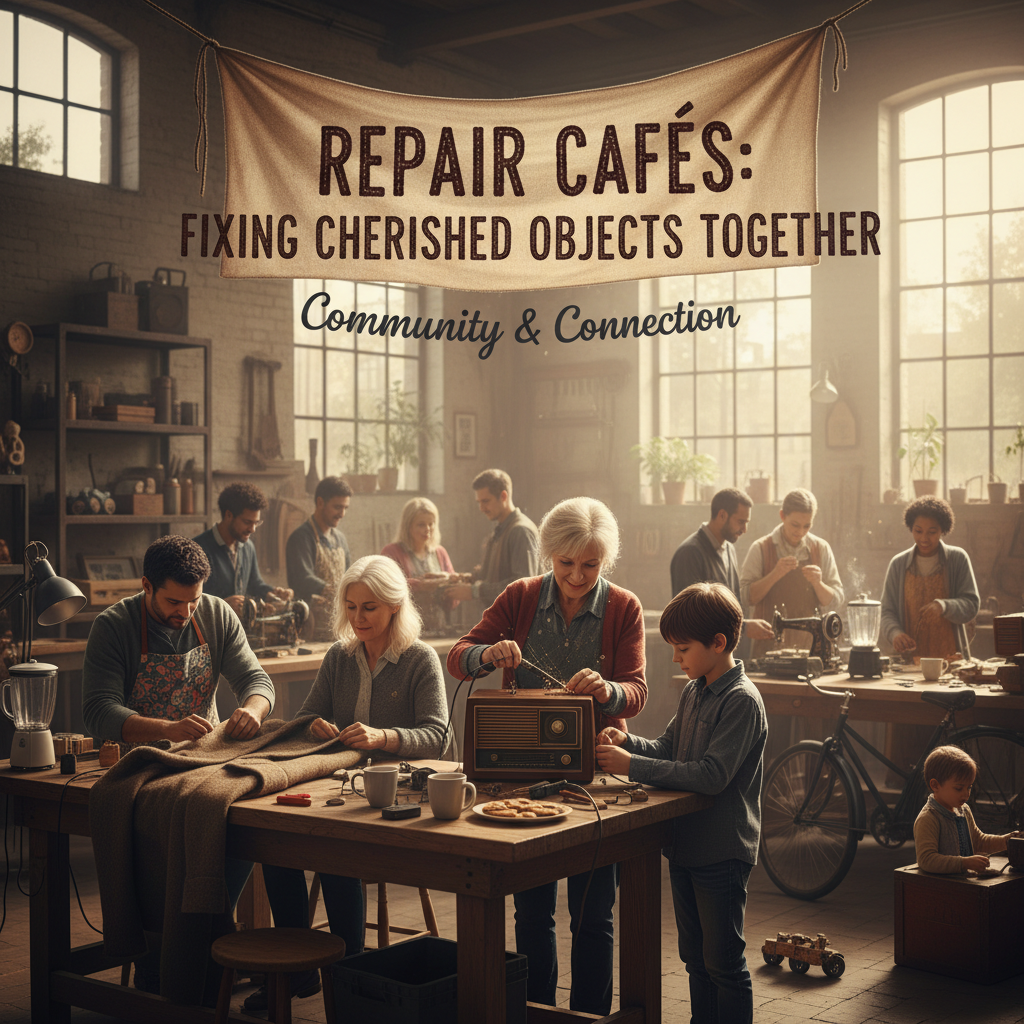
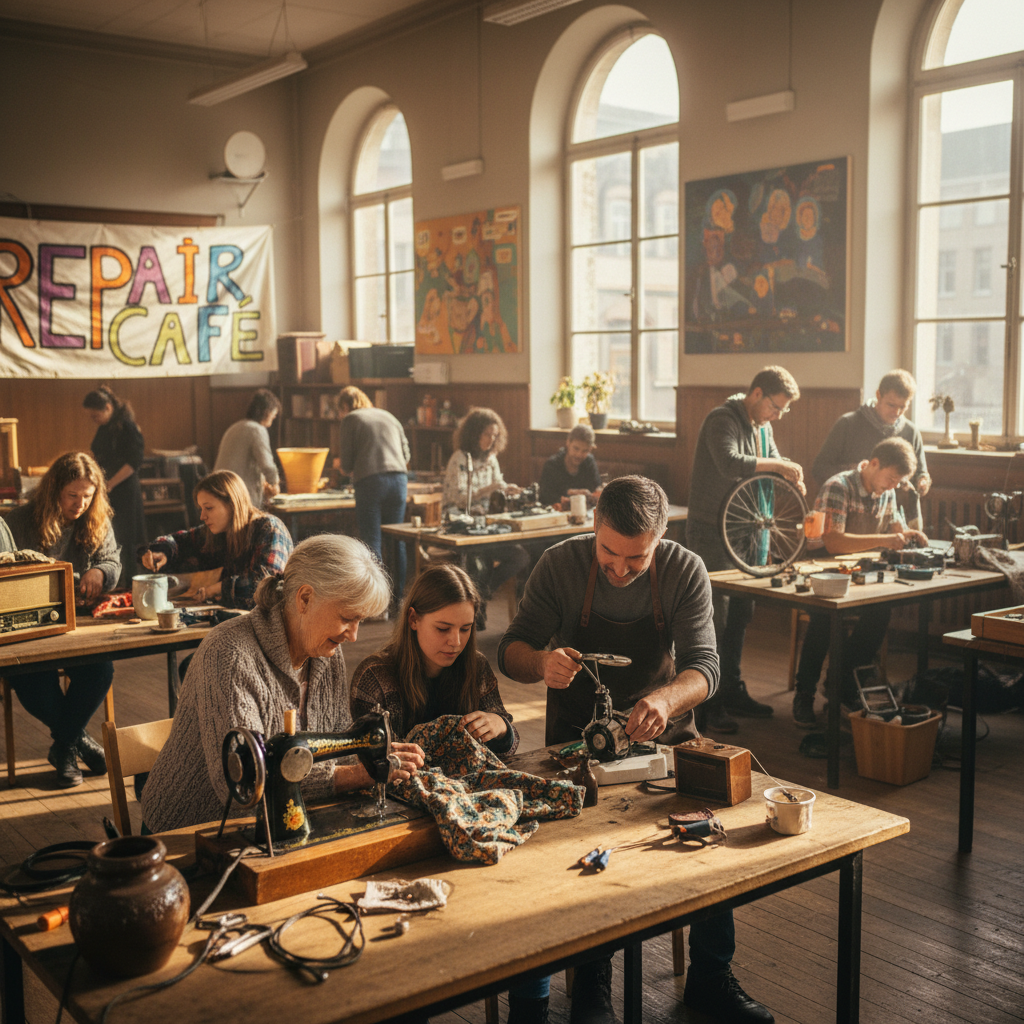
Across neighbourhoods, libraries, and community halls, a Repair Café offers time and a place to see whether a broken object can be repaired. Visitors bring something from home and work alongside volunteer repairers who may have experience with clothing, furniture, bicycles, small appliances, toys, or other everyday goods. The aim is not a promise that every item can be fixed. It is a shared attempt to understand the problem, learn what repair involves, and consider what to do next. Repair Café International describes these gatherings as free meeting places where people repair together and exchange practical knowledge. [1]
A first visit need not involve using tools or bringing a complicated object. You might watch, ask a question, or simply enjoy the social space. Nobody owes the group a personal story or has to demonstrate a skill.
What Happens at a Repair Café
The local format varies, but a typical visit begins with a welcome or registration. A volunteer may ask what is wrong, how the item is usually used, and whether anything has already been tried. Together, you can look for the cause and decide whether an attempt is sensible. Some groups use a queue, limit the number or size of items, or ask visitors to stay with their belongings while work is underway. Check the event page or contact the organizers before setting out, because these details are local rather than universal.
This is not usually a drop-off service. Depending on the task, a visitor may observe, help with a simple step, or learn what failed and what to do next. Repair Café International notes that volunteers sometimes direct visitors to professional repair specialists. [1]
Choosing an Item and Preparing
Pick one manageable item whose problem you can describe. A coat with a split seam, a chair with a loose joint, or a lamp that has stopped working are examples of different repair categories, not a guarantee that any particular event accepts them. Before bringing an item, look up the café’s accepted categories and any size, weight, or quantity limits. If you are uncertain, ask first rather than carrying a heavy object unnecessarily.
A little preparation makes diagnosis easier. Bring the complete item and any detachable parts that belong with it. If you already know when the fault began, what happened just before it, or whether it is intermittent, write down those observations. For an electronic device, bring its usual charger or power supply only if the organizers say that is appropriate. Do not open a device or attempt a repair that could expose you to electricity, sharp components, heat, chemicals, or other hazards. Tell the volunteer what has been tried and whether the object has been dropped, wet, or modified.
Avoid bringing something with a strong smell, leaking battery, broken glass, exposed wiring, or another obvious hazard unless the organizers specifically ask you to bring it and explain how it should be handled. A repair event is not an emergency service or a substitute for a qualified technician. If the item is safety-critical, involves mains electricity, gas, structural support, or a medical device, seek an appropriately qualified professional instead of relying on an informal community session. Ask the organizers about their safety rules; practices and expertise differ between groups.
Make the Visit Comfortable and Accessible
Before you go, check the venue’s step-free route, entrance, accessible toilet, seating, lighting, and transport options. Ask whether there is a quiet place to wait, whether someone can accompany you, and how long a typical queue may be. These are useful questions, not assumptions about what a venue provides. If phone calls are difficult, see whether an email or other contact method is available.
If standing is tiring, ask about seated waiting or a seated work area. Bring a smaller item or ask someone to help carry it. Take breaks; there is no need to stay until a repair is finished.
You can explain the fault, observe, ask questions, or help if invited. If low vision, hearing difficulty, or limited hand movement affects participation, tell the organizer what adjustment would help and ask whether the venue and task can accommodate it.
Repair, Reuse, and Realistic Expectations
Keeping an object in use can avoid discarding it and may delay buying a replacement. Repair Café International presents longer use and the passing on of repair skills as central aims. But the environmental result of one repair depends on what is fixed, how long it remains useful, what replacement would otherwise have been bought, and the resources needed for the repair. It is better to treat repair as one practical option than to assume that every repair automatically produces a particular environmental saving.
There are real limits. The European Environment Agency notes that repair activity can be constrained by high prices, unavailable spare parts, complex products, and consumer choices. Its figures describe the EU repair sector, not the likelihood that a local volunteer can fix your item. [2] A café may not have the right part, equipment, time, or specialist knowledge. A repair can also reveal that replacement or a professional service is the safer or more practical choice.
If an item cannot be repaired there, ask what options the volunteer recommends: a professional repairer, a supplier’s service, a suitable spare part, donation, or responsible recycling. Do not feel pressured to accept a repair you do not understand or to leave an item behind without agreeing what will happen to it. If the object has sentimental value, say so; you can decide together whether a cautious inspection is preferable to a risky attempt.
A Small Plan for Your First Visit
Before leaving, note the event details, symptoms, and questions. Confirm acceptance, fees, booking, and queues. Bring only what you can carry comfortably. Explain the fault, let the volunteer assess it, and agree what you are comfortable with before work begins.
Afterward, note the fault, any needed part or specialist, and next steps. Whether or not the repair succeeds, you may leave with a clearer decision, a new skill, or a pleasant reason to meet neighbours.
Repair cafés are most welcoming when curiosity is matched with realistic expectations. Bring an object only if the event can accept it, respect the volunteer’s limits, and remember that watching or sharing a conversation is participation too. A cherished item may leave repaired, partly understood, or still in need of professional attention; each outcome can help you make a more informed choice about what deserves another useful life.

Reading path
Continue this topic
Browse the reading paths for another gentle place to continue.
“Thank you for sharing this quiet moment of reading with us.”
Every piece in the MemContinuity library is preserved to spark gentle conversations, honor generational memory, and support the health and comfort of our families.
MemContinuity editorial team
MC-COMMUNITY-20260817-045 · Publication archive reference
Cross-device reading sync
Sign in to your MemContinuity account to optionally sync your article reading progress across your phone, tablet, and computer.
Themes & topics
Editorial guidance & care
Our publications are designed to be practical, gentle, and respectful. For specific medical, mobility, or travel arrangements, we recommend consulting local providers or relevant municipal services.
Related publications
 Community & Connection
Men's Sheds and Creative Woodworking Meetups
Community workshops where older adults fix chairs, build bird boxes, and converse shoulder-to-shoulder with steady camaraderie.
 Community & Connection
A Table, a Game, a New Conversation
Why board-game afternoons and quiet community spaces are quietly reshaping companionship for older adults across local neighbourhoods.
 Community & Connection
Thriving Together: Finding Connection Through Later-Life Clubs
Why welcoming community associations, lunch clubs, and interest circles offer a lifeline of joy, purpose, and lifelong friendship.
Share the story
Family discussion cards
Take one card at a time. There are no right answers—only memories worth hearing.
What memory did this article bring to mind?
Who in the family might have a story or photograph to add?
What is one small thing we could save, share, or do next?
A quiet conversation can be a meaningful family keepsake.
Subscribe to MemContinuity Publications
Receive thoughtful reflections, local heritage guides, and slow travel stories delivered directly to your inbox. No spam, privacy respected.