A Table, a Game, a New Conversation
A practical, welcoming guide to choosing a simple game, finding or hosting a comfortable gathering, and making room for conversation at every pace.
A compatible device voice is not available. You can still read this article on screen.
 Community & Connection
Detailed article
Use the text-size control at the top for larger text, or switch back to Easy Read at any time.
The Timeless Rhythm of a Table and a Game
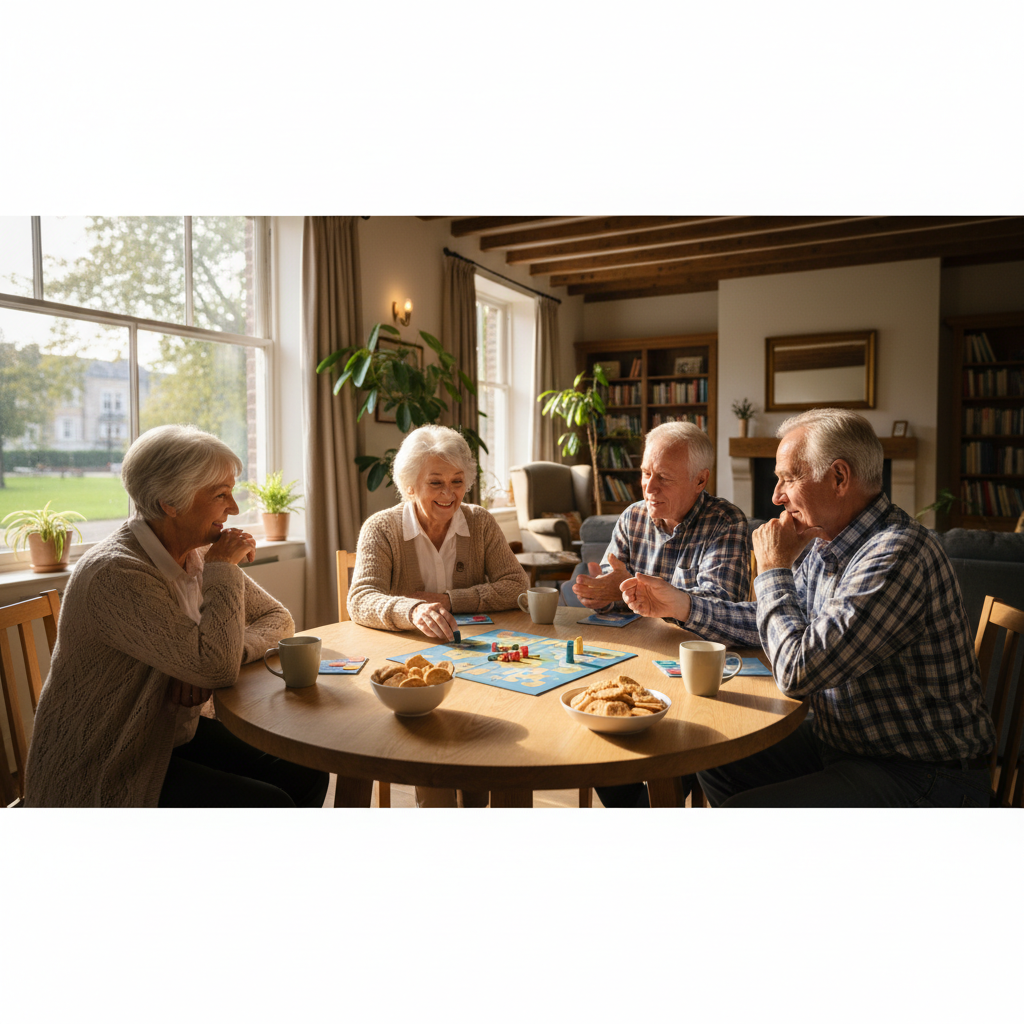
A board-game afternoon can offer a simple reason to spend time together. The game gives people something to look at and do, so conversation need not begin with a difficult question or fill every quiet moment. A library table, community room, café, or living room can all work. The most important ingredients are a welcoming invitation, a game people can follow, and permission to take part in whatever way feels comfortable.
A game is not a treatment for loneliness or a guaranteed way to improve memory. Social isolation and loneliness are related but different: isolation describes limited contact or support, while loneliness describes feeling alone or disconnected. The National Institute on Aging recommends enjoyable shared activities and local community resources as possible ways to stay connected. A gathering can create an opportunity for contact, but one afternoon cannot promise how anyone will feel afterward.
Choose the Gathering Before Choosing the Game
Start with the people and circumstances, not a fashionable box. For a first meeting, a familiar, short game with a few clear steps may be easier to learn than one with a long rulebook or many pieces. Dominoes, simple card games, word or picture games, and familiar board games are possibilities, but preferences differ. Ask the invitees what they enjoy and whether they would rather play, watch, chat, or help with refreshments.
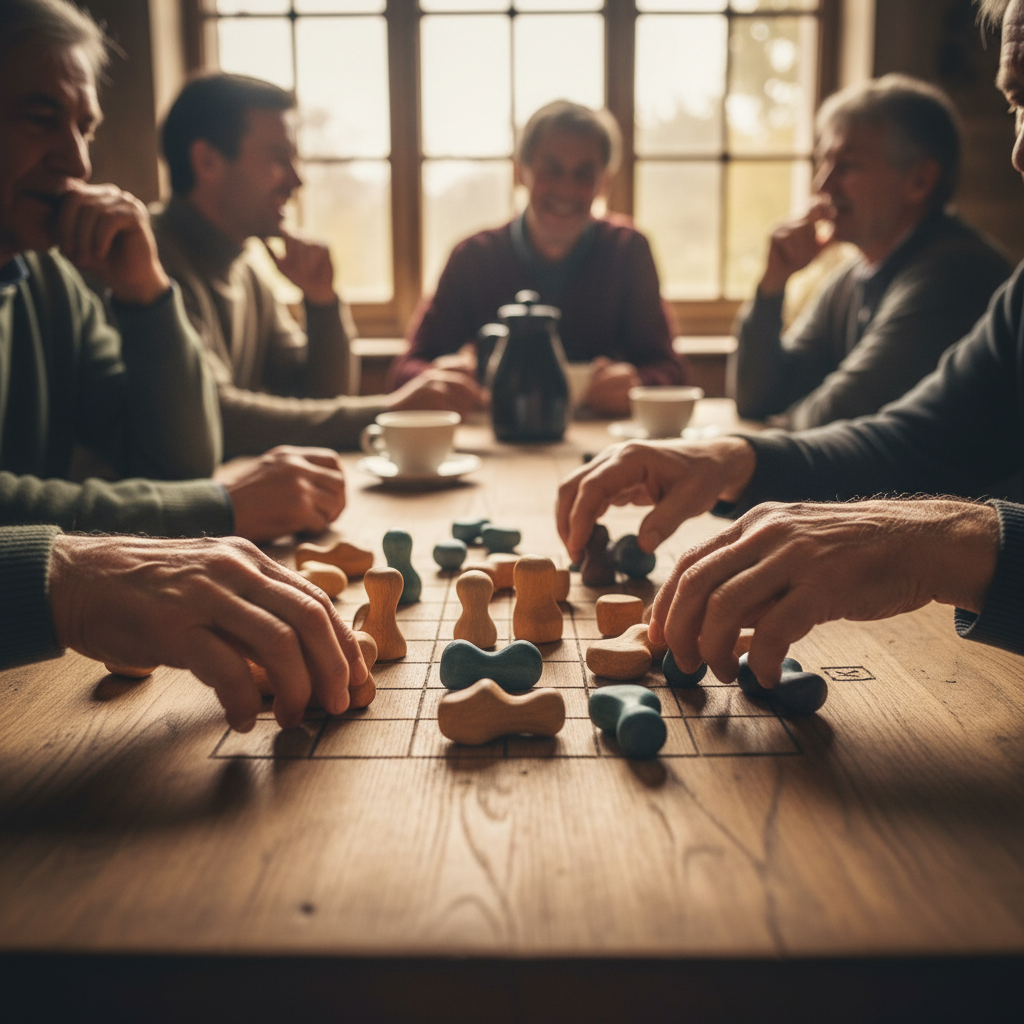
Consider the group size, available time, and room. A small table may suit a handful of people; a bigger group might feel more at ease with two tables or a game that allows people to join and leave between rounds. If players have very different experience levels, choose a cooperative or casual format where explaining a move is welcome. Keep the rules nearby and agree that anyone may ask for a reminder. Nobody needs to prove their skill.
Local organisations may already offer ways to meet. Age UK lists examples such as bridge groups, coffee mornings, friendship clubs, quizzes, cafés, and lunch clubs, while noting that local timetables vary and some activities require booking or a fee. Libraries, community centres, faith communities, and neighbourhood organisations may also publish their own programmes. Check the organiser’s current listing rather than assuming a particular activity runs nearby.
Make the Space Comfortable and Accessible
Before inviting people, check the whole visit rather than only the game table. Ask about the route from the entrance, steps or lifts, accessible toilets, transport and nearby drop-off points. If a venue has stairs or a narrow entrance, contact the organiser and ask whether an accessible route or another suitable room is available. For a home gathering, keep walkways clear, move loose cables, and leave enough room to approach and move around the table.
Think about how the room feels. Even lighting helps people see the board and one another; reduce glare where possible. Choose a quieter corner so participants can hear instructions, and place chairs so faces are visible. Offer seating with a choice of height and support, and avoid crowding the table. Larger, high-contrast pieces or printed rules may make a game easier for some participants. Ask what would help rather than guessing.
The ADA National Network’s event-planning guide encourages organisers to plan access early, including information before the event, arrival, entrance, movement through the site, participation, and amenities. In the United States, Title II of the ADA applies to state and local government services and programmes, including recreation, and requires equal opportunity and effective communication. For any specific venue or legal question, check with the organisation or a qualified local resource; a checklist cannot certify a site.
Keep the Pace Gentle and the Welcome Clear
A first gathering does not need an elaborate schedule. An optional starting plan might be a brief welcome, one easy round, a pause, and time for people to decide whether they would like another. The original 45-to-60-minute suggestion can be a reasonable trial length for some groups, but it is not a rule: ask attendees what suits them and allow people to arrive late or leave early without explanation.
Explain the plan before play begins. Say how long you expect to meet, whether there is a cost, what the room offers, and whether tea or other refreshments are available. Food is not essential. If refreshments are served, make them optional and ask about allergies or dietary needs without pressing anyone to disclose personal information. A no-food gathering can be equally warm.
Let participants choose their level of involvement. Someone may prefer to observe first, keep score, read the rules aloud, or simply talk while others play. Do not correct every mistake or rush a slower turn. If a rule causes confusion, pause and explain it in a different way. If the game stops being enjoyable, switch games, take a break, or finish early. The point is shared time, not completing a match.
Conversation Without Pressure
Keep conversation optional. Ask about the game or everyday interests, but do not require anyone to share personal history. Quiet company can be enough.
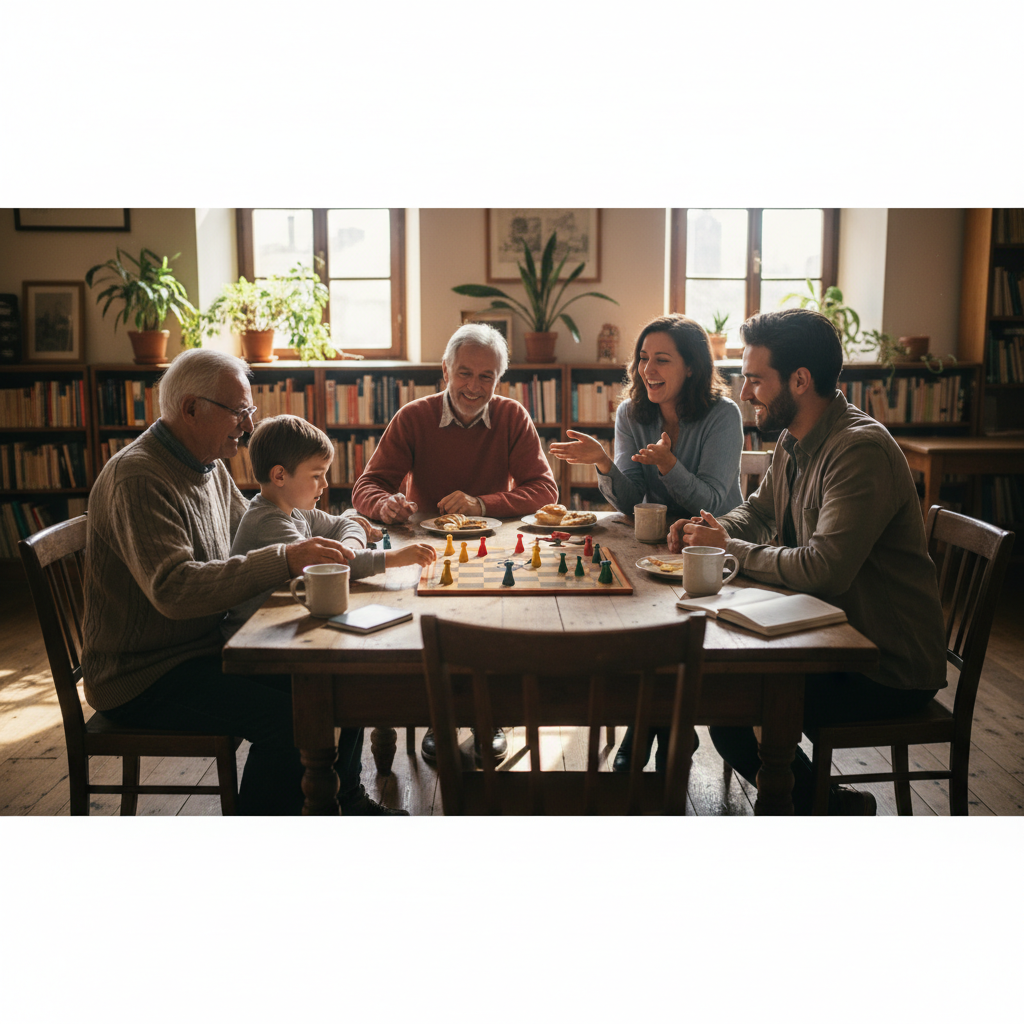
When different generations meet, invite everyone to contribute in their own way. A younger relative might explain a new game; an older player might introduce a familiar one. Avoid assuming that age determines ability, interests, or knowledge. A shared activity works best when each person is treated as an individual rather than as a representative of a generation.
If a story or memory comes up, listen without turning the moment into an interview. A notebook or phone recording can preserve a story only if the person telling it wants that. Ask clearly before writing down or recording their words, explain who may hear or read it, and accept “no” or “not now” without persuasion. People can change their minds later. There is no need to capture every conversation for it to matter.
A Small Plan for a First Afternoon
Beforehand, ask two or three invitees what kind of activity and timing they prefer. Choose a venue they can reach, verify access and any booking or fee, and select one familiar game with a backup activity such as conversation or a simple puzzle. On the day, put the rules and pieces within reach, introduce everyone, and explain that watching or leaving early is welcome. Afterward, ask whether people would like to meet again and what—if anything—they would change.
A phone or video call around a simple game can also bring distant relatives together, if everyone prefers that option.
Let the Gathering Be Its Own Success
A successful afternoon is not measured by how many rounds are finished or how lively every conversation becomes. It may be enough that the room was comfortable, people were welcomed by name, and everyone could choose how to take part. Some gatherings become a regular date; others remain a one-time pleasure. Either is worthwhile if it suited the people who came.
Community activities can offer a small, practical opening for companionship without demanding a performance. Choose a game because it sounds enjoyable, check the details that make attendance possible, and let the conversation take its own shape. The table is an invitation, not an obligation.
Sources and Further Reading
Reading path
Continue this topic
Small, playful ways to share stories across generations—without turning family time into a history lesson.
Pillar guides in this path
Community & Connection
Volunteer Storytelling in Local Primary Schools
Family Heritage
Songs in the Dark: Preserving Traditional Lullabies and the Soothing Voices of Mothers
Family Heritage
The Living Family Tree: Engaging Children and Grandchildren with Tactile Ancestral Lore
A gentle next step
Keep a related family story
If this topic brings a family memory to mind, you can save it at your own pace.
“Thank you for sharing this quiet moment of reading with us.”
Every piece in the MemContinuity library is preserved to spark gentle conversations, honor generational memory, and support the health and comfort of our families.
MemContinuity editorial team
MC-COMMUNITY-20260930-001 · Publication archive reference
Cross-device reading sync
Sign in to your MemContinuity account to optionally sync your article reading progress across your phone, tablet, and computer.
Themes & topics
Editorial guidance & care
Our publications are designed to be practical, gentle, and respectful. For specific medical, mobility, or travel arrangements, we recommend consulting local providers or relevant municipal services.
Continue with purpose
Part of a curated reading journey
Related publications
 Community & Connection
Men's Sheds and Creative Woodworking Meetups
Community workshops where older adults fix chairs, build bird boxes, and converse shoulder-to-shoulder with steady camaraderie.
 Community & Connection
Intergenerational Gardening: Planting with Grandchildren
Planting easy beans, sunflowers, and cherry tomatoes together teaches natural patience and builds unforgettable summer memories.
 Community & Connection
Repair Cafés: Fixing Cherished Objects Together
Skilled volunteer handypeople helping neighbors solder vintage radios, mend coats, and reject disposable consumerism over hot coffee.
Share the story
Family discussion cards
Take one card at a time. There are no right answers—only memories worth hearing.
What memory did this article bring to mind?
Who in the family might have a story or photograph to add?
What is one small thing we could save, share, or do next?
A quiet conversation can be a meaningful family keepsake.
Subscribe to MemContinuity Publications
Receive thoughtful reflections, local heritage guides, and slow travel stories delivered directly to your inbox. No spam, privacy respected.