Volunteer Storytelling in Local Primary Schools
A practical, school-led guide to choosing a story, reading aloud with children, and following safeguarding and privacy procedures as a volunteer.
A compatible device voice is not available. You can still read this article on screen.
 Community & Connection
Detailed article
Use the text-size control at the top for larger text, or switch back to Easy Read at any time.
Why volunteer storytelling belongs in a primary school
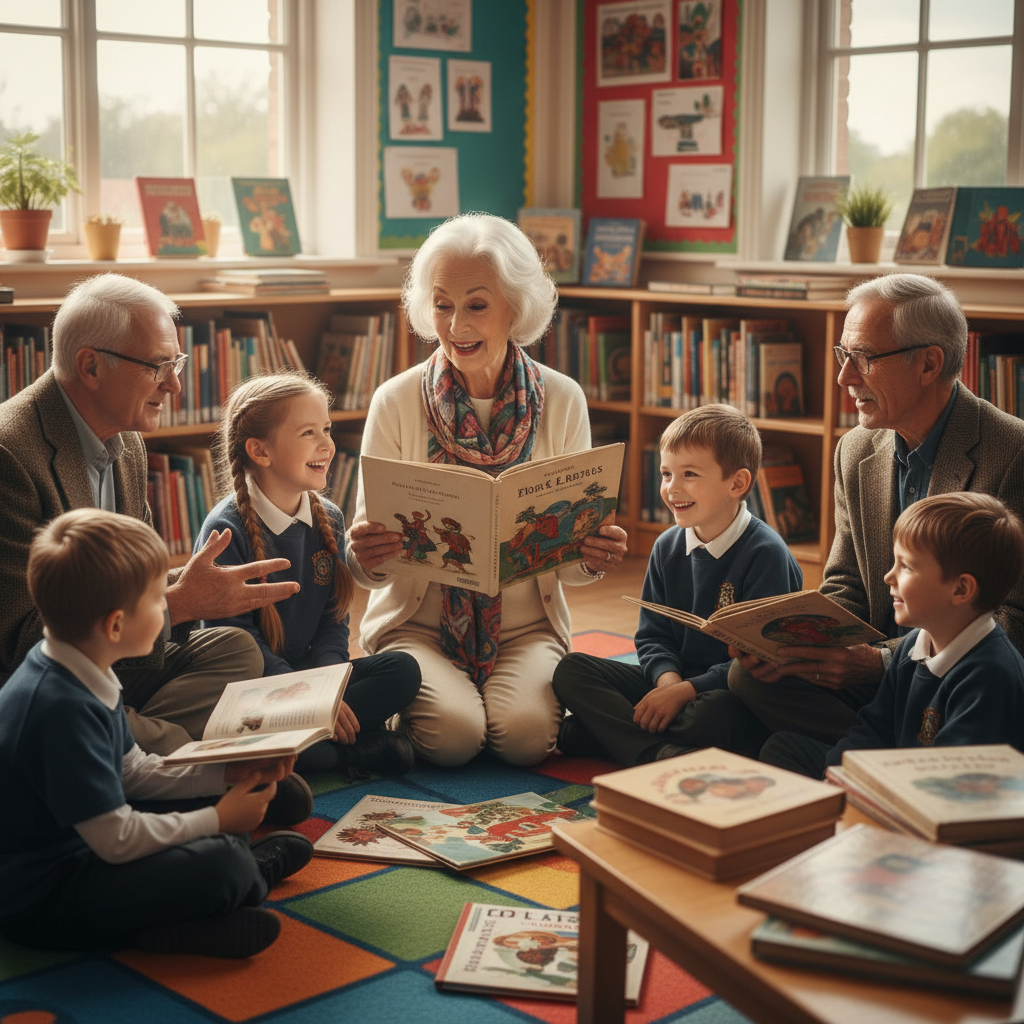
A volunteer storyteller can give a class a welcome pause in the school day: a shared book, a lively voice, and room for children to notice, wonder, and talk. The role is not to arrive with a lesson plan or to test children’s reading. The teacher knows the group, the curriculum, and the school’s routines; the volunteer contributes preparation, attention, and enjoyment of stories.
Reading aloud can make books accessible to pupils who are still building fluency, who prefer listening, or who benefit from hearing language modeled. The National Literacy Trust’s Books Out Loud programme encourages community leaders to include brief read-aloud moments in existing activities and offers guidance on planning, pace, tone, discussion, mixed ages, and differing communication needs. That is a practical invitation, not a promise that one visit will produce a measurable learning or wellbeing outcome. A welcoming story session is worthwhile on its own terms.
Start with the school, not the book
Contact the school office, volunteer coordinator, or headteacher before arranging a visit. Ask whether the school currently welcomes volunteer readers and whether it works through a partner programme. A school may have a particular need, preferred age group, timetable, or format. It may also be unable to accommodate visitors at a given time. Let the school decide whether the idea fits.
Before agreeing a date, clarify the role. Will you read to a whole class, a small group, or one pupil? Will a teacher remain present? How long is the session, and who chooses the book? Ask what to do if a pupil is upset, shares a concern, or asks a question you cannot answer. Confirm where to sign in, how to wear visitor identification, and whom to contact if you need to cancel. Follow the school’s instructions rather than assuming that arrangements used elsewhere apply.
Safeguarding and privacy are part of the role
Schools set their own visitor procedures and are responsible for explaining them. These may include identity checks, induction, supervision, boundaries, and a route for reporting concerns. Requirements depend on local law and the nature and frequency of the role. In England, for example, government guidance says changes taking effect on 1 September 2026 affect which supervised volunteer activities count as regulated activity and when enhanced DBS checks with children’s barred-list information are required. That rule is specific to England; it is not a universal checklist. Ask the school to determine the applicable checks and never try to arrange unsupervised access independently.
Protect pupils’ privacy. Do not photograph, record, identify, or post about children or their work unless the school has explicitly authorised the activity and explained the applicable consent process. Do not share names, family circumstances, reading levels, or personal stories outside the school. If a child tells you something concerning, listen calmly and pass it promptly to the named safeguarding contact; do not promise secrecy or investigate it yourself. Keep communication with families within the school’s approved channels.
Choose a story children can enter
Ask the teacher what the children are studying, enjoying, or ready to hear. A picture book, short traditional tale, humorous story, poem, or chapter excerpt can all work. Consider the group’s age without treating age as a perfect guide to interests or reading ability. Look for a story with clear language, a satisfying shape, and details that give listeners something to imagine. A book need not be old or “classic” to be meaningful, and a folk tale should not be presented as belonging to a particular community unless its source is known.
Preview the text aloud. Notice unfamiliar words, names, shifts in speaker, and any passage that might be frightening or sensitive for this particular group. Ask the teacher if you are unsure about suitability. Check that the book is easy to see from the group, and that illustrations can be shown without blocking pupils’ view. Bring a backup choice only if the teacher agrees. If you use a borrowed school copy, return it as directed; do not reproduce or distribute pages or recordings. Follow school policy and applicable copyright guidance for public readings and copies.
A short selection is often easier to hold than a long performance. Agree the length with the teacher; the National Literacy Trust suggests that even five to ten minutes can be incorporated into an existing community activity. That is an example rather than a fixed school-session rule. Leave time for settling, the story, and a few responses, and be ready to stop when the teacher signals a transition.
Read with the room
Arrive early enough to sign in and settle, then let the teacher introduce you and the session. Begin by showing the cover and inviting a simple prediction, if the teacher thinks that suits the class. Read at a comfortable pace. Pause at natural moments, vary your expression without forcing theatricality, and make the illustrations available to everyone. If a word is unfamiliar, briefly explain it in context or invite the teacher’s help.
Children may respond by listening quietly, asking questions, laughing, pointing, or connecting the story to something they know. Those are all valid forms of participation. Use open invitations such as “What did you notice?” or “Which picture would you look at again?” rather than questions with one hidden correct answer. Allow silence. Do not single out a child to read aloud, correct a child publicly, or ask anyone to disclose a personal or family experience. The teacher can guide discussion if a topic becomes difficult.
For a mixed group, speak clearly, keep the book visible, and give children time to process. Some may prefer to listen rather than speak; some may communicate through gesture, a device, or a support person. Ask the teacher beforehand about practical adjustments, including seating, lighting, hearing or vision needs, and any communication support. Do not assume that a child’s disability or language background tells you what they can enjoy. If the group loses interest, shorten the reading or follow the teacher’s lead rather than insisting on finishing every page.
A simple preparation checklist
Before the visit, confirm the date, location, group, adult supervision, book choice, session length, and safeguarding contact. Read the selection in advance and check pronunciation. Find out the school’s sign-in and privacy rules, and ask whether the book or any discussion topic needs review. On the day, bring only what has been agreed, follow staff directions, and leave time for pupils to respond. Afterward, return materials and share any practical observations with the teacher, without ranking children or making claims about their progress.
A useful reflection is brief: Which moment held the group’s attention? Was everyone able to see and hear? Did the chosen pace leave room for children to respond? What would the teacher like done differently next time? These questions help a volunteer learn while keeping the teacher’s professional judgment central.
Let the story be enough
A good school reading visit is not a performance to be judged by applause or a child’s ability to retell every detail. It is a small act of shared attention, planned with the school and shaped around the children who are present. Some sessions will be lively; others may be quiet. Respect the school’s boundaries, the children’s different ways of taking part, and the teacher’s decision about what best serves the class. With preparation and care, a volunteer can help make a book feel like an open invitation rather than an assignment.
Sources and Further Reading

Reading path
Continue this topic
Small, playful ways to share stories across generations—without turning family time into a history lesson.
Pillar guides in this path
A gentle next step
Keep a related family story
If this topic brings a family memory to mind, you can save it at your own pace.
“Thank you for sharing this quiet moment of reading with us.”
Every piece in the MemContinuity library is preserved to spark gentle conversations, honor generational memory, and support the health and comfort of our families.
MemContinuity editorial team
MC-COMMUNITY-20260907-024 · Publication archive reference
Cross-device reading sync
Sign in to your MemContinuity account to optionally sync your article reading progress across your phone, tablet, and computer.
Themes & topics
Editorial guidance & care
Our publications are designed to be practical, gentle, and respectful. For specific medical, mobility, or travel arrangements, we recommend consulting local providers or relevant municipal services.
Continue with purpose
Part of a curated reading journey
Related publications
 Community & Connection
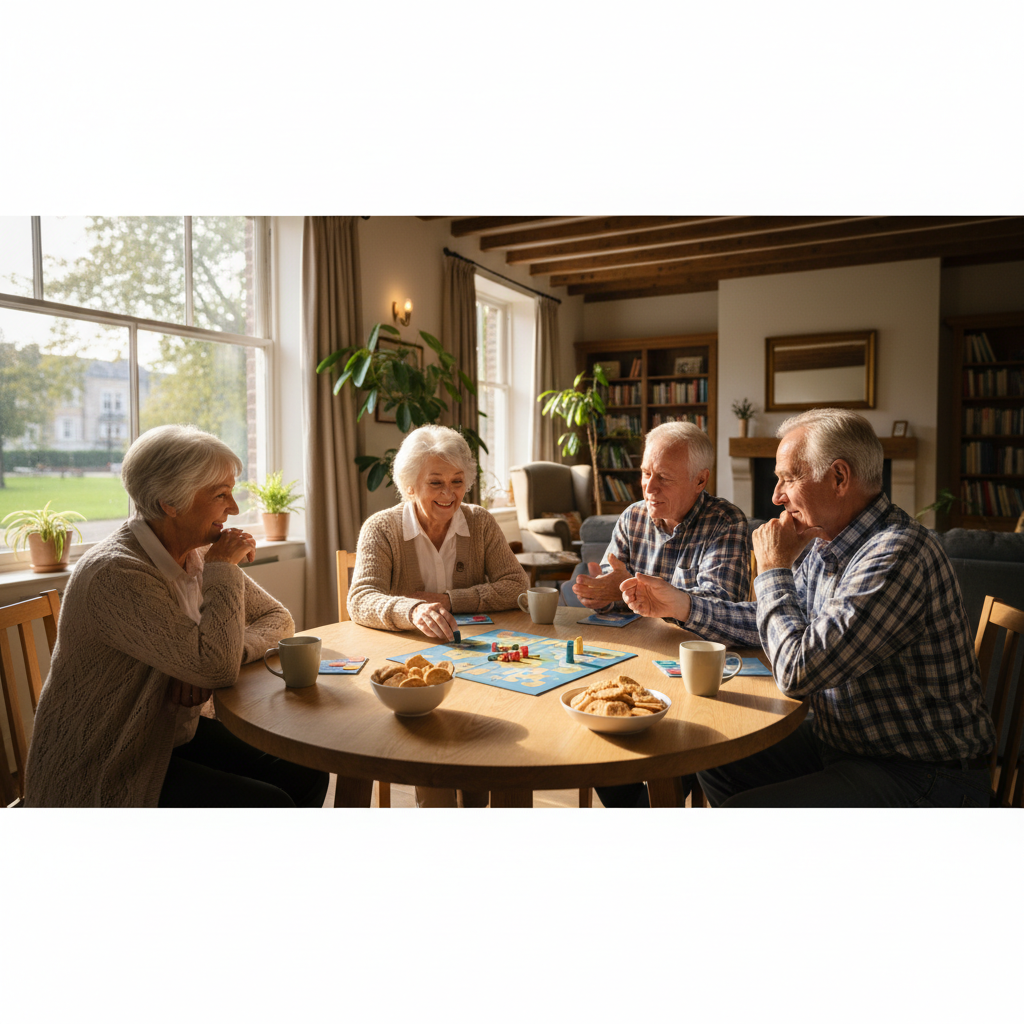
A Table, a Game, a New Conversation
Why board-game afternoons and quiet community spaces are quietly reshaping companionship for older adults across local neighbourhoods.
 Community & Connection
Neighbourhood Walking Groups: Steps and Stories
Regular morning strolls that turn ordinary streets into a shared chronicle of local history, blooming gardens, and warm check-ins.
 Community & Connection
Men's Sheds and Creative Woodworking Meetups
Community workshops where older adults fix chairs, build bird boxes, and converse shoulder-to-shoulder with steady camaraderie.
Share the story
Family discussion cards
Take one card at a time. There are no right answers—only memories worth hearing.
What memory did this article bring to mind?
Who in the family might have a story or photograph to add?
What is one small thing we could save, share, or do next?
A quiet conversation can be a meaningful family keepsake.
Subscribe to MemContinuity Publications
Receive thoughtful reflections, local heritage guides, and slow travel stories delivered directly to your inbox. No spam, privacy respected.