Songs in the Dark: Preserving Traditional Lullabies and the Soothing Voices of Mothers
A gentle, consent-first guide to recording a family lullaby, preserving the singer’s voice and the song’s context, and sharing the keepsake with care.
A compatible device voice is not available. You can still read this article on screen.
 Family Heritage
Detailed article
Use the text-size control at the top for larger text, or switch back to Easy Read at any time.
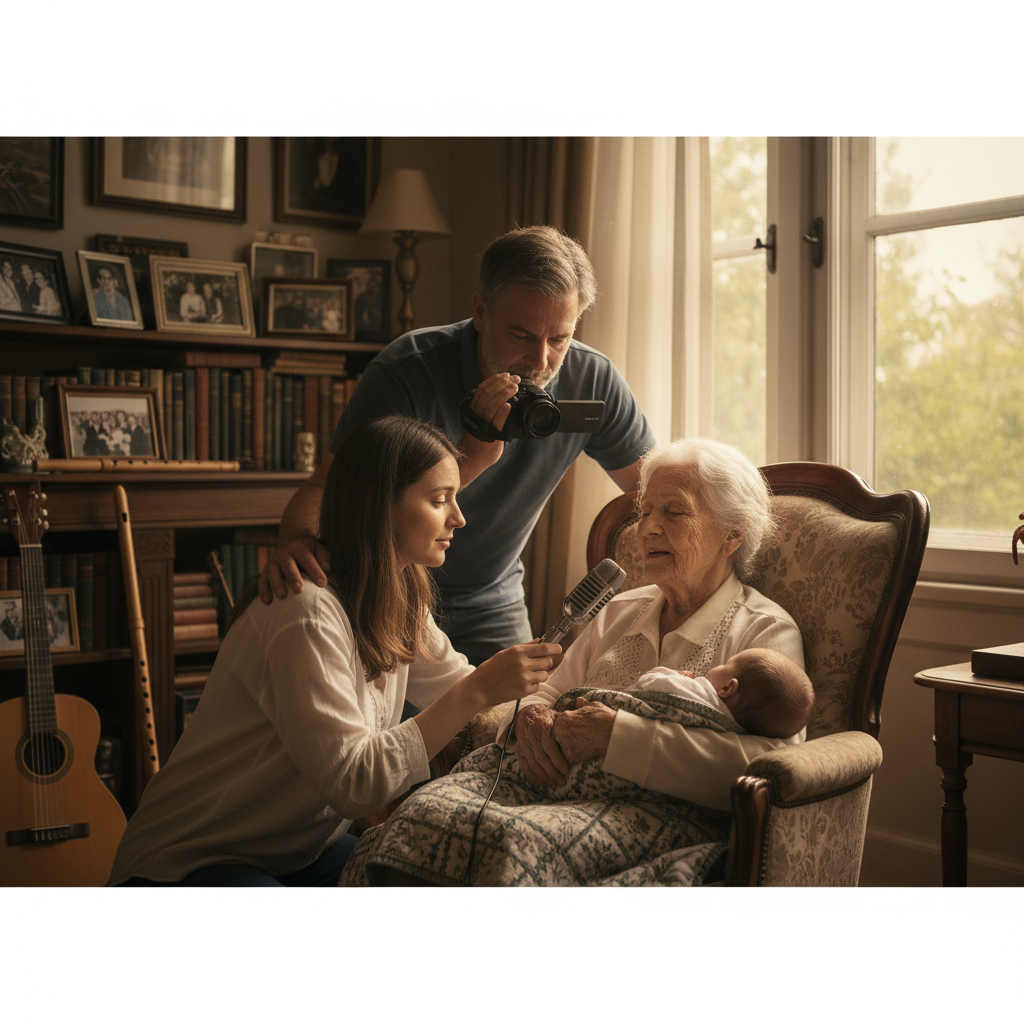
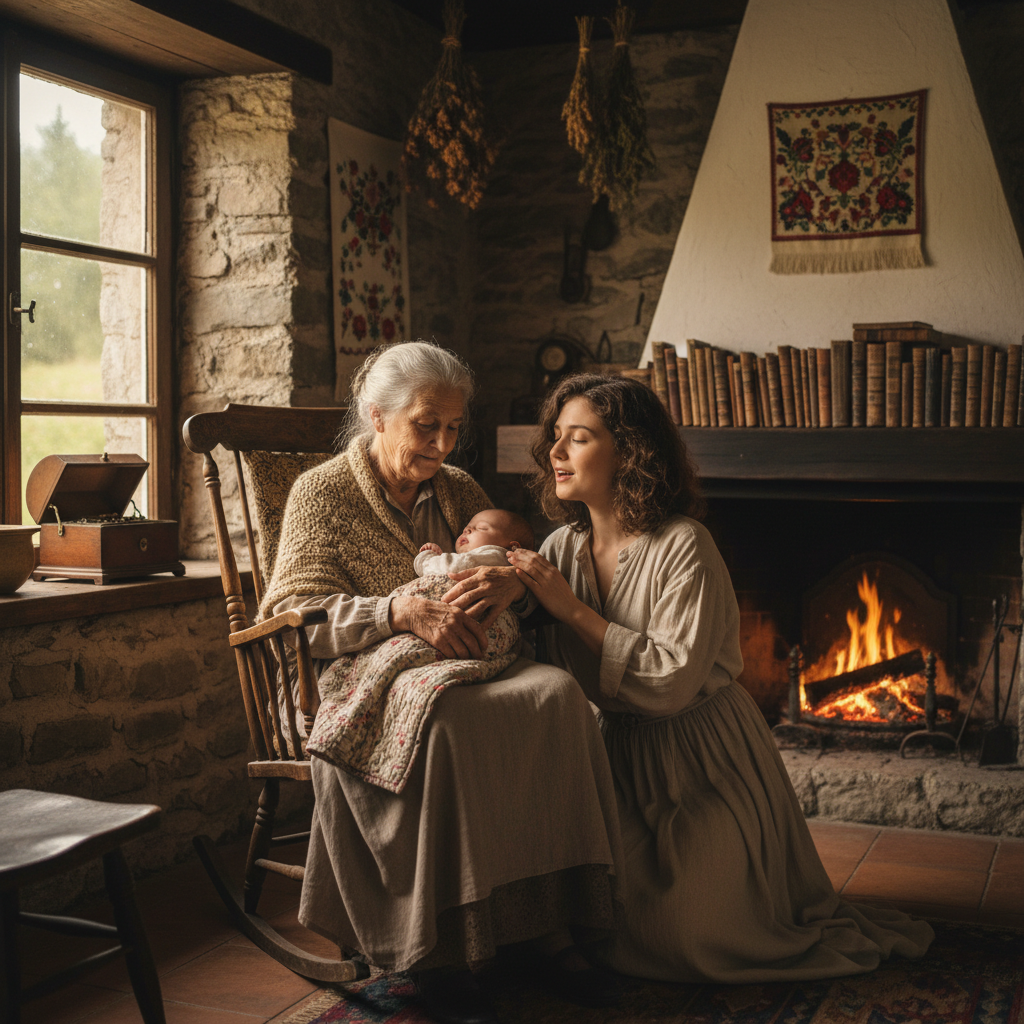
Why recording an elder softly singing a bedtime rhyme can become a precious family keepsake. A simple recording does not need a studio or a perfect performance. It does benefit from patience, permission, and a plan for keeping the file safe.
A song carries more than a melody
A lullaby may be remembered through a tune, a few lines, a rhythm, or the way someone softened their voice at bedtime. The singer may recall who taught it, which words changed over time, what language or dialect was used, and whether it was sung for a particular child or occasion. Those details are part of the record too.
Lullabies are not one uniform tradition. The Library of Congress documents lullabies and songs among children’s folklife, within collections that span languages and cultural practices. A family version may differ from a printed or commercially recorded version; that difference is useful context, not a mistake to correct. Avoid declaring a song ancient or assigning it a single origin unless reliable evidence supports that history. Instead, preserve what the singer knows and distinguish their recollection from anything researched later.
A recording is an act of listening and family documentation, not a test of anyone’s recall or singing ability.
Invite, listen, and agree on use
Begin with an unhurried invitation. Explain what you hope to record, who will hear it, where copies might be kept, and whether you might share it beyond the family. Make clear that the person can decline, pause, skip a question, sing only a fragment, or ask for the recorder to be switched off. Agreement to make a private family recording is not automatically agreement to post it online or submit it to an archive.
Before recording, agree on practical boundaries. Should the file be limited to named relatives? May it be copied to a shared family folder? Should it remain private during the singer’s lifetime? Would they like to hear it before anyone else does? Write down the decision in a simple note and revisit it if the intended audience changes. If the recording could be publicly distributed, check applicable permissions for the singer’s performance and the song’s words or arrangement; rights depend on the material and location, so do not assume that a familiar tune is free to publish.
Let the singer choose the song and the pace. Some people enjoy explaining how they learned it; others prefer simply to sing. Ask open, gentle questions such as “What do you remember about this song?” or “Would you like to tell me who sang it with you?” Do not supply lyrics as a memory test, press for a family story, or insist on a complete version. A pause or an uncertain line can remain part of the recording.
Make a calm, clear recording
Choose a familiar, comfortable room at a time when the singer is not rushed. Reduce avoidable noise by silencing notifications, closing a door if convenient, and moving away from a television, fan, or loud appliance. Keep the room at a comfortable temperature. A quiet room is helpful, but ordinary household surroundings do not need to be made sterile or formal.
A phone can be enough for a personal keepsake. Place it on a stable surface rather than holding it in a hand that may brush the microphone. Keep it close enough to capture a clear voice, but not so close that breathing or handling dominates. Make a short test, play it back at a comfortable volume, and adjust for clear sound without clipping or distortion. Smithsonian oral-history guidance likewise recommends checking the room and test recording, and suggests an external microphone where available.
At the start, record a brief spoken introduction: the singer’s chosen name, the date, the general location (not a private street address), the song as they call it, and the purpose of the recording. Ask permission to record aloud so the file itself preserves that context. Then leave space for the song. Avoid talking over the singing; after it ends, ask whether the singer wants to add a note about words, pronunciation, who taught it, or when it was sung. Stop if the person becomes tired or uncomfortable. A short, willing recording is more valuable than a long session pushed past someone’s limits.
Keep the recording findable and backed up
Afterward, listen through once to check that the file plays and that the beginning and ending are present. Give it a descriptive name that will make sense years later, such as FamilyName_SingerName_Lullaby_2026-10-25. In a separate text note, record the song title or first line, language if known, names or relationships the singer chose to share, date, recording device, and any access limits. Mark uncertain details as recollection rather than presenting them as verified history.
Keep the original recording unchanged. If you trim silence or adjust volume for easier listening, save that as a clearly labelled listening copy and retain the original. A widely supported, uncompressed format such as WAV can be useful where the device offers it and storage is practical; a compressed phone recording is still worth preserving if that is what is available. Do not let an ideal technical format prevent a meaningful recording.
Make more than one copy soon after recording. Keep copies on separate storage, such as a computer and an external drive, and consider an additional trusted cloud copy if that suits the family’s privacy choices. The US National Archives recommends multiple copies—three where practical—on different media and in different locations, and cautions against relying on cloud storage alone. Check from time to time that the files still open, migrate them when storage or formats become outdated, and keep the descriptive note with each copy. ## Share the voice with care
A recording can feel intimate even when it contains only a song. Share it only with the people and in the ways the singer agreed to. Ask before sending it to a wider family group, adding it to a memorial page, posting it on social media, or using it in a public event. Avoid attaching sensitive details—such as a home address or private family information—to a file that may travel beyond its original audience. If the singer later changes their mind, discuss whether copies can be deleted or access restricted; explain honestly that you may not be able to retrieve copies already downloaded by others.
A small plan to begin
Choose one person to ask, one song they want to share, and one calm time. Agree on who may listen before you press record. Test the device, make the recording, and write a few lines of context while the details are fresh. Save the original and create separate backups. Then let the singer decide whether to listen again or share it with someone else.
The aim is not to capture a flawless performance or settle every question about a song’s past. It is to preserve the version this person wishes to offer, with enough context and care that relatives can understand what they are hearing. Sometimes a few sung lines and a brief note about where they came from are a complete and respectful beginning.
Sources and Further Reading

Reading path
Continue this topic
Small, playful ways to share stories across generations—without turning family time into a history lesson.
Pillar guides in this path
A gentle next step
Keep a related family story
If this topic brings a family memory to mind, you can save it at your own pace.
“Thank you for sharing this quiet moment of reading with us.”
Every piece in the MemContinuity library is preserved to spark gentle conversations, honor generational memory, and support the health and comfort of our families.
MemContinuity editorial team
MC-HERITAGE-20260515-029 · Publication archive reference
Cross-device reading sync
Sign in to your MemContinuity account to optionally sync your article reading progress across your phone, tablet, and computer.
Themes & topics
Editorial guidance & care
Our publications are designed to be practical, gentle, and respectful. For specific medical, mobility, or travel arrangements, we recommend consulting local providers or relevant municipal services.
Continue with purpose
Part of a curated reading journey
Related publications
 Family Heritage
Mapping Lost Streets: Recording Ancestral Neighborhoods and Childhood Pavement Games
A guide to interviewing parents about cobblestones, local tradespeople, street songs, and the geography of their early youth.
 Family Heritage
Unlocking the Family Attic: Safely Handling Century-Old Trunks and Boxes
How to open forgotten heirloom chests without damaging crumbling paper, dried leather, or insect-damaged albums.
 Family Heritage
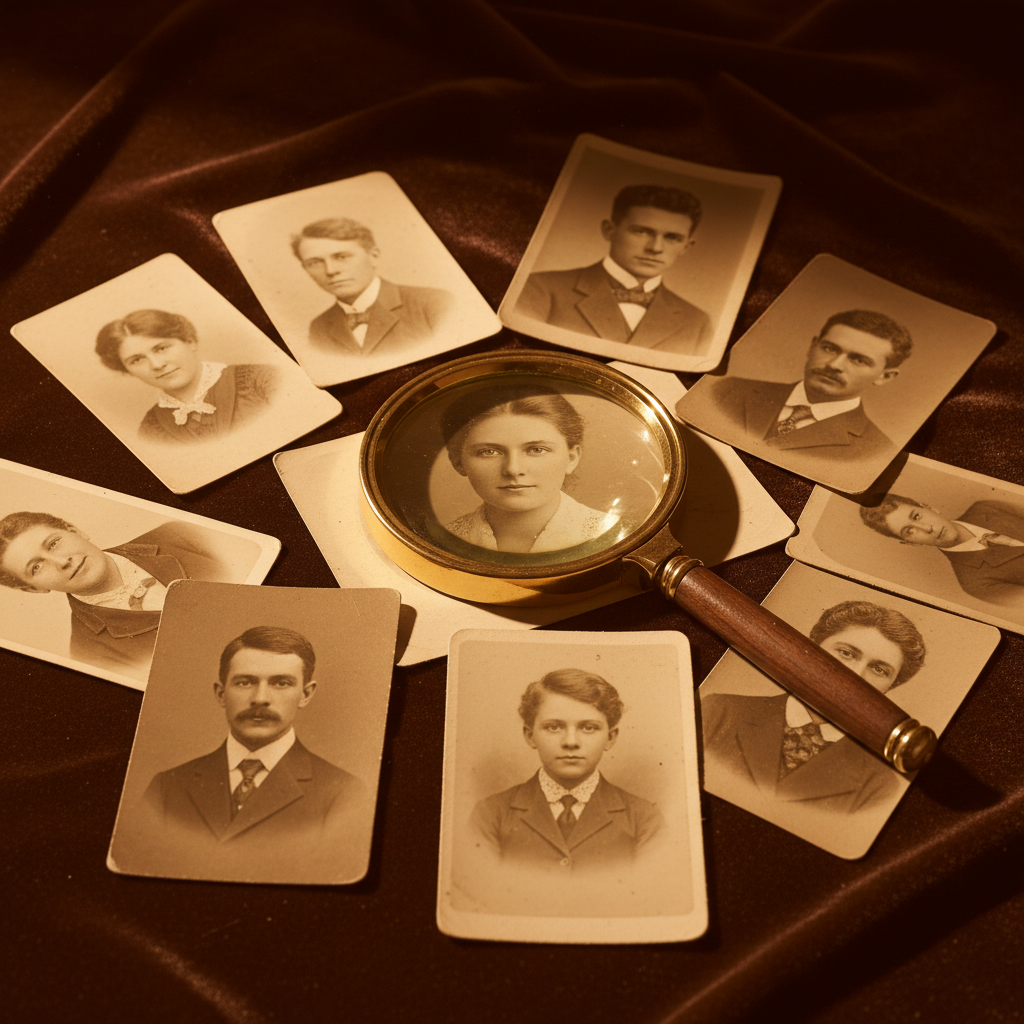
Faces from the Past: Dating Unnamed Family Photographs by Fashion and Collar Styles
Using Victorian high collars, Edwardian hats, and mid-century fabrics to pinpoint photographic decades accurately.
Share the story
Family discussion cards
Take one card at a time. There are no right answers—only memories worth hearing.
What memory did this article bring to mind?
Who in the family might have a story or photograph to add?
What is one small thing we could save, share, or do next?
A quiet conversation can be a meaningful family keepsake.
Subscribe to MemContinuity Publications
Receive thoughtful reflections, local heritage guides, and slow travel stories delivered directly to your inbox. No spam, privacy respected.