Unlocking the Family Attic: Safely Handling Century-Old Trunks and Boxes
A careful, practical first look at old family trunks: how to prepare, handle fragile papers and photographs, recognize when to stop, and plan safer storage.
A compatible device voice is not available. You can still read this article on screen.
 Family Heritage
Detailed article
Use the text-size control at the top for larger text, or switch back to Easy Read at any time.
A forgotten trunk can hold both family meaning and delicate materials. A slow first look helps you protect the contents—and yourself—without trying to solve every conservation problem at once.
Before you open the trunk
Start with the room, not the lock. Attics can be hot, cramped, and difficult to move around in. Clear a stable route, provide good light, and make sure the floor and the trunk’s resting surface are sound. If the trunk is high on a shelf, wedged under other objects, or too heavy to move comfortably, do not attempt a solo lift. Ask for help or leave it where it is until a safe plan is possible.
Look around the outside before touching the contents. Check for water staining, active leaks, dampness, visible mould, insect activity, animal droppings, strong chemical or musty odours, loose hardware, and a lid that may fall unexpectedly. These signs do not identify a specific hazard, but they are good reasons to pause. Do not bring food or drink into the work area; food and water can attract insects and rodents around stored collections.
If you see suspected mould, avoid opening or shaking the material. Keep other people away, especially anyone with asthma, allergies, respiratory problems, or a weakened immune system, and seek advice from a conservator or appropriate local professional. The Canadian Conservation Institute advises isolating mould-affected heritage objects and limiting access; its guidance also cautions that larger or more hazardous outbreaks require outside expertise. A family clean-up is not a substitute for that assessment.
Make a calm, supported first opening
If the trunk appears stable and dry, work on a clear surface with enough room to set items down. Open the lid slowly, keeping fingers clear of hinges and pinch points. An old lid may be heavier than expected or may not stay open. Do not force a stuck lock, pry at a swollen seam, or pull against a resisting lid. Those actions can injure you and tear or crush what is inside. If the mechanism will not move with gentle handling, stop and seek help from someone qualified to work with the trunk.
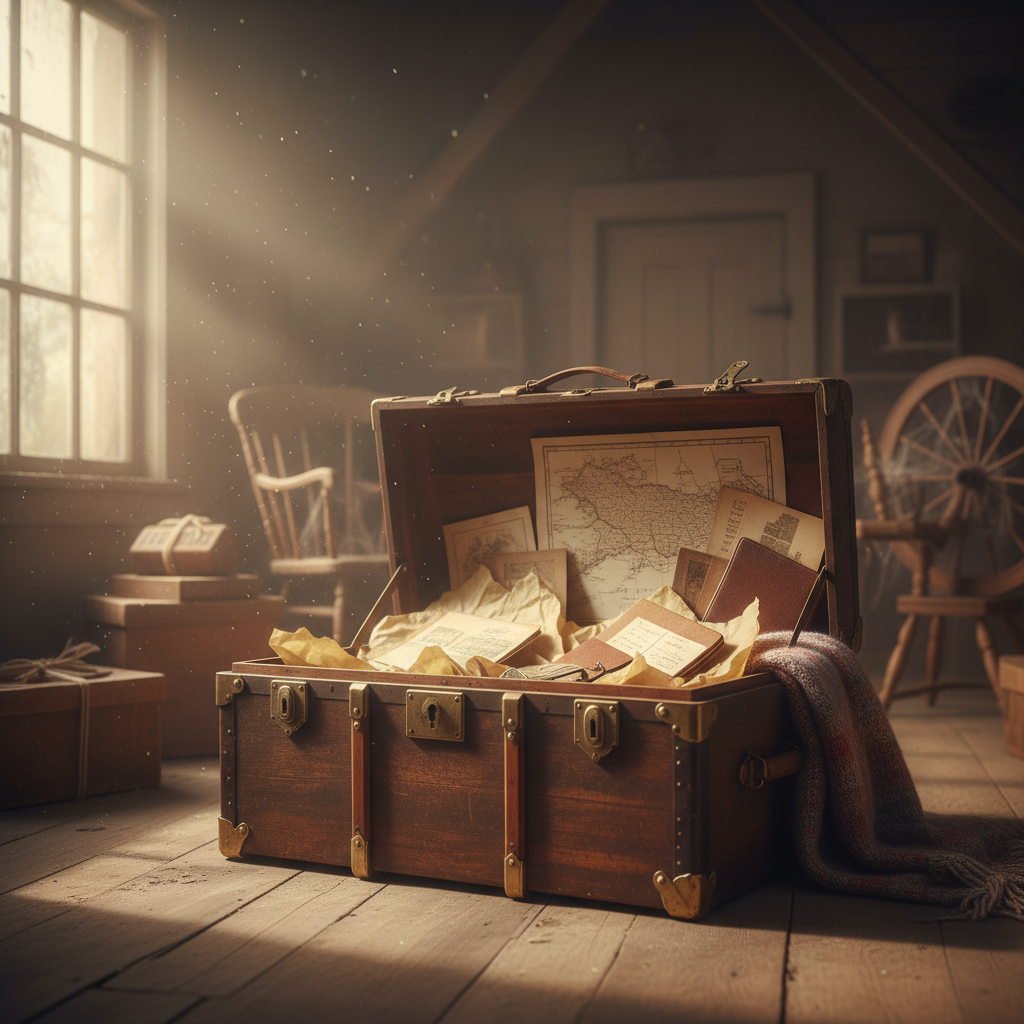
Before removing anything, take a moment to notice how the contents are arranged. Photograph the open trunk and its layers if you wish, without moving objects for a better shot. This simple record can help you remember where items were found. Make a short note of the trunk’s location, visible labels, and any names or dates that are legible. Keep observations separate from guesses: write “label appears to read…” rather than turning an uncertain reading into family fact.
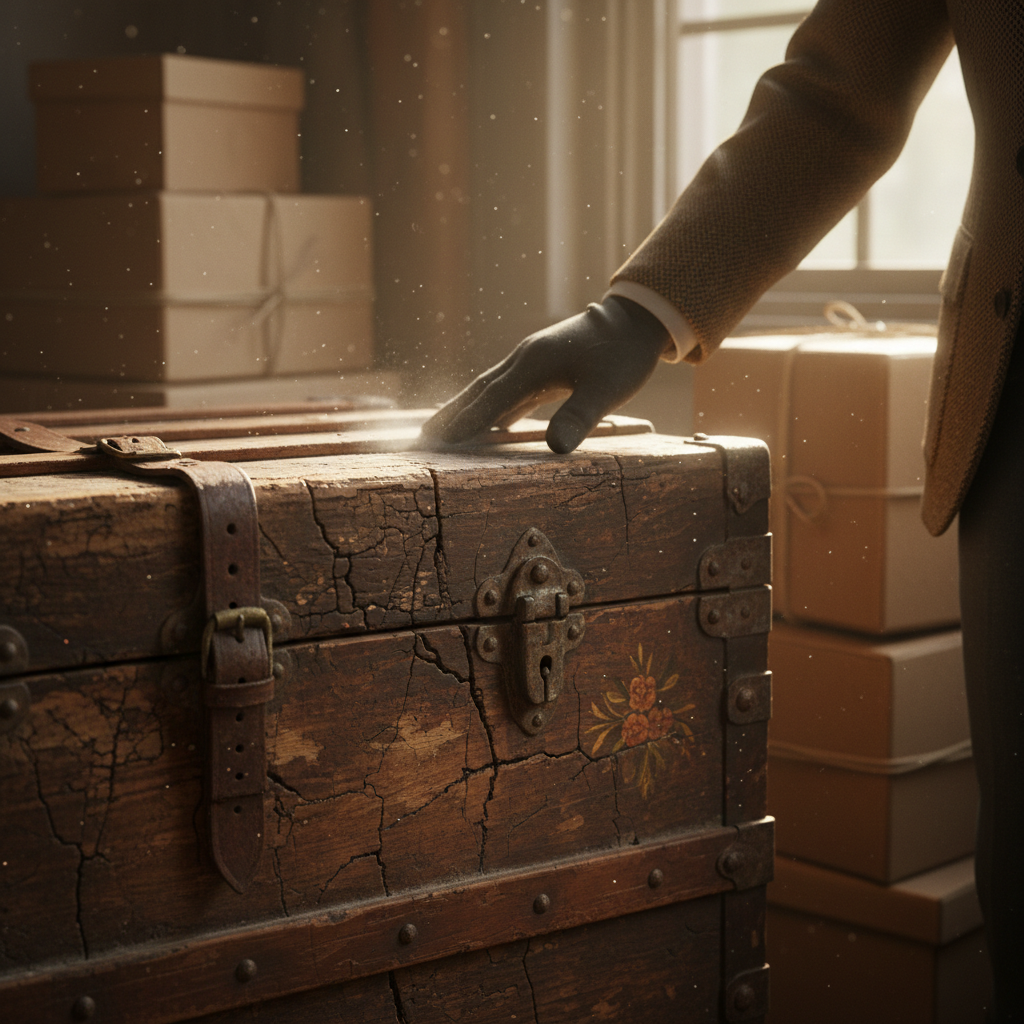
Work with one small group of items at a time. Use clean, dry hands when handling ordinary paper; the U.S. National Archives warns that cotton or plastic gloves can catch and tear paper and make it harder to handle securely. Photographs are different: the Archives advises nitrile gloves for prints and negatives unless they are protected in polyester sleeves. If you cannot tell whether an item is paper, a photograph, metal, or another material, avoid unnecessary handling and ask a conservator for advice.
Handle fragile contents without forcing them
Support a sheet or album from underneath rather than lifting it by a corner. Place it on a clean, flat surface and avoid bending, flattening, or repeatedly turning brittle pages. If several papers have become stuck together, do not pull them apart. Leave brittle, torn, flaking, damp, or mould-suspect items in place and seek professional guidance. A photograph’s surface may be especially vulnerable, and different historic photographic processes can need different treatment.
Leather, cloth, wood, metal fittings, and paper can age differently even when they have shared one trunk. Avoid polishing, oiling, wiping, spraying, or applying household cleaners. Adhesive tape, glue, rubber bands, and sticky notes can also create new problems. If an item has a loose piece, keep the piece with it in a labelled, separate enclosure rather than attaching it. Do not write directly on an original; record identifying details on a separate note or housing.
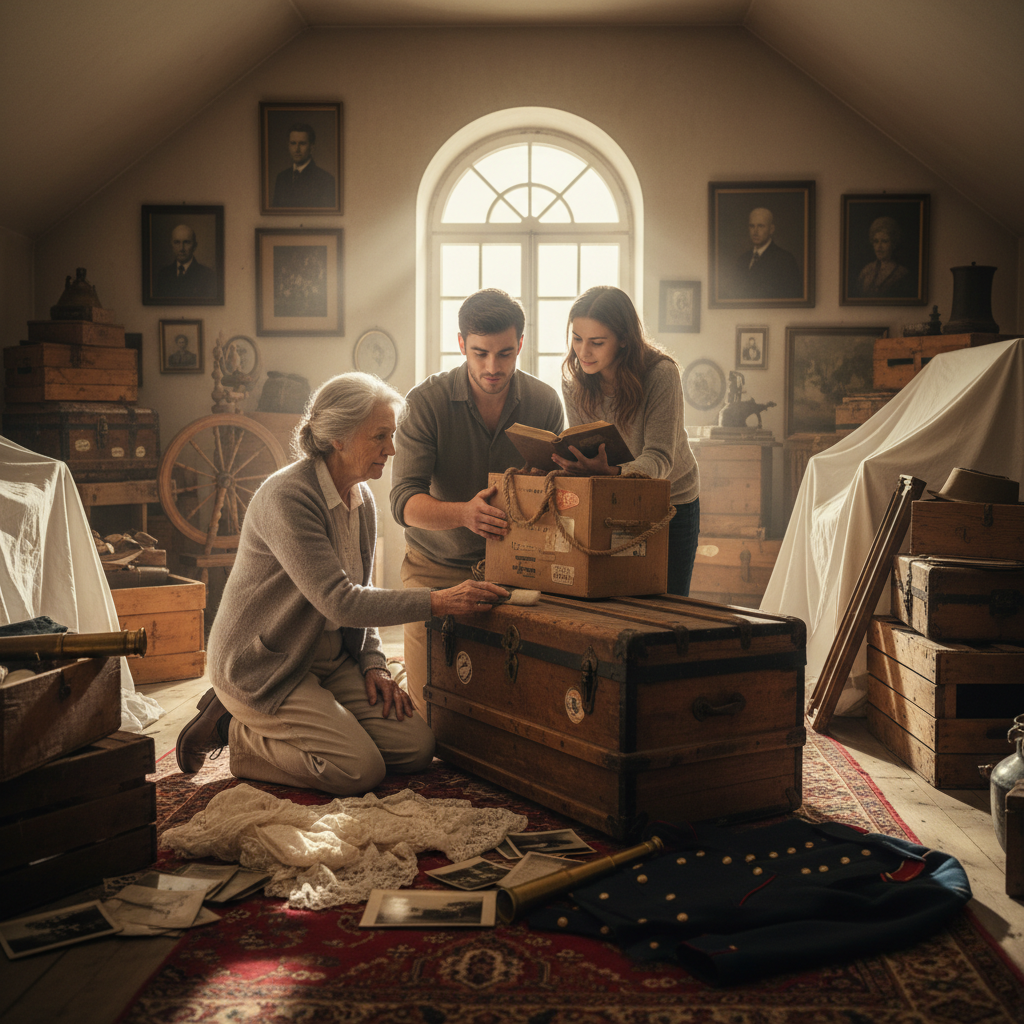
Children or relatives can take part without handling every object. One person might read labels aloud, another can make a written inventory, and someone else can take photographs. Make participation optional. Family members may have different feelings about particular objects, and nobody needs to explain a painful or private story in order to help preserve an item.
Sort gently and keep a simple record
Use broad temporary groups such as “letters,” “photographs,” “documents,” and “objects,” rather than deciding immediately what is valuable. Number groups on separate slips, not on the objects themselves. A brief inventory might include a temporary number, a plain description, names or dates visible on the item, its condition, and where it was found. Mark uncertain information as uncertain. If you make digital copies, keep the original’s temporary number in the image filename or a companion note so the scan remains connected to its source.
Avoid discarding duplicates or blank-looking papers during the first session. A reverse side, envelope, or inscription can carry context. Keep items in the order found unless there is a clear reason to change it, and note any changes you make. If the task begins to feel tiring, stop at a natural point and cover or re-house the materials safely. There is no need to complete an entire attic in one afternoon.
Choose a safer place after discovery
An attic may be where a trunk was found, but it is not necessarily the best long-term place for family papers and photographs. National Archives guidance recommends keeping family archives out of hot attics and damp basements, away from leaks, and off the floor. It also recommends containers that fit the items without bending, shifting, or overfilling them. Use an archival-quality folder or box when practical; until then, avoid putting fragile pieces back into a damp, dusty, or unstable trunk.
Choose a dry, clean place with relatively steady conditions, away from sunlight, radiators, water pipes, and food storage. Do not assume that putting photographs into an ordinary plastic sleeve or tightly sealing damp material will make it safe. For serious water exposure, active mould, extensive insect damage, or deteriorating film, ask a conservator or archive service about suitable next steps. Specialized cold storage for some photographic materials requires appropriate packaging and handling; a household freezer is not a general-purpose preservation solution.
Let the discovery remain unfinished
A first opening is successful when the contents are safer and their context is better understood—not when every mystery is solved. Record what you know, leave uncertain interpretations open, and give delicate items time and space.
When you are ready, invite relatives to share memories only by choice. Ask open, modest questions such as “Do you recognize this place?” or “Would you like to tell me anything about this?” Make a note of who supplied a recollection and when, so a later reader can distinguish memory from what is written on the object. Preserving a family archive is both physical care and thoughtful stewardship: protect the evidence, respect the people connected to it, and let the story develop at a pace that feels comfortable.
Sources and Further Reading
Reading path
Continue this topic
Practical, unhurried steps for looking after photographs, letters, and treasured objects without feeling overwhelmed.
Pillar guides in this path
A gentle next step
Keep a related family story
If this topic brings a family memory to mind, you can save it at your own pace.
“Thank you for sharing this quiet moment of reading with us.”
Every piece in the MemContinuity library is preserved to spark gentle conversations, honor generational memory, and support the health and comfort of our families.
MemContinuity editorial team
MC-HERITAGE-20260324-149 · Publication archive reference
Cross-device reading sync
Sign in to your MemContinuity account to optionally sync your article reading progress across your phone, tablet, and computer.
Themes & topics
Editorial guidance & care
Our publications are designed to be practical, gentle, and respectful. For specific medical, mobility, or travel arrangements, we recommend consulting local providers or relevant municipal services.
Related publications
 Family Heritage
Faces from the Past: Dating Unnamed Family Photographs by Fashion and Collar Styles
Using Victorian high collars, Edwardian hats, and mid-century fabrics to pinpoint photographic decades accurately.
 Family Heritage
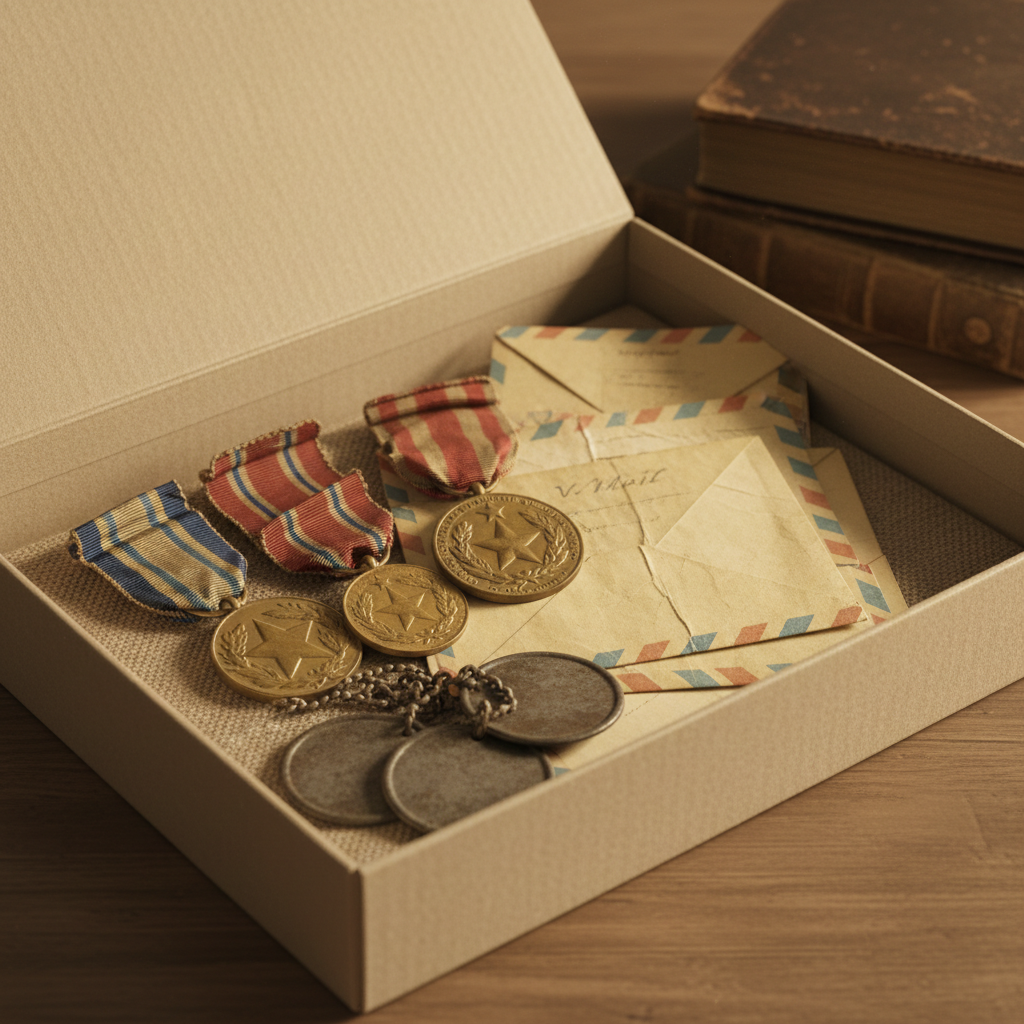
The Soldier's Footlocker: Preserving Medals, Dog Tags, and War Correspondence
Acid-free display cases, gentle tarnish protection, and cataloging the military service of fathers and uncles.
 Family Heritage
Walking the Sacred Yard: Reading Weathered Gravestones Without Causing Stone Damage
Soft brush cleaning, raking light photography, and avoiding harmful chalk or acid rubbings on marble monuments.
Share the story
Family discussion cards
Take one card at a time. There are no right answers—only memories worth hearing.
What memory did this article bring to mind?
Who in the family might have a story or photograph to add?
What is one small thing we could save, share, or do next?
A quiet conversation can be a meaningful family keepsake.
Subscribe to MemContinuity Publications
Receive thoughtful reflections, local heritage guides, and slow travel stories delivered directly to your inbox. No spam, privacy respected.