The Soldier's Footlocker: Preserving Medals, Dog Tags, and War Correspondence
A practical guide to caring for inherited military medals, identification tags, and letters while recording their stories with care and respect.
A compatible device voice is not available. You can still read this article on screen.
 Family Heritage
Detailed article
Use the text-size control at the top for larger text, or switch back to Easy Read at any time.
Begin with a calm inventory
Before arranging a display, gather the keepsakes on a clean, stable table away from food, drinks, direct sun, and open windows. Work with one item at a time. If an object is dirty, flaking, sticky, or shedding green, white, or reddish powder, do not rub it clean. Photograph it where it lies, note the visible condition, and set it aside from other objects without forcing it into a tight box. Loose powder, active flaking, or fresh corrosion can signal a need for advice from a conservator. Metal types and surface coatings differ, so a treatment that suits one medal can harm another.
Wash and thoroughly dry hands before handling. For metal, clean, well-fitting nitrile gloves can reduce transfer of oils and salts; use care so gloves do not catch on fragile ribbons, paper, or sharp edges. Support an item from underneath rather than lifting it by a ribbon, chain, pin, or corroded fitting. If the object feels unstable or has sharp parts, leave it in place and ask a museum, archive, or qualified conservator how to proceed.
Make a simple inventory before separating items. Give each object a temporary number on a separate paper slip, not on the object. Record what it appears to be, its dimensions if easy to measure, inscriptions, where it was found, who currently cares for it, and any family account of its history. Distinguish what you can see from what someone remembers or suspects. “Name stamped on reverse” is an observation; “awarded for a particular battle” needs independent evidence.
Store medals and tags without polishing
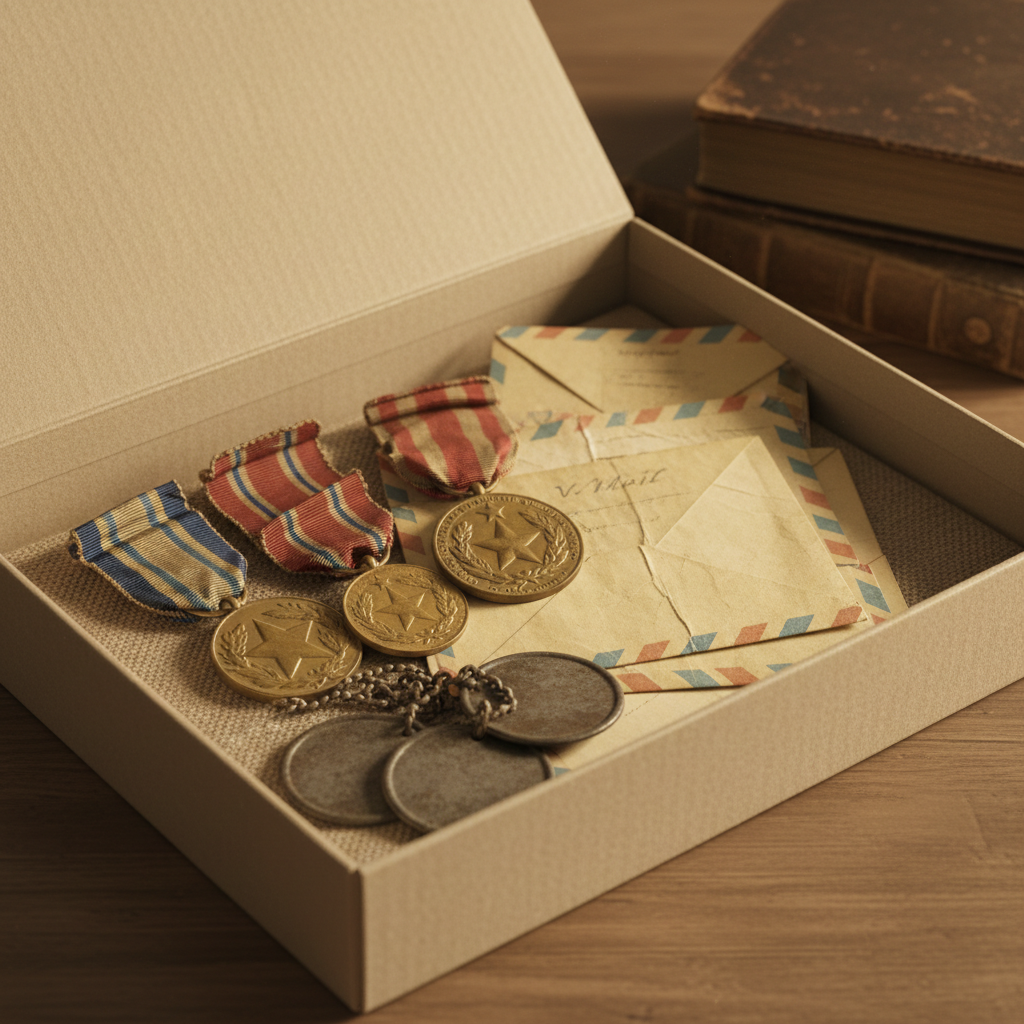
A medal may combine metal, enamel, a ribbon, a suspension ring, and a pin. Dog tags may have a chain, stamped metal, and sometimes other attached material. These mixed components can respond differently to moisture, light, and cleaning. Keep pieces from knocking against each other. A stable, cool, dry room away from damp basements, hot attics, leaks, and strong sunlight is a sensible starting point. Avoid a sealed display in a room where condensation or dampness is likely.
For storage, use a clean archival-quality box or a stable inert enclosure sized so objects do not slide around. Place medals separately, using an appropriate archival tissue or inert support to prevent contact and abrasion. Do not wrap an unstable object tightly or put tissue against a loose, powdery surface. Keep paper records and photographs in their own folders or sleeves rather than pressed against metal. Acid-free paper packaging is useful for paper; it does not make every enclosure suitable for every metal. Specialist advice matters where a medal is actively corroding or unusually valuable.
Do not polish a medal or dog tag simply to make it shine. Abrasives and household metal cleaners can remove original finishes, plating, traces of use, or evidence needed to understand the object. A soft, dry brush may be suitable for loose surface dust on a stable object, but avoid brushing if material is flaking or powdering. Tarnish is not automatically a reason to intervene. The Canadian Conservation Institute notes that metal risks vary by material and condition, and recommends tailored preventive care rather than assuming every metal needs the same treatment.
Protect letters and envelopes as paper objects
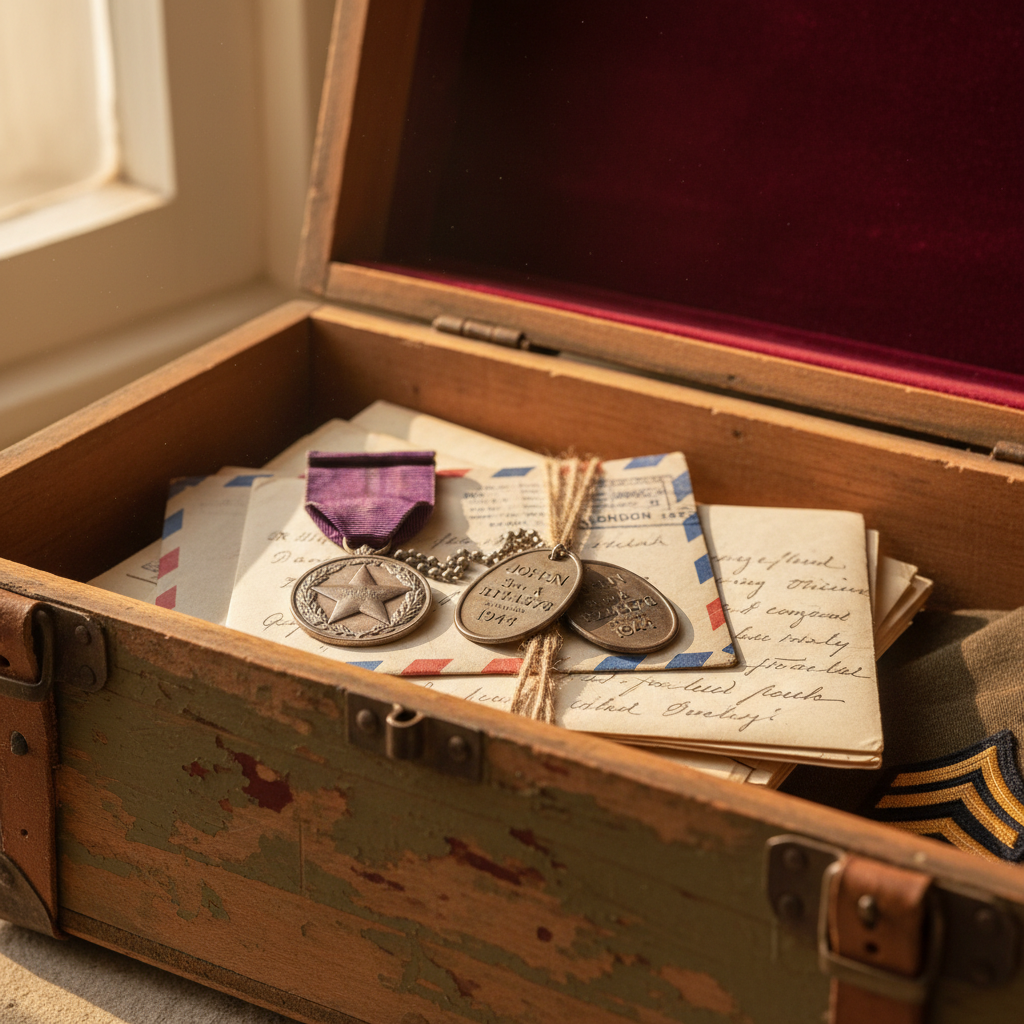
Letters often provide the names, dates, and places that help identify objects, but paper needs different care from metal. Handle a fragile sheet with clean, dry hands and support it fully. Avoid unfolding a brittle crease repeatedly or forcing open a sealed envelope. Keep the letter with its envelope when their relationship is clear, but do not use tape, glue, laminating film, paper clips, or sticky notes to attach them. If a mark or annotation matters, record its position in a note or photograph rather than writing on the original.
Store papers flat where possible in an appropriately sized folder or box made from archival-quality, acid-free and lignin-free material. If a sheet is torn, brittle, or frequently consulted, an oversized polyester sleeve can reduce handling; use one item per sleeve and ensure no edge protrudes. Do not overfill a box or allow sheets to bend. Keep papers off the floor and away from leaks, damp, food, and pests. The U.S. National Archives advises avoiding hot attics and damp basements, and recommends storage that prevents shifting, folding, and overstuffing.
Record the story without filling gaps with guesses
Write a short, separate description for each item. Include the name exactly as it appears, the source of the information, and the date the note was made. If the family knows who kept the object or how it came to you, record that account in the person’s own words only with permission; otherwise summarize it without quotation marks and label it as family recollection. Leave uncertain dates or initials unresolved rather than choosing the most appealing explanation. A timeline can show what is documented, what is remembered, and what remains unknown.
For example, a record might say: “Two identification tags, stamped with the same name; inherited from an aunt in 2008; service dates not yet confirmed.” Add a photo of each side beside the inventory entry, and note any visible damage. Keep the written record near the collection but not attached to an object. This modest documentation helps relatives understand how identifications were made and where future research might begin.
Official service records can sometimes clarify names, service dates, or units, but access depends on the country, record, and privacy rules. In the United States, the National Archives explains who may request certain service records and that access restrictions apply to more recent records. Do not send irreplaceable originals in a records request; the Archives specifically asks requesters to submit copies of supporting documents and retain originals. A record may not answer every family question, and it should not be treated as proof of a story it does not state.
Share the keepsakes on the family’s terms
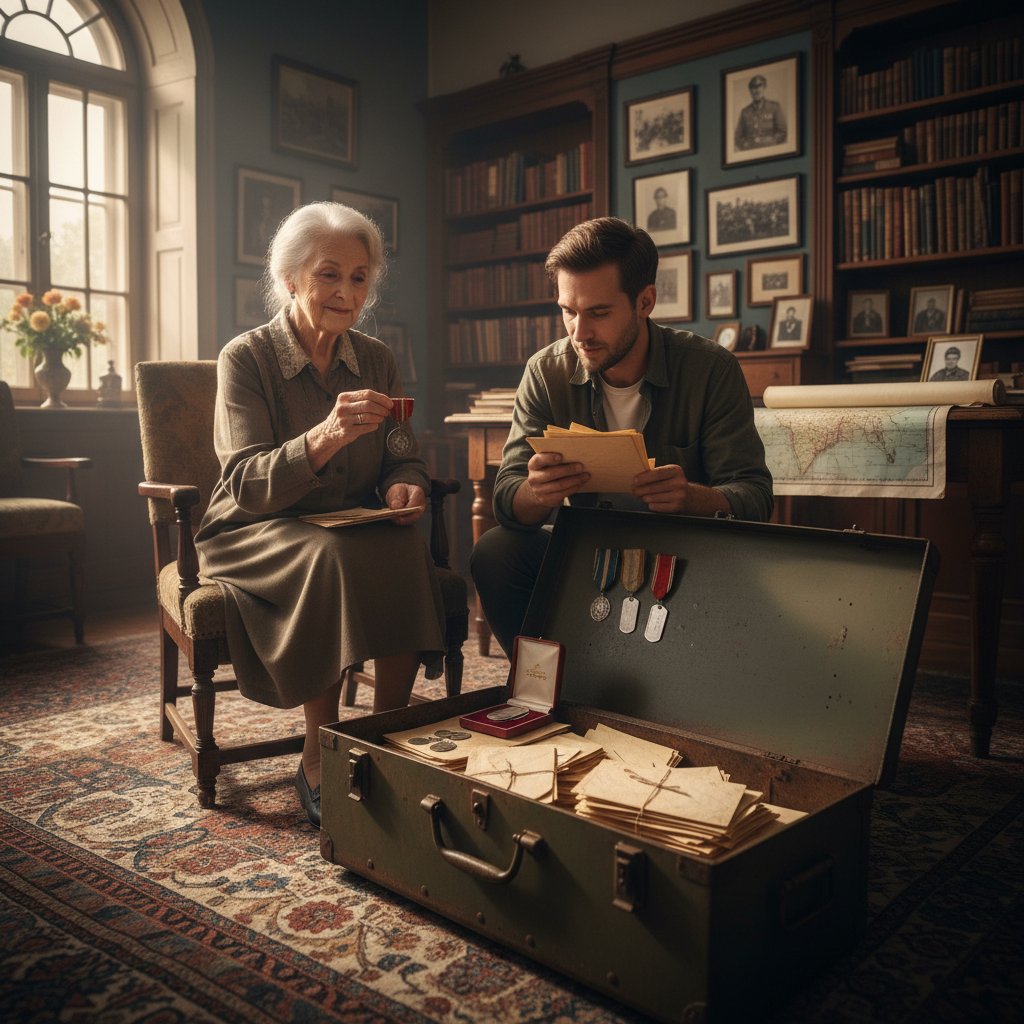
A small viewing can be as simple as placing a photograph, a safely supported medal, and a copy of a letter on a table. Invite conversation without requiring anyone to speak, remember details, or disclose painful experiences. Service and wartime correspondence can involve grief, trauma, complicated loyalties, or private relationships. Let the person closest to the story decide what may be shared, and allow relatives to step away or decline. A quiet label such as “letter dated May 1944; sender not yet identified” is more respectful than a dramatic caption that assumes what the writer felt.
A manageable first session
Choose just one object and spend a short session documenting it rather than trying to organize a whole footlocker. Photograph both sides, write down visible marks, and note its current condition. Place it in a safe temporary location separate from other materials. Then decide whether it is stable enough for ordinary storage or whether a conservator’s guidance is prudent. A family collection does not need a perfect catalogue to be cared for well. Accurate notes, gentle handling, appropriate storage, and consent about sharing are meaningful beginnings.
Sources and Further Reading
Reading path
Continue this topic
A gentle four-part start for recording voices, memories, and the stories that make a family feel like home.
Pillar guides in this path
A gentle next step
Keep a related family story
If this topic brings a family memory to mind, you can save it at your own pace.
“Thank you for sharing this quiet moment of reading with us.”
Every piece in the MemContinuity library is preserved to spark gentle conversations, honor generational memory, and support the health and comfort of our families.
MemContinuity editorial team
MC-HERITAGE-20260322-151 · Publication archive reference
Cross-device reading sync
Sign in to your MemContinuity account to optionally sync your article reading progress across your phone, tablet, and computer.
Themes & topics
Editorial guidance & care
Our publications are designed to be practical, gentle, and respectful. For specific medical, mobility, or travel arrangements, we recommend consulting local providers or relevant municipal services.
Related publications
 Family Heritage
Unlocking the Family Attic: Safely Handling Century-Old Trunks and Boxes
How to open forgotten heirloom chests without damaging crumbling paper, dried leather, or insect-damaged albums.
 Family Heritage
Faces from the Past: Dating Unnamed Family Photographs by Fashion and Collar Styles
Using Victorian high collars, Edwardian hats, and mid-century fabrics to pinpoint photographic decades accurately.
 Family Heritage
Walking the Sacred Yard: Reading Weathered Gravestones Without Causing Stone Damage
Soft brush cleaning, raking light photography, and avoiding harmful chalk or acid rubbings on marble monuments.
Share the story
Family discussion cards
Take one card at a time. There are no right answers—only memories worth hearing.
What memory did this article bring to mind?
Who in the family might have a story or photograph to add?
What is one small thing we could save, share, or do next?
A quiet conversation can be a meaningful family keepsake.
Subscribe to MemContinuity Publications
Receive thoughtful reflections, local heritage guides, and slow travel stories delivered directly to your inbox. No spam, privacy respected.