Record Family Stories: Consent, Interviews and a Memory Archive
A practical, consent-led guide to recording family oral histories, creating accessible transcripts, organizing a memory archive, backing it up, and writing a legacy note that is not a legal will.
A compatible device voice is not available. You can still read this article on screen.
 Family Heritage
Detailed article
Use the text-size control at the top for larger text, or switch back to Easy Read at any time.
How to Record Family Stories: Consent, Interviews and a Memory Archive
The best way to record family stories is to agree first what will be recorded, who may hear it, and what stays private. Make one clear recording, create a readable transcript, label the files, and keep copies in more than one place. A small, well-described archive beats a folder nobody can identify.
Start with permission, purpose and participant control
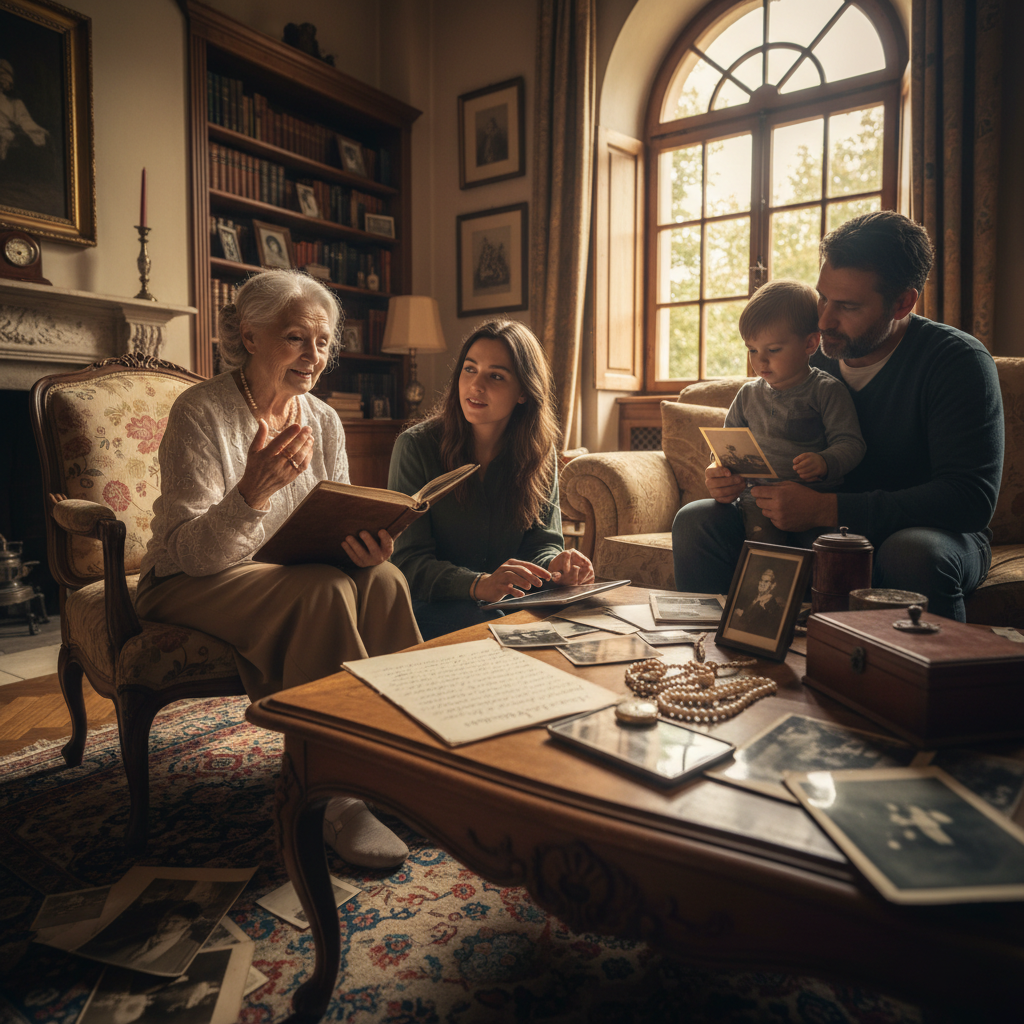
An oral-history interview is not simply a chat with a recorder running. Even in a family, a story may include memories of other people, grief, health, conflict, migration, faith, or events the speaker has never discussed outside a small circle. Before you press record, describe the purpose of the project in ordinary language: what you hope to preserve, who will receive a copy, where the files will live, and whether anything might ever be shared outside the family.
The Oral History Association’s best-practice guidance recommends documenting informed consent and discussing recording, review, preservation, access and possible uses before an interview. Its participant guidance also makes clear that a narrator may decline a question, pause, or end the conversation. Treat those as practical choices, not formalities.
For a private family project, use a one-page consent-and-access note. Record the interviewee’s name or chosen identifier, date, recording, audience, review choice and limits such as “family listening only,” “do not post online,” or “this section is not to be retained.” Give the participant a copy. For public publication, archive donation, copyright transfer, or material with legal risk, seek appropriate local advice rather than relying on a family template.
Make sensitive stories optional from the outset
Say explicitly: “You can pass on any question, ask me to stop recording, or tell me something that we do not keep.” Ask whether there are topics to avoid before the session begins. Do not try to turn a painful event into a complete account on a first meeting. If the speaker becomes distressed, stop the recording, ask what they need, and do not resume unless they freely choose to.
This is a practical family approach, not a test of courage or memory. Treat remembered facts as personal recollections, not proven history, and be especially cautious about identifiable details concerning living people. Public release is difficult to reverse once a copy has travelled, as the Oral History Association’s guidance for participants emphasizes.
Prepare a calm, accessible recording session
Choose a time when the narrator has energy and a place with little competing noise. Use the device you can operate confidently. Before the conversation, make a short test recording and listen back with the same speaker position and room. Clear speech matters more than complicated equipment.
At the start, record a simple lead-in: the date, the interviewer and narrator’s names or chosen identifiers, a broad location such as “at home in Leeds” rather than a street address, and the topic. This mirrors the contextual information recommended in the Oral History Association’s interview guidance. Keep the question list nearby, but listen for the detail the narrator considers important. Open questions such as “What do you remember about arriving there?” invite a story; a focused follow-up such as “What happened next?” can clarify it without taking over.
Accessibility matters. Give questions in advance if helpful, offer a trusted interpreter where needed, and plan breaks. Afterward, make a transcript that names speakers and includes non-speech information only when it affects meaning, such as “[long pause].” The W3C’s transcript guidance explains that transcripts make audio available to people who are Deaf, hard of hearing, or process text more easily. For video, keep captions and add essential visual information to the transcript.
A transcript is not a replacement for the voice recording. It is a companion that makes the recording searchable, reviewable and usable by more relatives. Give the narrator the agreed review opportunity before wider sharing, and record any correction, redaction or access restriction beside the relevant file.
An original interview worksheet for one meaningful session
Use this worksheet as a prompt, then adapt it to the narrator. It is deliberately short so there is room for listening.
Family story session worksheet
- Purpose and audience. “I am recording this to preserve __________. The people who may listen are __________. It will not be shared beyond them without __________.”
- Comfort and access. Preferred language or interpreter: __________. Helpful pace, seating, hearing or reading support: __________. Planned break signal: __________.
- Recording choice. May I record today? __________. May I retain the recording? __________. May I make a transcript? __________. Review before sharing: yes/no; by what date? __________.
- Story map. Choose two or three starting points: a childhood room or street; a person who shaped you; a journey or move; work or a skill; a family meal, object or song; a turning point; a hope for younger relatives.
- Gentle follow-ups. “What do you remember seeing or hearing?” “Who else was there?” “What would you want us to understand about that?” “Would you like to continue, pause, or leave that here?”
- Items to connect. Photograph, letter, recipe, map, object or document mentioned: __________. Who owns the original? __________. What does the item show or mean? __________.
- Archive record. Filename: __________. Date recorded: __________. Broad place: __________. Interviewer and narrator: __________. Transcript status: __________. Access rule and review date: ________.
For more gentle at-home prompts, see the related guide to recording a family story. If a meal or recipe opens the conversation naturally, the family-story recipe guide can provide a different starting point.
Build a memory archive people can navigate
An archive begins with a consistent structure, not specialist software. Keep a short README explaining filenames, backup locations and access rules. A simple arrangement could be:
01-Interviews/02-Transcripts/03-Photos-and-documents/04-Consent-and-access/(kept private from general family sharing)05-Index-and-README/
Use a stable filename such as 2026-10-25-Patel-Asha-childhood-home-audio. Capture the basic “who, what, where and when” metadata recommended by the U.S. National Archives, plus a short summary and alternate names or places. That is what lets a relative find “the story about the first shop” years later.
Attach scans or photographs of items that the narrator discusses, but keep the original physical item. The National Archives notes that digitizing can reduce handling and make sharing easier, while digital files have their own preservation risks and originals should be retained. Handle fragile papers carefully; do not force a book flat or send weak, bent or valuable papers through an automatic feeder. For a wider approach to objects and their stories, read how to inventory family heirlooms.
Export, back up and check the archive
After each session, export the recording as a normal file, retain its best-quality version and transcript, and choose formats your household can open. Where possible, an open, non-proprietary format gives future users more flexibility.
The Library of Congress guidance on personal digital audio recommends descriptive filenames, tags, a folder structure, a written summary and copies in different places. It calls for at least two copies, while the National Archives presents the more conservative 3-2-1 approach: three copies, on two media types, with one copy off-site. For a family archive, that might mean a computer copy, an external drive, and an encrypted cloud or trusted relative’s drive—provided every person who can access them is covered by the participant’s permission.
Each year, open a sample recording and transcript, confirm the access list, and update the index if a filename or folder changes. A backup that cannot be found or opened is not reliable.
Write an ethical legacy note without confusing it with a legal will
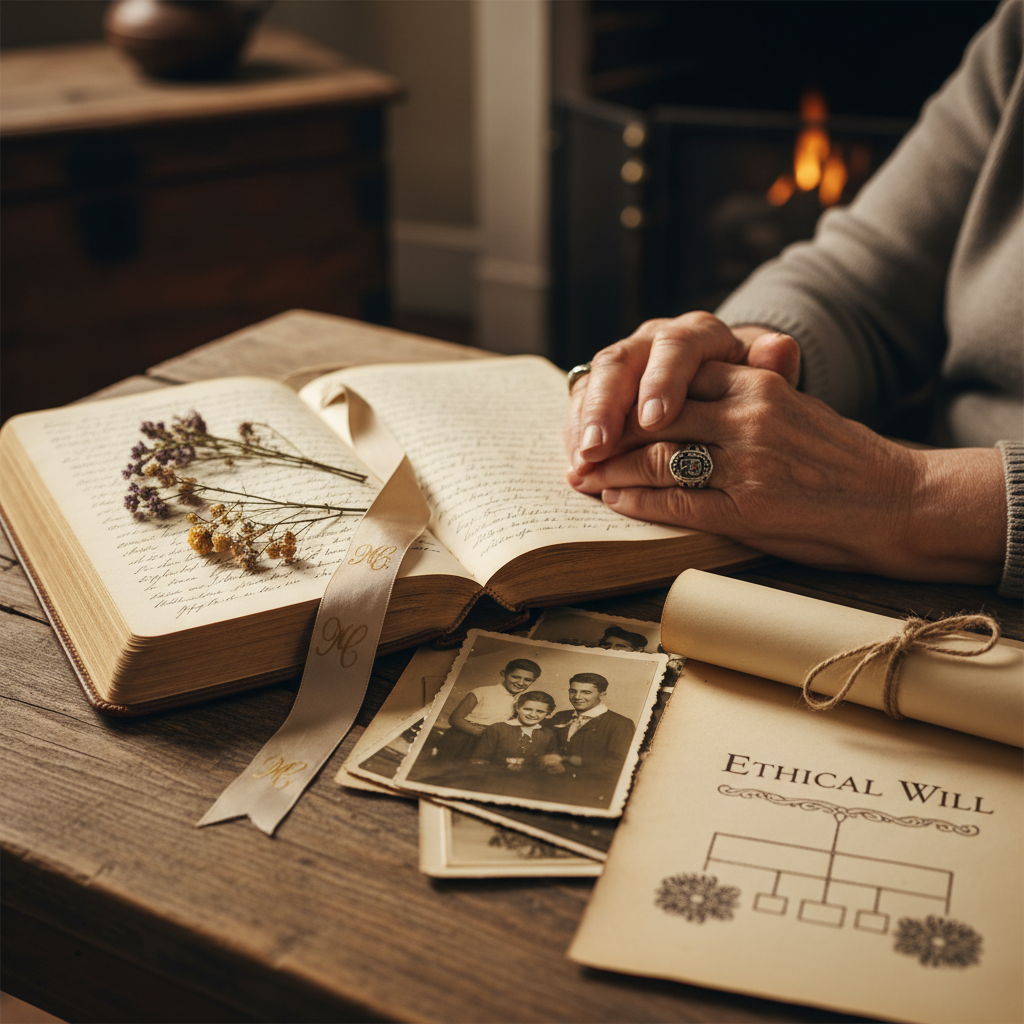
A legacy note, sometimes called an ethical will, is a personal letter about values, memories, gratitude, apologies, hopes or blessings. It can sit alongside an interview, but it is not a legal will. It does not decide who receives property, appoint executors, or replace an estate plan. This article is not legal advice; ask a qualified professional in the relevant jurisdiction about any legal will or estate document.
Keep the note personal and specific. An illustrative opening might be: “I hope you remember that our family meals were never about perfect cooking; they were about making room for one another.” Add one story behind that value, a gratitude, and a hope for the reader. The useful question is: “What would I want someone I love to understand about how I tried to live?”
Store the legacy note with its date, author, and the chosen access rule. If the writer wants it kept private until a particular time, note that instruction clearly and make sure the person holding the archive understands it.
Frequently asked questions
Do I need permission to record a relative?
Yes—ask before recording and explain the planned use. A family relationship does not automatically tell you whether someone is comfortable with a recording, transcript or wider sharing. Record the agreement and any restrictions.
What if a narrator asks to remove part of the interview?
Stop, identify the section, and follow the agreed process before anyone else receives it. Keep the access note with the files. If the material has already been shared publicly, removal may not erase copies held by others.
Do I need special recording equipment?
No. A familiar device in a quiet room, a short sound check, and careful listening are a sensible starting point. Use whatever setup lets the narrator feel comfortable and produces a file you can export and back up.
How should I make a recording accessible to relatives?
Provide a transcript with speaker names and headings. For video, add captions and include important visual information in the transcript. Keep the transcript easy to find beside the recording.
Is an ethical will legally binding?
No. A legacy or ethical will is a personal message, not a substitute for a legal will or estate planning. Seek jurisdiction-specific professional advice for legal documents.
Sources and scope
This guide combines practical family-archive suggestions with public oral-history, archival and accessibility guidance. It is not legal, mental-health, medical or archival-repository advice, and no source can guarantee that a platform or storage provider will remain available. Adapt access decisions to the narrator’s wishes before sharing.
- Oral History Association: Best Practices
- Oral History Association: For Participants in Oral History Interviews
- U.S. National Archives: Digitizing Family Papers and Photographs
- Library of Congress: Keeping Personal Digital Audio
- W3C Web Accessibility Initiative: Transcripts
Next, choose one willing participant, agree the access rule in writing, and record a short session about one object or place. Export it, make the transcript, add the index entry, and test a second copy before scheduling the next conversation.
Reading path
Continue this topic
A gentle four-part start for recording voices, memories, and the stories that make a family feel like home.
Pillar guides in this path
Printable checklist
Family Oral-History Session Checklist
A gentle next step
Keep a related family story
If this topic brings a family memory to mind, you can save it at your own pace.
“Thank you for sharing this quiet moment of reading with us.”
Every piece in the MemContinuity library is preserved to spark gentle conversations, honor generational memory, and support the health and comfort of our families.
MemContinuity editorial team
MC-HERITAGE-20260928-001 · Publication archive reference
Cross-device reading sync
Sign in to your MemContinuity account to optionally sync your article reading progress across your phone, tablet, and computer.
Themes & topics
Editorial guidance & care
Our publications are designed to be practical, gentle, and respectful. For specific medical, mobility, or travel arrangements, we recommend consulting local providers or relevant municipal services.
Continue with purpose
Part of a curated reading journey
Related publications
 Family Heritage
QR Codes on Headstones: Permissions, Privacy and Lasting Care
A practical guide to adding a QR memorial code without assuming permission, permanence, or privacy: confirm the cemetery’s rules, separate the code from the hosted archive, and make a family handover plan.
 Family Heritage
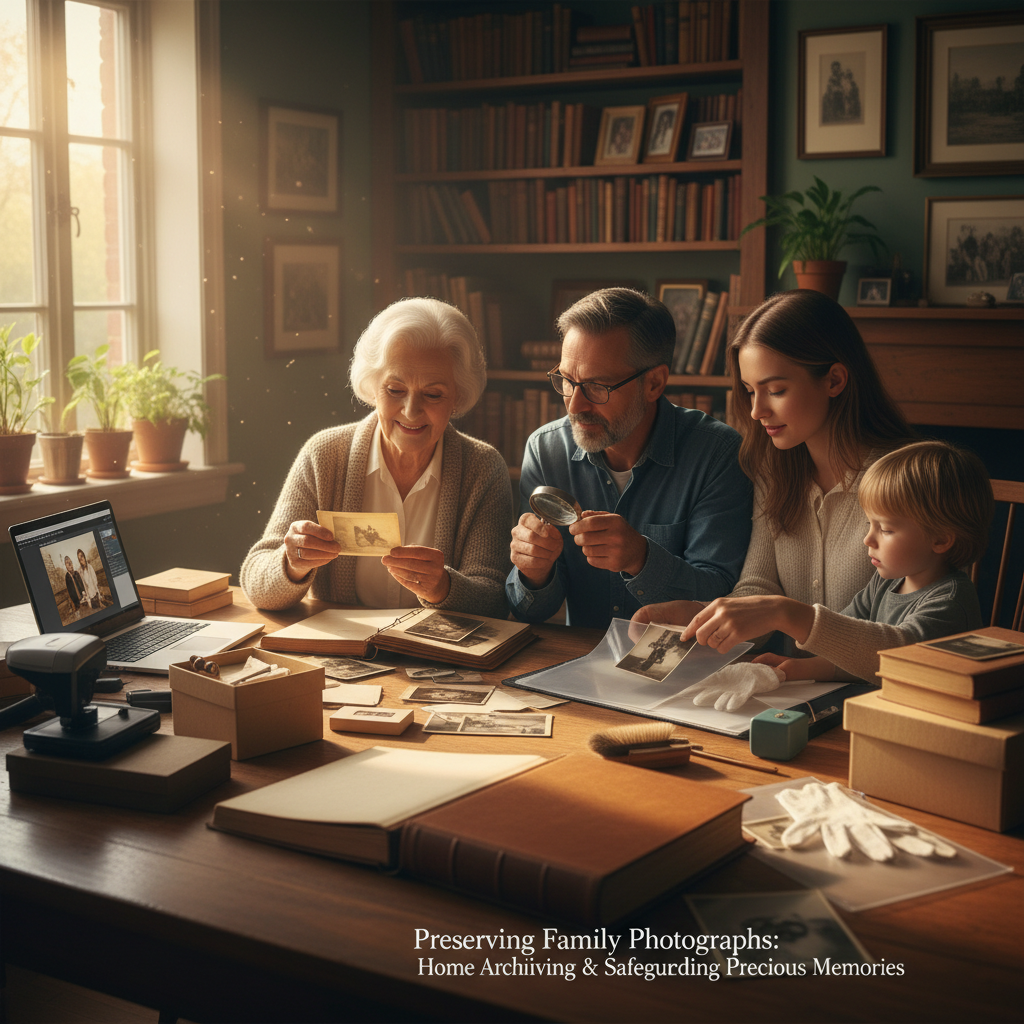
Preserve Old Family Photos: Safe Storage, Scanning and Backups
Protect old family photographs at home with safer handling, photo-safe storage, non-destructive scanning, clear metadata, and reliable backups—without risky cleaning or DIY restoration.
 Family Heritage
Create a Family Recipe Memory Book: Recipes, Stories and Care
Create a family recipe memory book one dish at a time: preserve the original recipe, add a readable transcription, record dietary notes carefully, and keep the story beside it.
Share the story
Family discussion cards
Take one card at a time. There are no right answers—only memories worth hearing.
What memory did this article bring to mind?
Who in the family might have a story or photograph to add?
What is one small thing we could save, share, or do next?
A quiet conversation can be a meaningful family keepsake.
Subscribe to MemContinuity Publications
Receive thoughtful reflections, local heritage guides, and slow travel stories delivered directly to your inbox. No spam, privacy respected.