Create a Family Recipe Memory Book: Recipes, Stories and Care
Create a family recipe memory book one dish at a time: preserve the original recipe, add a readable transcription, record dietary notes carefully, and keep the story beside it.
A compatible device voice is not available. You can still read this article on screen.
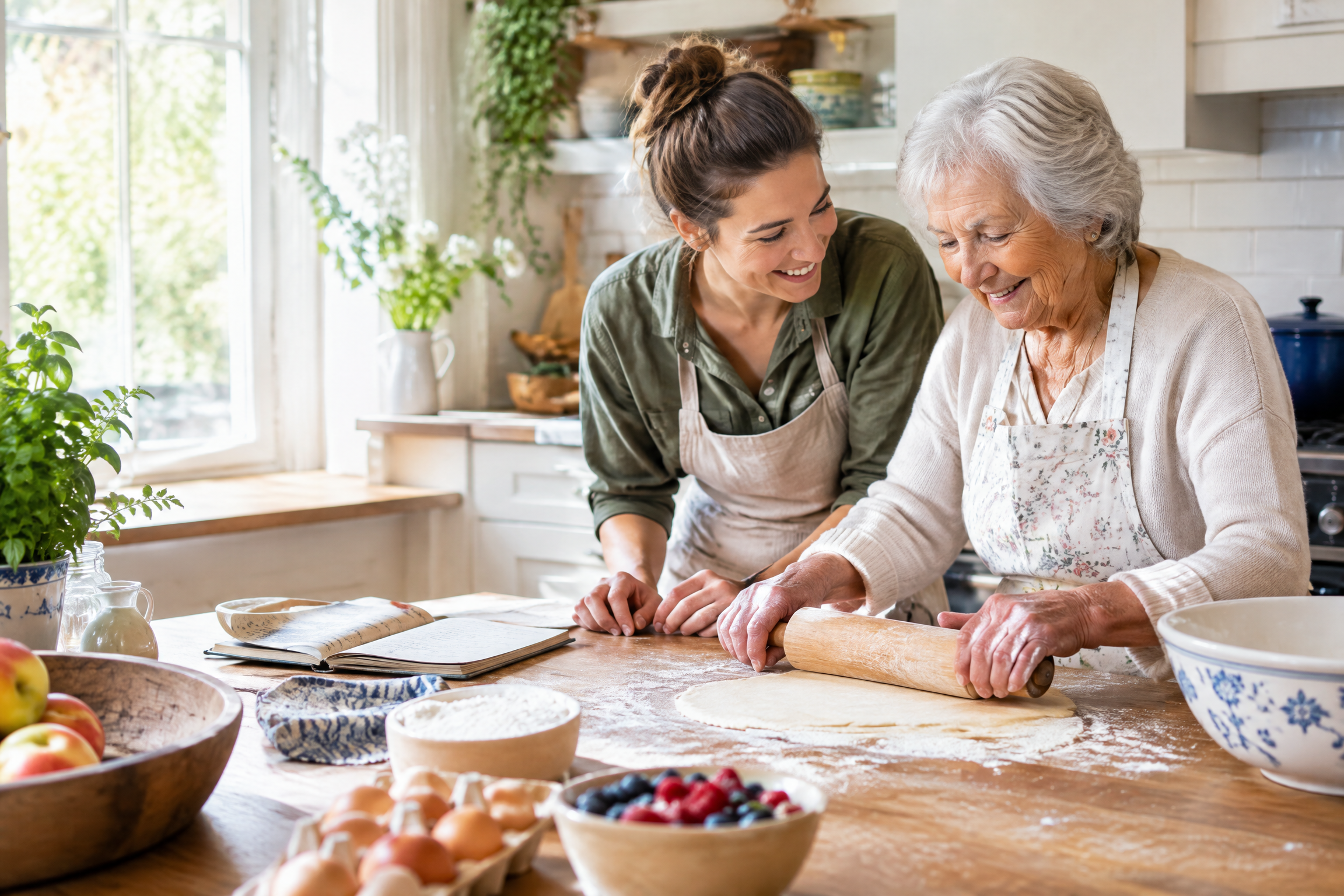 Family Heritage
Detailed article
Use the text-size control at the top for larger text, or switch back to Easy Read at any time.
Start with one recipe, not a whole box. Preserve two things side by side: a faithful record of the original card or notebook page, and a clear working transcription that someone can cook from. Then add the small details that turn instructions into family history: who shared it, when it appeared, what the kitchen was like, and how the recipe has changed.
Begin with a small, finishable collection
A family recipe memory book does not need to be a polished cookbook. It can be a printed binder, a shared digital folder, or a simple document that grows one entry at a time. The useful unit is one complete entry: source, readable recipe, image, story, and a practical note for the next cook.
Choose a modest first set, such as five dishes connected to one person, celebration, place, or season. Ask each contributor to name the recipe they most want to keep and why. That choice gives the project a shape without deciding whose version is “right.” A handwritten card, a clipped recipe, a recipe sent by email, and a remembered method can all belong, provided the record says what it is and where it came from.
Keep the source record distinct from the working version. The source record preserves the handwriting, spelling, crossed-out ingredients, and quirks of measurement. The working version is where you can make a tested, legible adaptation. This distinction lets future readers see the original without being asked to cook from an uncertain transcription.
Handle recipe cards and photographs before scanning
Do the simple, low-risk care first. The Library of Congress recommends a clean work area, clean hands, and keeping food and drink away from paper; it also advises against tape, glue, rubber bands, paper clips, and folding to organize documents. Store paper in a cool, relatively dry, stable place away from direct or intense light, using supportive protective enclosures when practical. See the Library of Congress guide to caring for paper.
If an entry includes a family photograph, handle the print by its edges or its enclosure rather than its image surface. The Library of Congress also advises against sticky notes, tape, and adhesives on photographs. Its photograph-care guidance explains why a clean, dry, stable environment and photo-safe housing matter. A recipe book is not a reason to permanently attach an original photograph to a page; use a scan or a separate sleeve instead.
For a fragile, mouldy, stuck, torn, or heavily creased original, do not force it flat or attempt a repair for the book. Keep it separate, photograph its condition, and consider advice from a qualified paper or photograph conservator. Basic handling and storage reduce risk, but they do not reverse existing damage.
A simple capture order
Work from the least risky step to the most useful result:
- Give the item a short ID before you move on, such as
R-001-Lemon-Cake-card. - Photograph or scan the front and back, including margins, postmarks, names, dates, and any notes on the reverse.
- Make a transcription without silently correcting spelling or quantities. Use
[illegible]or[uncertain]where needed. - Create a separate cooking copy only after the source record is saved.
- File the original in a labelled folder or sleeve, then place the digital files in a folder with the same ID.
Scanning improves access, but it does not make the original irrelevant. The National Archives notes that digital files can become inaccessible when computers or drives fail; an organised copy and a clear plan for where it lives are part of the archive. Its guidance also suggests displaying a digital scan rather than keeping an original photograph in long-term light. Read National Archives advice on preserving family photos.
Use this one-recipe memory-book worksheet
Copy this template for every entry. It is designed to keep evidence, interpretation, and cooking notes separate.
Recipe memory entry: [recipe name]
1. Source recipe
Item ID:
Original title or first line:
Source type: handwritten card / notebook / clipping / email / recalled recipe
Owned or shared by:
Approximate date and place, if known:
What is original and what is unknown:
2. Photo or scan
File names for front, back, and any associated photograph:
Caption for the recipe image:
Caption for a family or meal photograph:
Who may view or share it:
3. Faithful transcription
Transcribe the original wording and measurements as written. Keep spelling, crossed-out text, and uncertainty visible. Add [illegible], [uncertain], or [missing amount] rather than guessing.
4. Working recipe (optional)
Test date:
Cook or tester:
Clarified measurements, timings, or steps:
Changes made during testing:
Result and what to try next time:
5. Dietary and serving note
Known ingredients or substitutions recorded by the contributor:
Allergen or dietary information to check before serving:
Is this a historical record, a tested home recipe, or an untested transcription?
Do not treat an old recipe card as a current safety or allergy guarantee. Ingredients, brands, processing, and household practices change. If the dish will be served to others, confirm ingredients and individual dietary needs at the time rather than relying on a family archive note.
6. Story and context
Who is connected to this recipe?
When was it made, and for what occasion?
What do people remember about the taste, preparation, table, music, or conversation?
What was usually changed, improvised, or never written down?
Contributor’s name and permission to share:
The story does not have to be long. A few attributed sentences are more useful than a polished but anonymous paragraph. If accounts differ, label them: “Aunt Mira’s recollection, recorded 2026” and “Sam’s note from the original card.” The differences can be part of the history.
Invite stories without turning the task into an interview
Send one photo of the recipe and ask three focused questions: “Who made this most often?”, “What do you remember happening around this dish?”, and “What detail would a new cook miss?” Let relatives answer by text, voice note, or a short call. Ask before publishing a name, photograph, or voice, especially when the memory includes someone else’s private life.
For an illustrative example, a recipe labelled only “Sunday soup” might gain a story note: “Made after market mornings in the 1980s; the amount of parsley was never measured.” That adds provenance without pretending that the source card itself contains those facts. The book can hold both the exact card and the later recollection.
For related ways to gather and credit family accounts, read How to Record a Family Story at Home. If the box also contains loose letters, notebooks, or very fragile pages, the companion guide on preserving handwritten letters and recipe notebooks can help frame a gentler sorting session.
Arrange the book so it can grow
Organise entries in the way your family is most likely to use: by person, occasion, place, season, or course. Add a short index with recipe name, associated person, and item ID. Keep a “not yet transcribed” list so a large collection remains manageable rather than becoming a single unfinished project.
A useful digital folder can mirror the book: one folder per item ID containing the original scan, a transcription, a working version, and a note of contributor permission. Use descriptive filenames such as R-003-BeanStew-front.jpg rather than an automatic camera filename. Choose one person to maintain the master copy and tell at least one other trusted relative where it is kept.
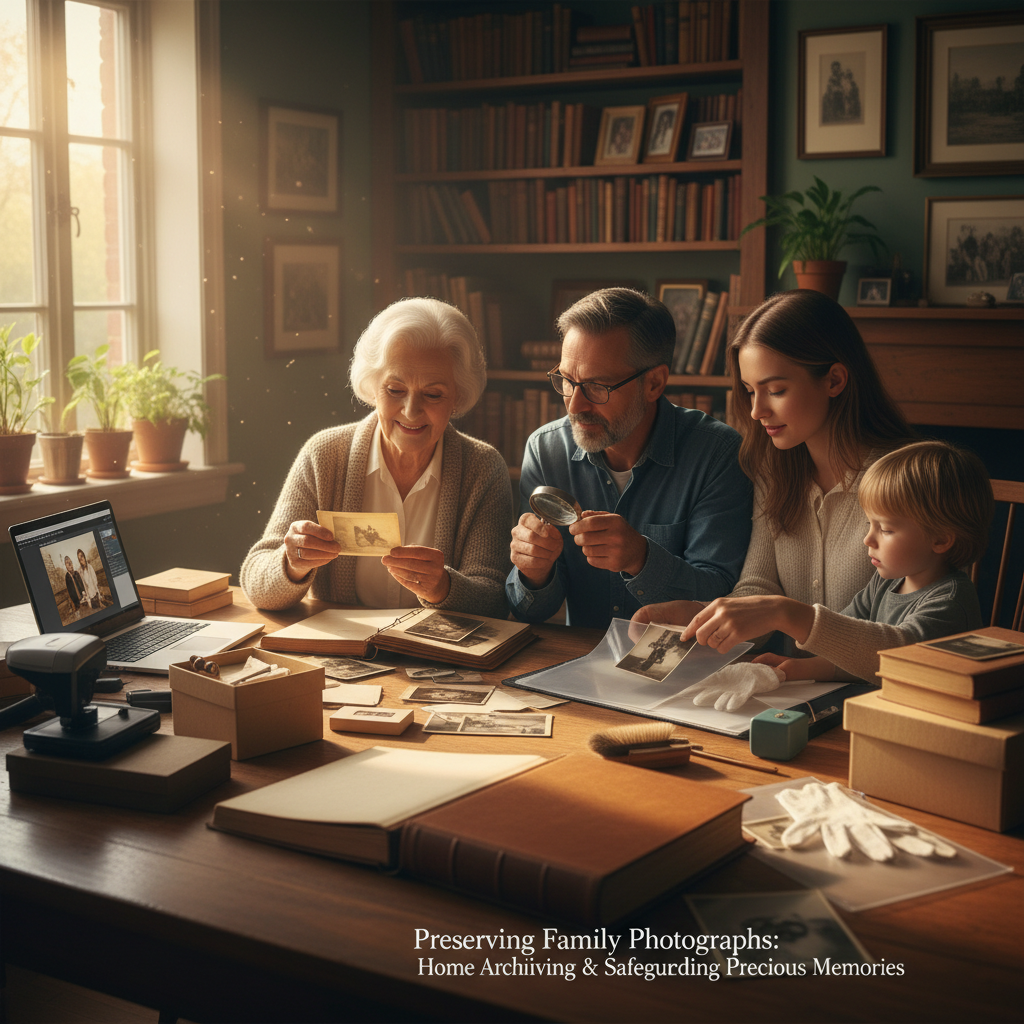
A printed memory book can contain photocopies or prints of scans, not the originals. For photographs and recipe images, retain the item ID in the caption so the page can be traced back to its source file. The Memories Around the Table reading path and the guide to preserving family photographs offer connected ideas for building a wider family archive.
Explore real recipe collections for inspiration
Public archives can show how much context a recipe can carry. The U.S. National Agricultural Library’s Carver’s Recipes for Small Farmers presents historical recipe material and provides access to full text through the exhibit. The Smithsonian’s Recipes from the Archives traces recipes found among artists’ personal papers, including diaries, notebooks, and scrapbooks. These are collection resources, not instructions to reproduce historic recipes unchanged; use them to notice how a recipe’s surrounding notes and records add meaning.
Family Recipe Memory Book: One-Recipe Archive Checklist
- Select one recipe and assign a unique item ID before scanning or transcribing it.
- Capture both sides of the recipe and any connected photograph, envelope, or notebook page.
- Preserve the original wording in a source transcription, marking uncertainty rather than guessing.
- Keep a separate, dated working version for tested clarifications or adaptations.
- Add a concise story with the contributor’s name, date, and permission to share.
- Record dietary or substitution notes as information to re-check, not a safety promise.
- Store the physical original safely and save clearly named digital files in an agreed location.
Frequently asked questions
Should I throw away a recipe card once it is scanned?
Usually, no. The original contains handwriting, paper, annotations, and other context that a scan may not capture. Keep it if you can store it safely. If it is actively deteriorating, avoid repair attempts and seek preservation advice.
What if no one knows the exact measurements?
Transcribe what is present, mark what is unknown, and make any test version separate. A recipe memory book can preserve an incomplete method honestly while allowing a current cook to develop a documented adaptation.
Can several relatives include different versions of the same dish?
Yes. Give each version its own item ID and attribution. Record the relationship between them, such as “adapted from” or “recalled by,” rather than choosing a single authoritative version.
How do I include a relative who lives far away?
Invite a photo of the recipe or dish plus a written or voice-note response to two or three specific prompts. Ask what may be shared and credit the contributor beside the entry.
Is a binder enough, or do I need to make a professionally printed book?
A binder or shared document is enough when each entry can be found, understood, and updated. A finished print book can come later; the priority is preserving the source and context while they are available.
Sources and scope
This guide combines practical family-archive workflow with basic preservation guidance from public institutions. It does not assess a particular item’s condition, certify an adaptation as safe to serve, or replace a conservator’s advice for damaged material.
- Library of Congress: Proper Care and Handling of Works on Paper
- Library of Congress: Care, Handling and Storage of Photographs
- U.S. National Archives: Preserving Family Photos
- U.S. National Agricultural Library: Carver’s Recipes for Small Farmers
- Smithsonian Archives of American Art: Studio and Culinary Artists—Recipes from the Archives
Next gentle archive action: choose one recipe today, give it an item ID, capture both sides, and write down the name of one person who can tell you what happened around that dish. That small record is a useful beginning, even before the book exists.
For cooking inspiration, browse 20 simple heritage family recipes, then record the names, occasions and permissions connected with your own recipe. If you want to explore a digital home for that material, family heritage archive options are a separate, optional next step.
Reading path
Continue this topic
Use familiar dishes, recipe notes, and shared meals to bring family stories naturally into the conversation.
Pillar guides in this path
Printable checklist
Family Recipe Memory Book: One-Recipe Archive Checklist
A gentle next step
Keep a related family story
If this topic brings a family memory to mind, you can save it at your own pace.
“Thank you for sharing this quiet moment of reading with us.”
Every piece in the MemContinuity library is preserved to spark gentle conversations, honor generational memory, and support the health and comfort of our families.
MemContinuity editorial team
MC-HERITAGE-20260927-004 · Publication archive reference
Cross-device reading sync
Sign in to your MemContinuity account to optionally sync your article reading progress across your phone, tablet, and computer.
Editorial guidance & care
Our publications are designed to be practical, gentle, and respectful. For specific medical, mobility, or travel arrangements, we recommend consulting local providers or relevant municipal services.
Continue with purpose
Part of a curated reading journey
Related publications
 Family Heritage
QR Codes on Headstones: Permissions, Privacy and Lasting Care
A practical guide to adding a QR memorial code without assuming permission, permanence, or privacy: confirm the cemetery’s rules, separate the code from the hosted archive, and make a family handover plan.
 Family Heritage
Preserve Old Family Photos: Safe Storage, Scanning and Backups
Protect old family photographs at home with safer handling, photo-safe storage, non-destructive scanning, clear metadata, and reliable backups—without risky cleaning or DIY restoration.
 Family Heritage
Record Family Stories: Consent, Interviews and a Memory Archive
A practical, consent-led guide to recording family oral histories, creating accessible transcripts, organizing a memory archive, backing it up, and writing a legacy note that is not a legal will.
Share the story
Family discussion cards
Take one card at a time. There are no right answers—only memories worth hearing.
What memory did this article bring to mind?
Who in the family might have a story or photograph to add?
What is one small thing we could save, share, or do next?
A quiet conversation can be a meaningful family keepsake.
Subscribe to MemContinuity Publications
Receive thoughtful reflections, local heritage guides, and slow travel stories delivered directly to your inbox. No spam, privacy respected.