The Heirloom Inventory: Recording the Provenance and Human Stories Behind Physical Keepsakes
A practical, consent-first guide to documenting family heirlooms: identify each object, record what is known and uncertain, preserve its story, and make the inventory useful to relatives.
A compatible device voice is not available. You can still read this article on screen.
 Family Heritage
Detailed article
Use the text-size control at the top for larger text, or switch back to Easy Read at any time.
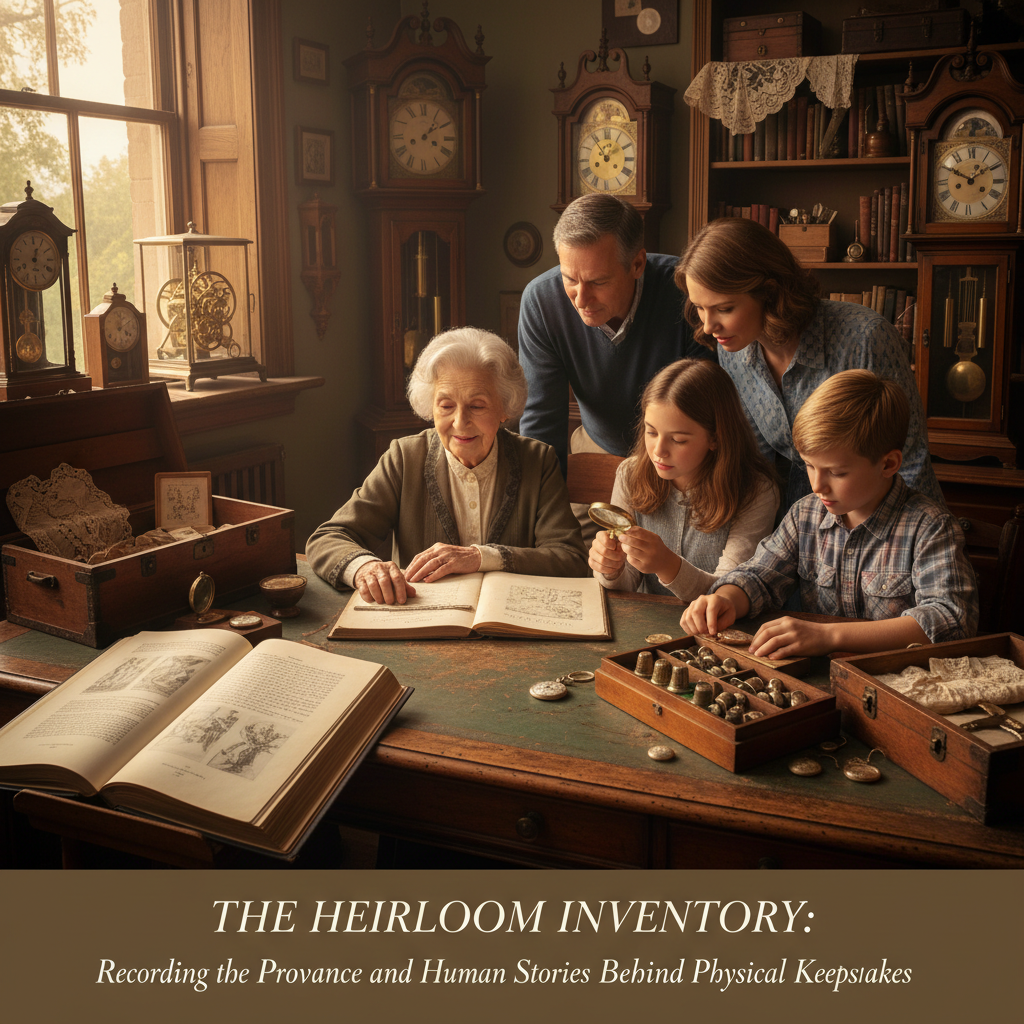
Why antique clocks, pocket watches, silver thimbles, and wooden trunks matter often has as much to do with their known history as with their age or appearance. A family heirloom inventory helps relatives identify what exists, where it is kept, who knows its story, and which details are documented rather than assumed. It need not be an appraisal or a polished family history. Begin with a simple record and add context gradually.
What an heirloom inventory can—and cannot—tell you
A basic inventory answers practical questions: what is the object, how many are there, and where can it be found? A fuller catalogue can add physical description and context, such as materials, inscriptions, previous owners, use, and how the object came into the family. The Canadian Heritage Information Network distinguishes these basic identification and location details from richer physical and contextual documentation. More detail takes time, so start with what will be useful and manageable.
An inventory is not proof of a story merely because it is written down. Keep the difference visible between an inscription you can read, a dated receipt, a relative’s recollection, and a family tradition whose source is unclear. Provenance—the known history of an object’s creation, ownership, or custody—may be incomplete. A careful note that says “possibly belonged to…” is more useful than certainty invented to fill a gap.
Start with a small, safe group
Choose a few objects that relatives can readily identify, rather than emptying cupboards or moving heavy furniture. Ask household members before handling or photographing belongings, especially when an object is personally meaningful or privately owned. If someone would rather not discuss an item, leave it out. There is no need to turn the exercise into a test of anyone’s memory.
Make a temporary list first. Give each item a simple identifier, such as H-001, and record its usual location. Keep the identifier in the written record or image filename; do not attach adhesive labels, write on, polish, open, or dismantle the object just to catalogue it. If it seems fragile, unstable, unusually heavy, or potentially hazardous, document it in place and seek appropriate conservation advice before moving it.
A useful record, one field at a time
For each object, create a page or digital entry with these fields:
- Identifier and familiar name: “H-001, brass mantel clock” is clearer than “Grandad’s clock” alone. Include family names or nicknames as additional labels.
- Description: Note visible materials, colour, shape, dimensions if easy and safe to measure, distinctive marks, and any readable inscription. Describe what you observe; do not identify a maker or date unless you have evidence.
- Location and count: Record where the item is normally kept and whether the entry covers one object or a set. This makes the inventory useful during a move or when relatives need to locate something.
- Ownership and custody: List known people and approximate dates, distinguishing ownership from temporary possession, such as a loan or time in someone else’s care. Use “unknown” where necessary.
- Story and source: Write the story in the speaker’s own words when they wish, then note who shared it, when it was recorded, and whether it is a personal recollection, a document, or family hearsay. Ask permission before recording or sharing sensitive details.
- Evidence and open questions: List supporting items such as a dated receipt, letter, photograph, maker’s mark, or inscription. Note what each source actually supports. Keep unanswered questions in a separate line rather than resolving them by guesswork.
- Photographs and care notes: If permitted, take a clear overall image and close-ups of marks without moving the object unnecessarily. Record any visible damage or handling concern factually. A photograph can aid identification, but it does not replace the object or establish its history.
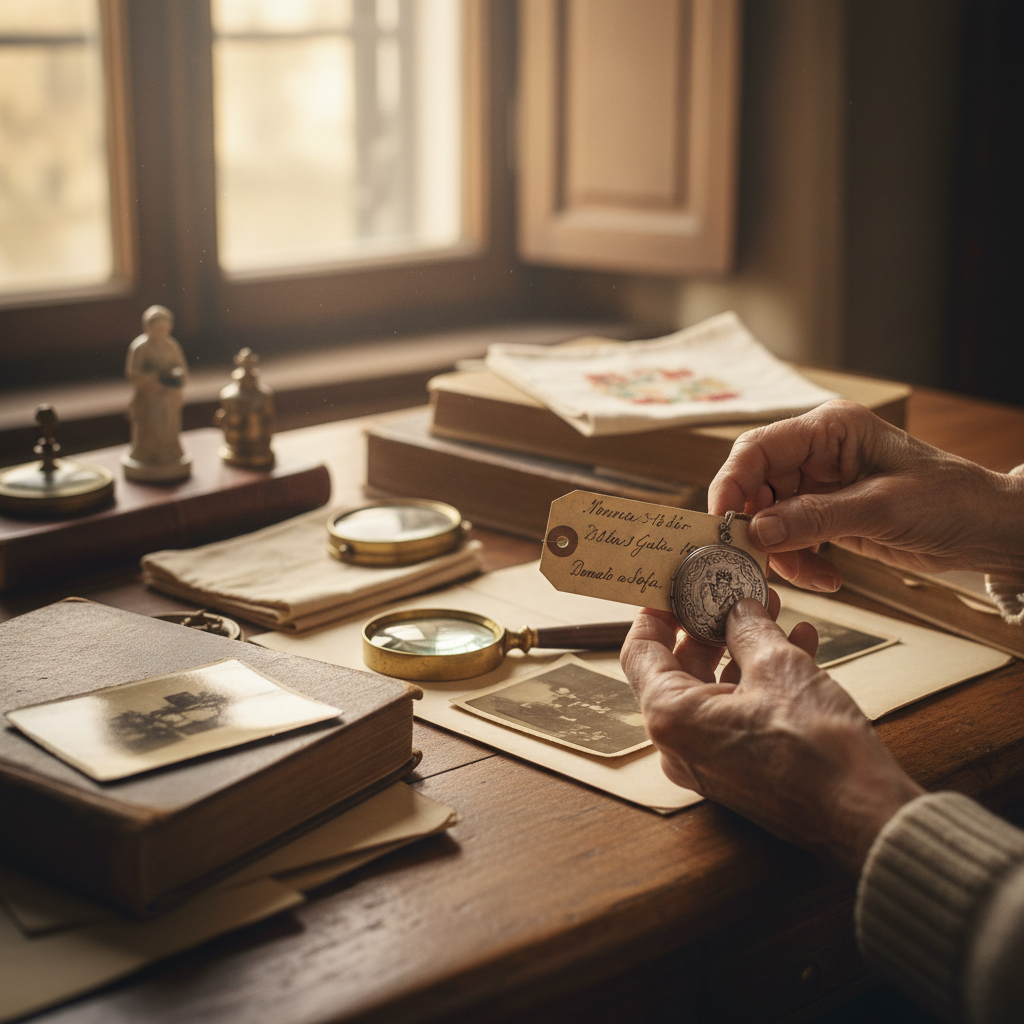
For instance, a pocket watch entry might say: “H-004; silver-coloured case; initials ‘A.B.’ inside cover; found in the desk drawer; family recollection says it belonged to an aunt, but the name and dates are unconfirmed.” If a dated repair receipt later names the owner, add its details and where the receipt is stored. Avoid treating the initials alone as proof of identity.
Ask questions that leave room for uncertainty
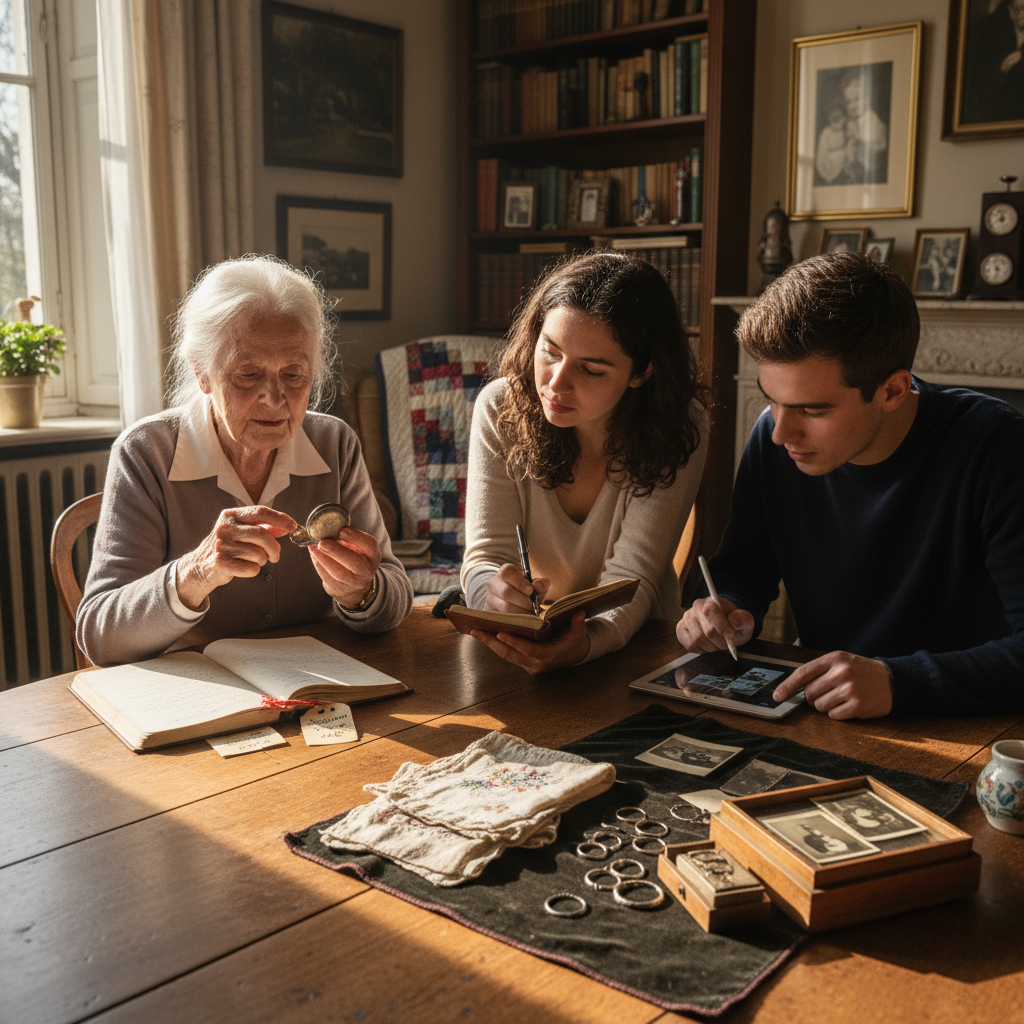
A calm conversation can add context that the object itself cannot supply. Try open questions: “What do you remember about seeing this?” “Who told you that?” “Was it used, displayed, or kept away?” “Is there a document or photograph that might help us check?” A person may remember the object but not its dates, or may have heard the story from someone else. Record that distinction kindly.
Invite corrections later. Two relatives may remember different owners or events; preserve both accounts with their sources rather than forcing agreement. If a story involves grief, conflict, adoption, migration, or another sensitive subject, let the person choose what belongs in the shared inventory. A private note can remain private, or the detail can be omitted entirely.
Make the inventory findable and maintainable
Use a format relatives can open: a paper binder, a spreadsheet, or a folder of text records and images. Keep identifiers consistent between records and filenames. Store a copy separately from the objects, and tell an appropriate trusted person where it is. If the inventory includes addresses, private family details, or valuable possessions, limit access; do not post it publicly by default. For digital copies, make a backup and periodically check that files still open.
Preserve the source material too. Note whether a receipt is in a named envelope, a family letter is held by a particular relative, or a photograph is available in a digital folder. Do not write on original documents or attach them to an object. A small note such as “receipt photographed; original kept with household papers” helps future readers understand how a claim could be checked.
Keep care advice modest. Different materials can need different conditions, and one generic instruction will not suit every clock, textile, metal object, or wooden chest. Avoid cleaning, applying polish, or making repairs as part of inventory work. The Canadian Conservation Institute publishes material-specific care and handling notes; consult relevant guidance or a conservator before attempting treatment.
A simple first-session checklist
Set aside a short, unhurried time and choose no more than a few manageable items. Ask permission, assign each a number, write down a plain description and location, and add one story only if someone wants to share it. Mark which details are directly observed and which came from memory or documents. Photograph only with permission and without disturbing fragile objects. Finish by saving the record somewhere relatives can find it, then invite them to correct or add information later.
The purpose is not to make every object historically important or to produce a definitive family account. It is to leave a more honest trail: what the family has, what it knows, where that knowledge came from, and what remains uncertain. Even a modest record can help a keepsake—and the memories people choose to share about it—be understood with care.
Sources and Further Reading
Reading path
Continue this topic
Practical, unhurried steps for looking after photographs, letters, and treasured objects without feeling overwhelmed.
Pillar guides in this path
A gentle next step
Keep a related family story
If this topic brings a family memory to mind, you can save it at your own pace.
“Thank you for sharing this quiet moment of reading with us.”
Every piece in the MemContinuity library is preserved to spark gentle conversations, honor generational memory, and support the health and comfort of our families.
MemContinuity editorial team
MC-HERITAGE-20260526-018 · Publication archive reference
Cross-device reading sync
Sign in to your MemContinuity account to optionally sync your article reading progress across your phone, tablet, and computer.
Themes & topics
Editorial guidance & care
Our publications are designed to be practical, gentle, and respectful. For specific medical, mobility, or travel arrangements, we recommend consulting local providers or relevant municipal services.
Continue with purpose
Part of a curated reading journey
Related publications
 Family Heritage
Thread of Time: Archival Storage of Embroidered Tablecloths, Lace, and Baptismal Gowns
How acid-free tissue wrapping and darkness prevent fabric brittleness and yellowing in multi-generational handiwork.
 Family Heritage
Preserve Old Family Photos: Safe Storage, Scanning and Backups
Protect old family photographs at home with safer handling, photo-safe storage, non-destructive scanning, clear metadata, and reliable backups—without risky cleaning or DIY restoration.
 Family Heritage
Family Heirloom Quilts and Textile Memories
How stitched fabric remnants—from wedding dresses to school frocks—carry tangible biographies across four generations.
Share the story
Family discussion cards
Take one card at a time. There are no right answers—only memories worth hearing.
What memory did this article bring to mind?
Who in the family might have a story or photograph to add?
What is one small thing we could save, share, or do next?
A quiet conversation can be a meaningful family keepsake.
Subscribe to MemContinuity Publications
Receive thoughtful reflections, local heritage guides, and slow travel stories delivered directly to your inbox. No spam, privacy respected.