Thread of Time: Archival Storage of Embroidered Tablecloths, Lace, and Baptismal Gowns
A practical, conservation-led guide to handling and storing embroidered linens, lace, and baptismal gowns while reducing risks from light, unsuitable storage, and unnecessary cleaning.
A compatible device voice is not available. You can still read this article on screen.
 Family Heritage
Detailed article
Use the text-size control at the top for larger text, or switch back to Easy Read at any time.
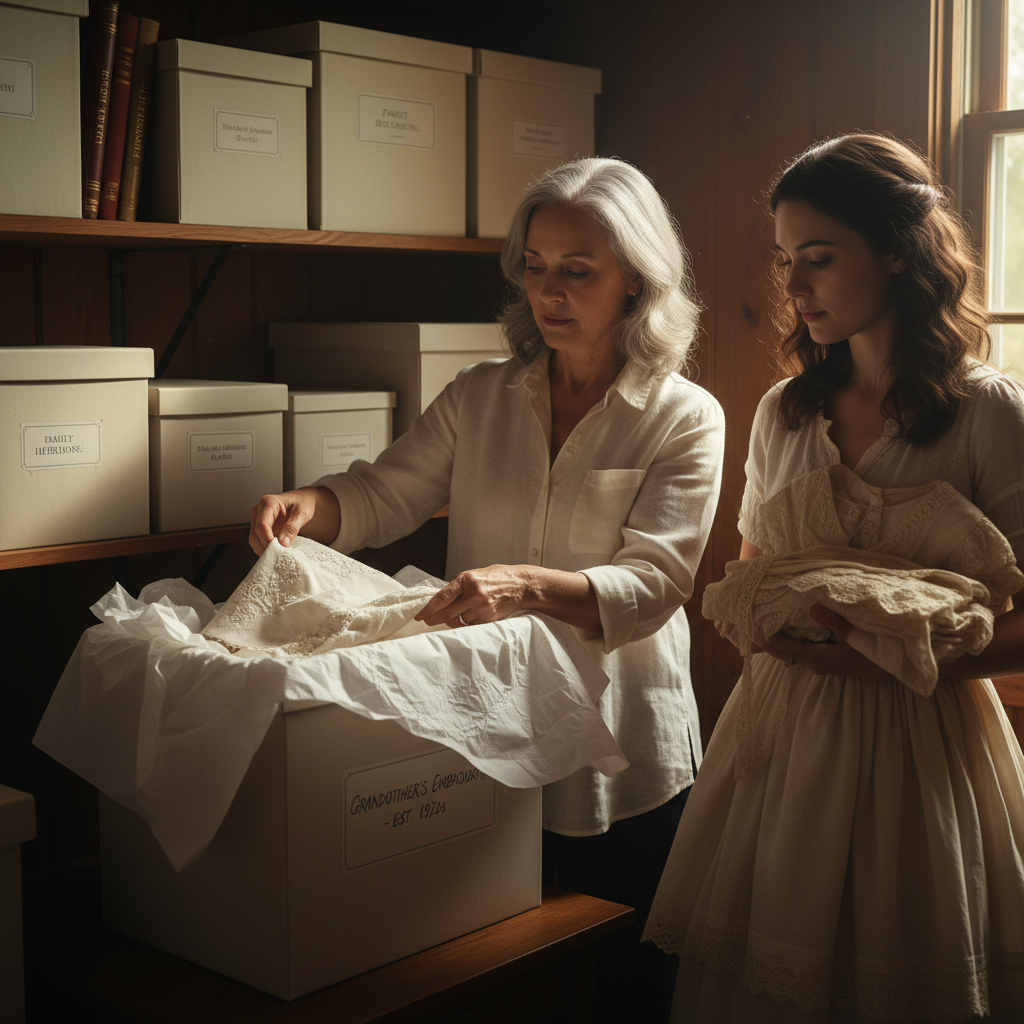
How acid-free tissue wrapping and darkness help reduce avoidable damage to family textiles.
Why careful storage matters
An embroidered tablecloth, a length of lace, or a baptismal gown may carry family meaning as well as delicate stitching. Age alone does not tell you how strong a textile is. Fibres, thread, dyes, previous wear, repairs, and decorative details all affect how it responds to handling. Seams can be weaker than they look, and lace or embroidery may catch on a ring or rough surface.
Good home care is less about elaborate equipment than about reducing stress: keep treasured pieces away from light, dust, damp, and frequent handling; support them fully when they must be moved; and avoid treating an old textile like an ordinary washable garment. The National Archives notes that light can fade colour and weaken fibres, while damp storage can encourage mold and insects. These protections reduce risks; they cannot reverse existing damage or guarantee an heirloom will remain unchanged.
Choose a safe place before choosing a box
Select a clean, dry, dark part of the home where conditions are reasonably steady and the textile is easy to reach for occasional inspection. A bedroom cupboard or interior closet may work better than a hot attic, a damp basement, a garage, or a spot near a leaking pipe. Avoid direct sunlight and do not leave the box beside a radiator or air vent. If a room smells musty or has recurring moisture, choose another location.
Darkness matters because light exposure is cumulative. Sunlight and indoor lighting can fade dyes; prolonged exposure can also weaken fibres. Store textiles covered when they are not being viewed. If you display a piece, limit the period and keep it away from direct sun, then return it to protected storage. Rotating a textile does not undo fading already caused by exposure.
Prepare the textile and workspace
Before opening a box, clear a clean surface and have the storage materials ready. Wash and dry your hands, remove jewelry that might snag, and keep drinks, food, and pets away. Handle the textile only when needed. For a large tablecloth or gown, ask another person to help rather than lifting one edge and allowing the rest to hang.
Move the item on a clean support, such as a large piece of acid-free board or a clean, smooth sheet. Support the whole object rather than pulling at sleeves, lace edges, embroidery, or seams. If the fabric catches, feels unusually stiff, sheds fibres, or seems to strain as it unfolds, stop. Do not force creases flat. A conservator can advise how to handle a weak textile.
Select storage that supports the object
A shallow archival box or a clean drawer can protect a small or medium flat textile from dust, light, and unnecessary movement. Use acid-free tissue as a clean interleaving and cushioning layer, not as a chemical treatment. Choose a box large enough to avoid tight folds; do not cram it with unrelated objects. Keep metal accessories and materials that could stain or snag away from the textile. If an archival box is not available, a clean, light-coloured cotton sheet can provide a temporary dust cover.
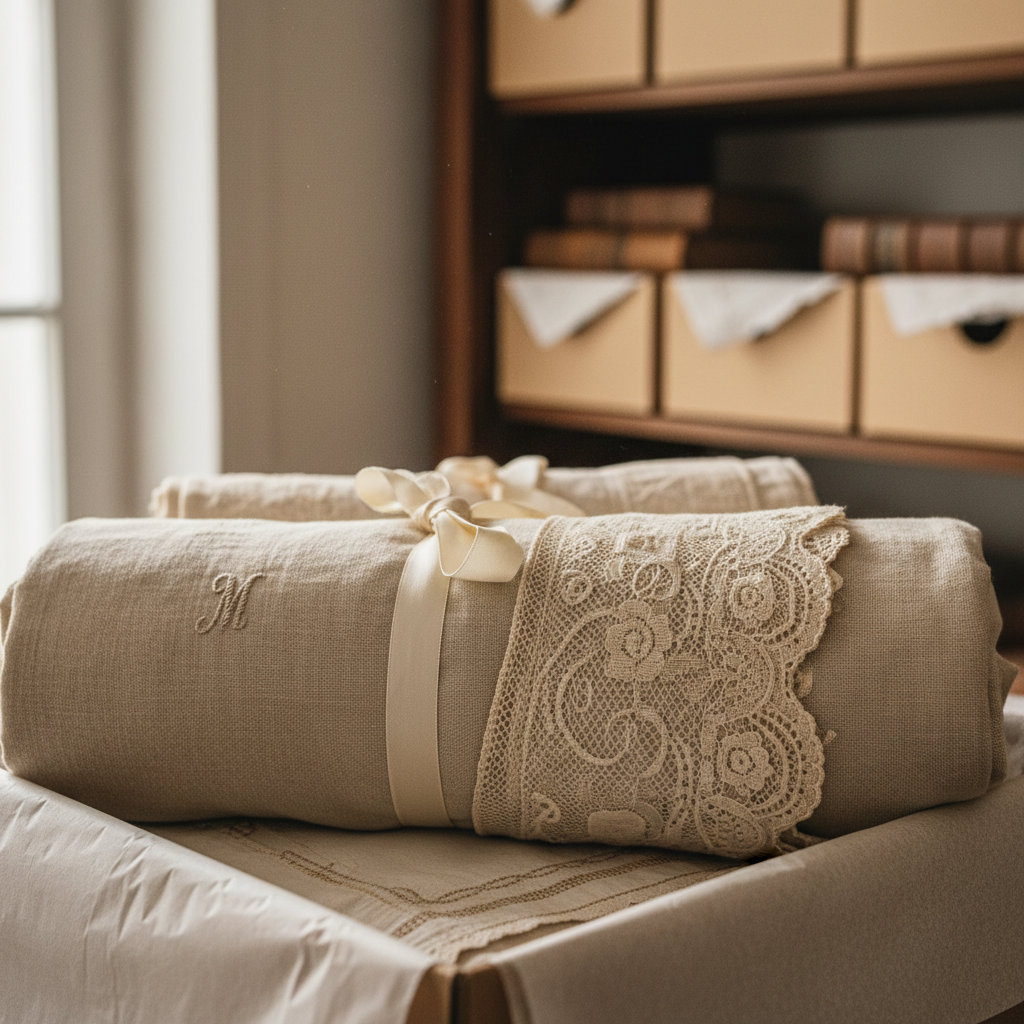
For a tablecloth or lace panel, lay the item as flat as space allows. If a fold is unavoidable, place a loose roll or soft pad of acid-free tissue inside it so the fabric turns gradually rather than forming a sharp crease. Interleave folds so embroidered areas do not rub against one another. Do not press the textile down to make the lid fit or stack heavy objects on top. The Canadian Conservation Institute recommends as few folds as possible and cushioning folds to prevent tight creases.
A baptismal gown often has sleeves, a bodice, trims, and lace that can be strained by hanging. For long-term storage, a suitably sized box with gentle tissue padding in sleeves and folds is often sensible, especially if the garment is old, heavy, fragile, or decorated. A sound, stable garment may be supported on an appropriately padded hanger in some circumstances, but the right method depends on its cut and condition. If shoulders, seams, or embellishments look weak, choose flat support and ask a textile conservator before hanging it.
Cleaning, stains, and repairs: pause before acting
Resist the instinct to wash, bleach, iron, or dry-clean an heirloom because it looks yellowed or has a stain. Water, detergent, agitation, heat, and commercial cleaning can affect fragile fibres, cause dyes to run, or alter old repairs. The National Archives advises caution with antique or valuable textiles and those in poor condition. A stain may be part of the object’s history, and removing it can cause more harm than leaving it undisturbed.
Do not pull loose threads through the fabric, trim them, apply adhesive, or sew over a weak area. Keep detached fragments with the object in a small labelled enclosure, without taping them to the textile. If cleaning, repair, or display is important, consult a textile conservator first. They can assess the materials and explain options before treatment.
Inspect gently and keep a simple record
Check storage periodically, perhaps when the season changes or when you retrieve the piece. Look for new holes, loose fragments, dampness, musty odour, insect webbing, or fresh staining. Inspection need not mean repeatedly unfolding the whole item: examine accessible surfaces and the storage area, and handle it only for a reason. If you notice active mold, widespread insect activity, or a sudden change in condition, isolate the closed box from other textiles if you can do so without disturbing the affected piece, and seek professional advice. Do not brush, vacuum, spray, or wash a fragile textile as a first response.
A brief note kept with the box can make future care easier. Record a description, approximate dimensions, storage location, and known condition concerns. Use pencil on a separate label attached to the box rather than writing on the fabric. Keep family stories separate from assumptions about age or maker; note uncertainty plainly.
Keep preservation personal and manageable
There is no need to make every heirloom into a display or a demanding project. A protected box, a clear label, and an occasional gentle inspection can be a useful start. If relatives want to see or discuss a textile, let the owner decide whether to bring it out; passing it around is optional. A photograph or description can invite conversation without putting a fragile object at risk.
The most reliable approach is modest: limit light, choose a dry storage place, cushion unavoidable folds, and pause before cleaning or repairing. If the textile is fragile or its condition is uncertain, professional conservation advice is safer than experimenting.
Sources and Further Reading
Reading path
Continue this topic
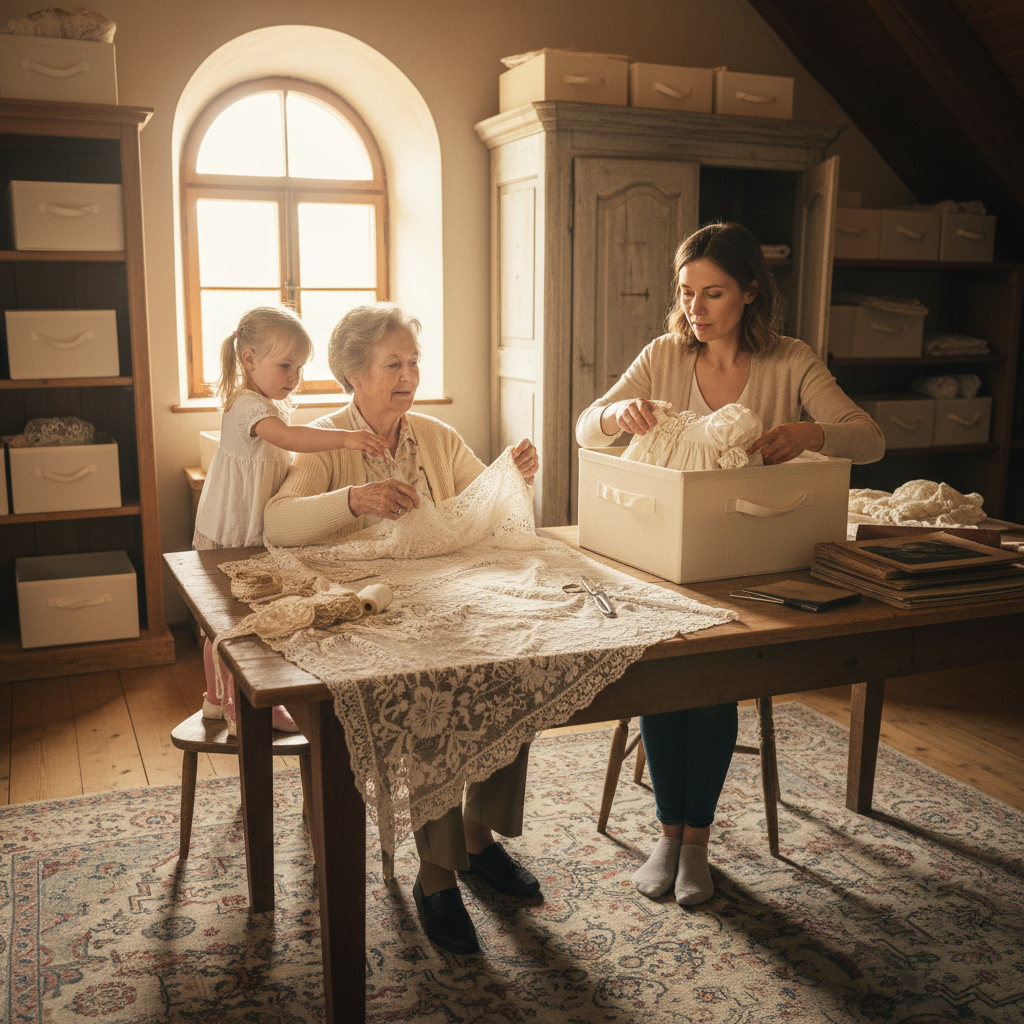
Practical, unhurried steps for looking after photographs, letters, and treasured objects without feeling overwhelmed.
Pillar guides in this path
A gentle next step
Keep a related family story
If this topic brings a family memory to mind, you can save it at your own pace.
“Thank you for sharing this quiet moment of reading with us.”
Every piece in the MemContinuity library is preserved to spark gentle conversations, honor generational memory, and support the health and comfort of our families.
MemContinuity editorial team
MC-HERITAGE-20260516-028 · Publication archive reference
Cross-device reading sync
Sign in to your MemContinuity account to optionally sync your article reading progress across your phone, tablet, and computer.
Themes & topics
Editorial guidance & care
Our publications are designed to be practical, gentle, and respectful. For specific medical, mobility, or travel arrangements, we recommend consulting local providers or relevant municipal services.
Related publications
 Family Heritage
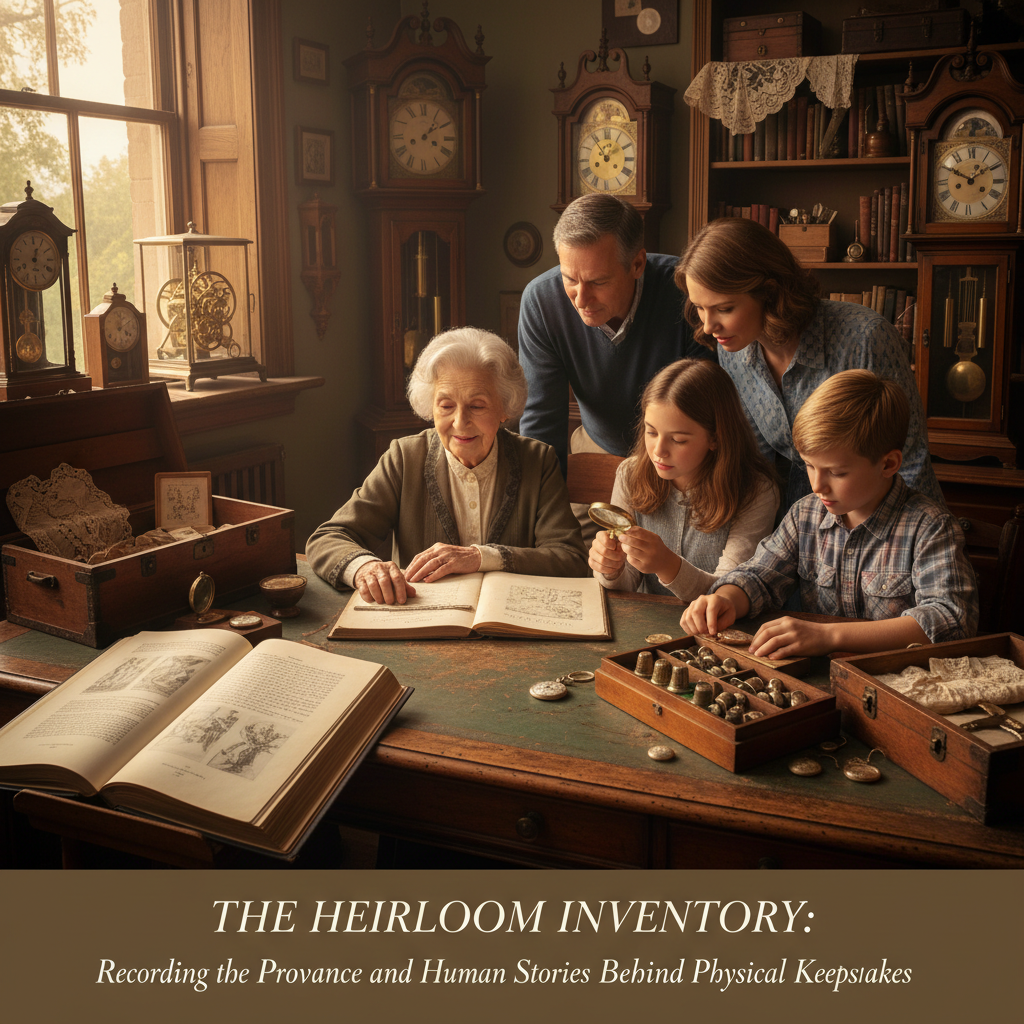
The Heirloom Inventory: Recording the Provenance and Human Stories Behind Physical Keepsakes
Why antique clocks, pocket watches, silver thimbles, and wooden trunks lose their value without written family provenance.
 Family Heritage
Preserve Old Family Photos: Safe Storage, Scanning and Backups
Protect old family photographs at home with safer handling, photo-safe storage, non-destructive scanning, clear metadata, and reliable backups—without risky cleaning or DIY restoration.
 Family Heritage
Family Heirloom Quilts and Textile Memories
How stitched fabric remnants—from wedding dresses to school frocks—carry tangible biographies across four generations.
Share the story
Family discussion cards
Take one card at a time. There are no right answers—only memories worth hearing.
What memory did this article bring to mind?
Who in the family might have a story or photograph to add?
What is one small thing we could save, share, or do next?
A quiet conversation can be a meaningful family keepsake.
Subscribe to MemContinuity Publications
Receive thoughtful reflections, local heritage guides, and slow travel stories delivered directly to your inbox. No spam, privacy respected.