Family Heirloom Quilts and Textile Memories
A thoughtful guide to sharing quilt and textile memories, documenting family stories, and caring for heirlooms without putting fragile fabric at risk.
A compatible device voice is not available. You can still read this article on screen.
 Family Heritage
Detailed article
Use the text-size control at the top for larger text, or switch back to Easy Read at any time.
A textile can invite a story
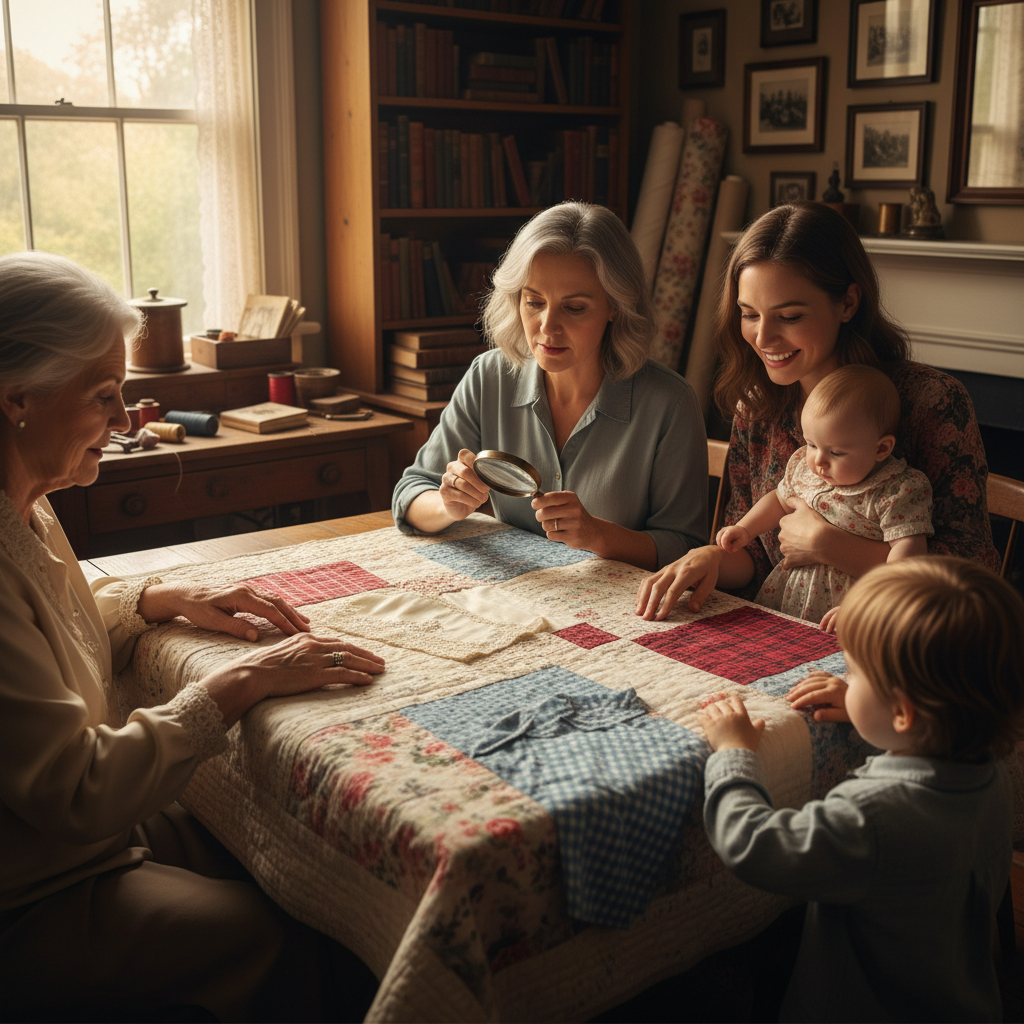
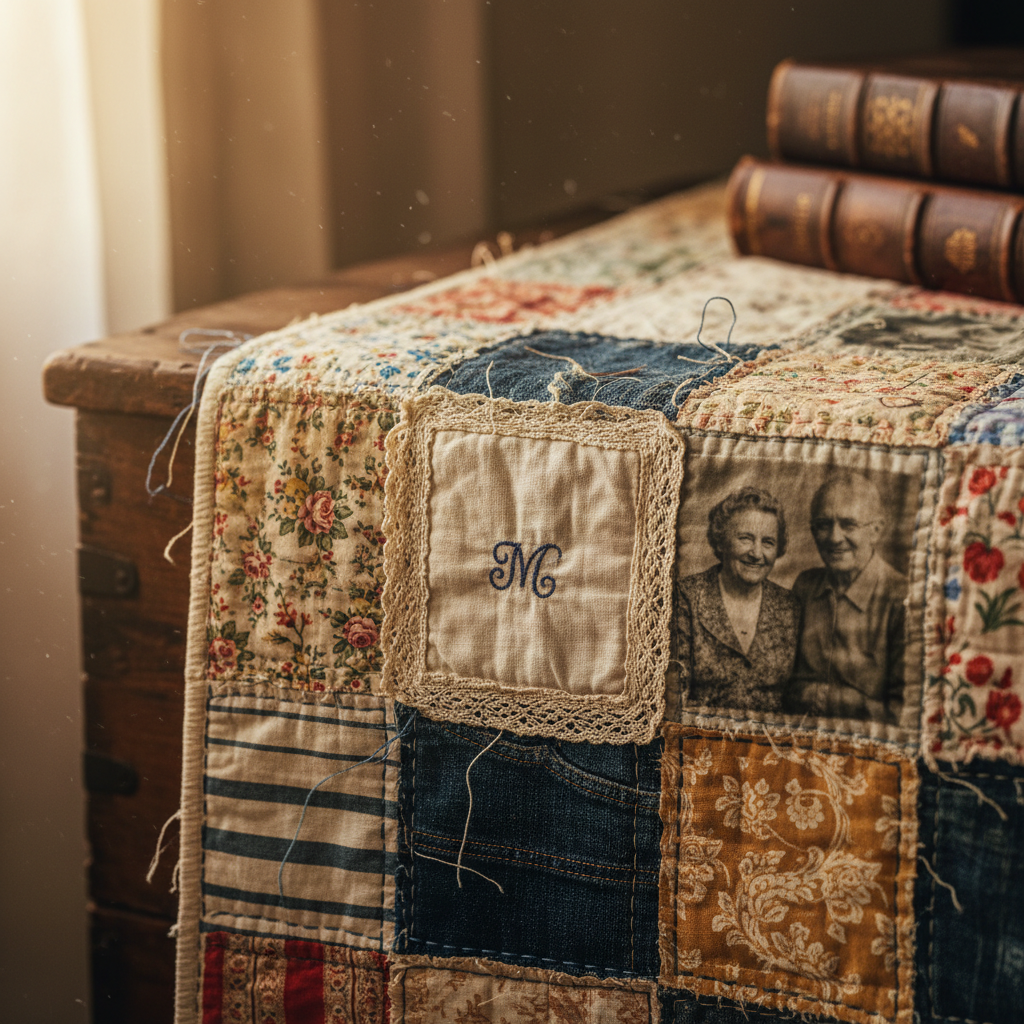
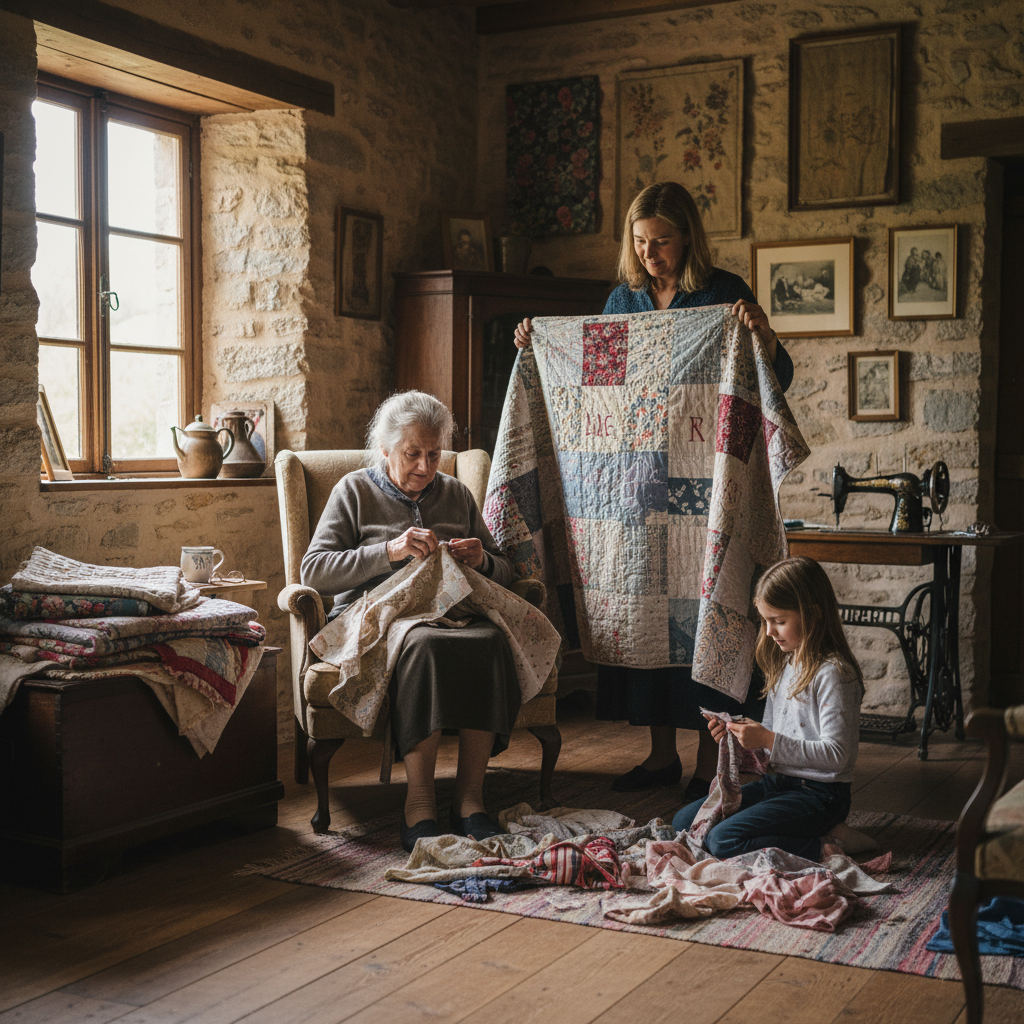
A family quilt, embroidered cloth, or small piece of a wedding dress can make history tangible. Its pattern and wear may prompt questions: Who chose these colours? Was this used every day or saved for a special occasion? What does the family know, and what remains uncertain? The object can be a starting point for conversation without requiring anyone to remember a particular event or disclose something private.
Sharing a textile is not a test of memory. One relative may recognize a fabric, another may enjoy its colours, and someone else may prefer to listen. A quiet gathering around a quilt can make room for different kinds of participation. The value lies in attending to the object and one another, not in proving a health benefit or producing a perfect family history.
Textiles are also vulnerable objects. Museums note that light, humidity, heat, pests, pollutants, and handling can contribute to deterioration. Preventive care can slow damage but cannot make an old quilt permanent. The International Quilt Museum’s care guidance and the Canadian Conservation Institute’s overview of textiles and costumes are useful references when deciding how to share or store a family piece.
Plan a relaxed, accessible gathering
Choose a comfortable room with enough clear space for people to sit and see the textile. Good, even room lighting helps people view details, but do not place a fragile heirloom in strong sunlight for a better look. A table covered with a clean, plain sheet can provide a visual background if the object is robust enough to be moved and laid down. When its condition is uncertain, keep it where it is and invite everyone to look rather than handle it.
Let the owner or custodian decide what to bring and who may touch it. Ask before lifting, unfolding, photographing, or passing a textile around. A quilt may appear sturdy while weakened seams, thin patches, loose threads, or past repairs remain hidden. If several people want a closer view, the person responsible for the item can reposition it, or show photographs instead. Avoid pinning, clipping, taping, or using the textile as a table covering during refreshments. Keep drinks and food on a separate surface.
A gathering can be brief or unhurried according to the participants. Offer a choice of seats and make it easy to take a break or leave. No one needs to sew, tell a story, or stay for the whole visit. A person can point to a motif, describe a colour, share a question, or simply enjoy the company. If the group includes children, explain that looking carefully is a meaningful way to take part; touching should happen only with the keeper’s clear permission and suitable support.
Ask questions that leave room for uncertainty
Start with what can be observed: Is the pattern repeated? Are the pieces similar in size? Is there a label, name, or date? Then ask open questions that do not assume an answer: “What do you remember about seeing this?” or “Does anyone know who may have made it?” A relative might recall a story, but recollections can differ. Record them as individual memories rather than silently combining them into a single certain account.
Useful notes distinguish what is visible from what has been reported. For example: “Blue-and-cream quilt with a hand-sewn label; Aunt May remembered it on the spare bed; maker and date not confirmed.” If a story has more than one version, preserve both with the names of the people who shared them, if they agree. Leaving a question open is more honest than filling a gap with a plausible guess.
A simple record can include the object’s current name, approximate dimensions if known, materials only when reliably identified, who owns or cares for it, where it is usually kept, and the date of the conversation. Note any visible damage without trying to diagnose its cause. Keep this information with a photograph or in a separate catalogue entry, rather than writing on the textile or attaching a label with adhesive. The Canadian Conservation Institute’s textile-care resources explain why materials, construction, and condition affect appropriate handling and storage.
Make a memory record with consent
A notebook is often enough. If relatives want an audio recording, ask each person plainly and explain where the file will be kept and who may hear it. Recording should be optional. Someone may agree to be recorded but not to have the file shared more widely; ask separately about sharing, naming people, or publishing excerpts. Respect a request to pause or delete a recording. For a written account, offer to let the speaker review it, correct a detail, or leave out a sensitive passage.
Photographs can document patterns, labels, and the textile’s present condition, but avoid flash or prolonged bright lighting around a fragile object. Photograph the item supported and still rather than holding it up by a corner. Include a neutral scale only if it can be placed nearby without contact. Save the date and a brief description with the image so the photograph does not become detached from its context. Ask permission before sharing photos outside the family, especially if they include people, identifying details, or a private story.
Everyday preventive care
Store an heirloom in a clean, relatively stable part of the home rather than an attic or basement that may experience larger temperature or moisture changes. Avoid direct sunlight and prolonged display under bright light: light damage accumulates and cannot be reversed. Keep storage areas tidy and inspect them occasionally for signs of insects or damp. The International Quilt Museum notes that mothballs can be harmful to people and should be avoided; a clean storage area and periodic inspection are safer preventive habits.
Do not put a textile directly against ordinary cardboard or bare wood. Museum guidance recommends a protective layer such as clean cotton sheeting or suitable archival tissue between the object and storage surfaces. If folding is unavoidable, cushion the folds with soft, clean support to reduce sharp creases, and refold from time to time if this can be done safely. A large, heavy quilt may need broad support when moved; do not lift it by one edge or let its weight hang from a weak section.
Avoid washing, spot-cleaning, ironing, applying stain removers, or attempting repairs on a historic or fragile textile without professional advice. Colours may run, fibers may weaken, and water or abrasion can cause damage. The International Quilt Museum generally advises against washing quilts and recommends consulting a textile conservator; Winterthur Museum likewise cautions that wet cleaning requires careful testing. Dust removal also depends on condition: do not vacuum a brittle, beaded, fraying, or otherwise unstable piece as a routine household task. When uncertain, leave it undisturbed and ask a qualified textile conservator for guidance.
When professional advice is worthwhile
Seek a textile conservator’s advice before cleaning, repairing, framing, hanging, or transporting an object that is brittle, torn, shedding fibers, heavily stained, mouldy, or decorated with loose beads or metallic threads. A conservator can assess the actual materials and condition; general online instructions cannot determine what a particular heirloom can safely tolerate. If you notice a new pest problem or dampness, separate the textile from other stored items if that can be done without handling risk, and seek appropriate conservation advice rather than applying chemicals or heat.
Let the object keep its questions
At the end of a gathering, return the textile to its usual safe place with the keeper’s permission. Save the notes and images in a way the family can find, and label uncertainty honestly. A remembered name, a pattern no one can identify, or a story that ends with “we are not sure” can all belong in the record. The aim is not to make a fabric carry more certainty than the evidence allows. It is to share attention, care for the object, and leave future generations a truthful account of what the family has seen and remembered.
Sources and Further Reading
Reading path
Continue this topic
A gentle four-part start for recording voices, memories, and the stories that make a family feel like home.
Pillar guides in this path
A gentle next step
Keep a related family story
If this topic brings a family memory to mind, you can save it at your own pace.
“Thank you for sharing this quiet moment of reading with us.”
Every piece in the MemContinuity library is preserved to spark gentle conversations, honor generational memory, and support the health and comfort of our families.
MemContinuity editorial team
MC-HERITAGE-20260906-025 · Publication archive reference
Cross-device reading sync
Sign in to your MemContinuity account to optionally sync your article reading progress across your phone, tablet, and computer.
Themes & topics
Editorial guidance & care
Our publications are designed to be practical, gentle, and respectful. For specific medical, mobility, or travel arrangements, we recommend consulting local providers or relevant municipal services.
Related publications
 Family Heritage
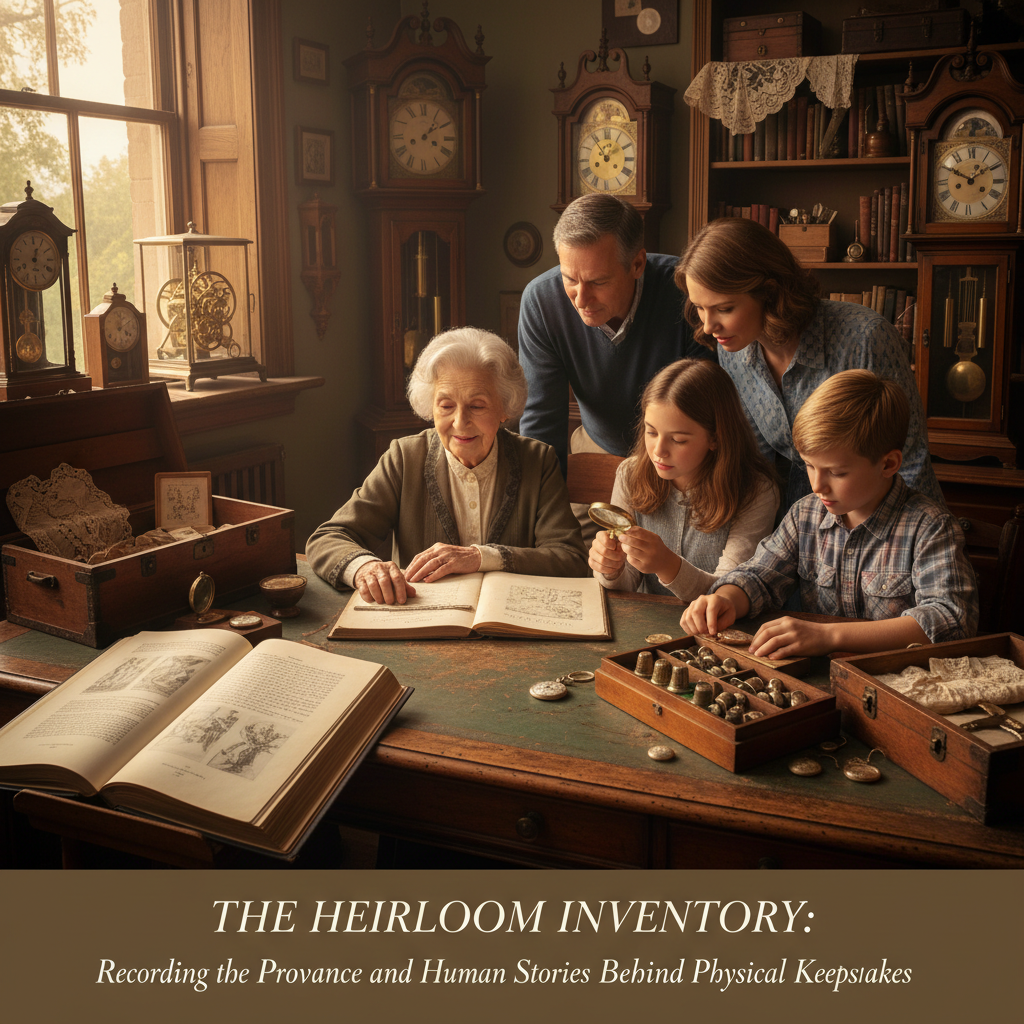
The Heirloom Inventory: Recording the Provenance and Human Stories Behind Physical Keepsakes
Why antique clocks, pocket watches, silver thimbles, and wooden trunks lose their value without written family provenance.
 Family Heritage
Thread of Time: Archival Storage of Embroidered Tablecloths, Lace, and Baptismal Gowns
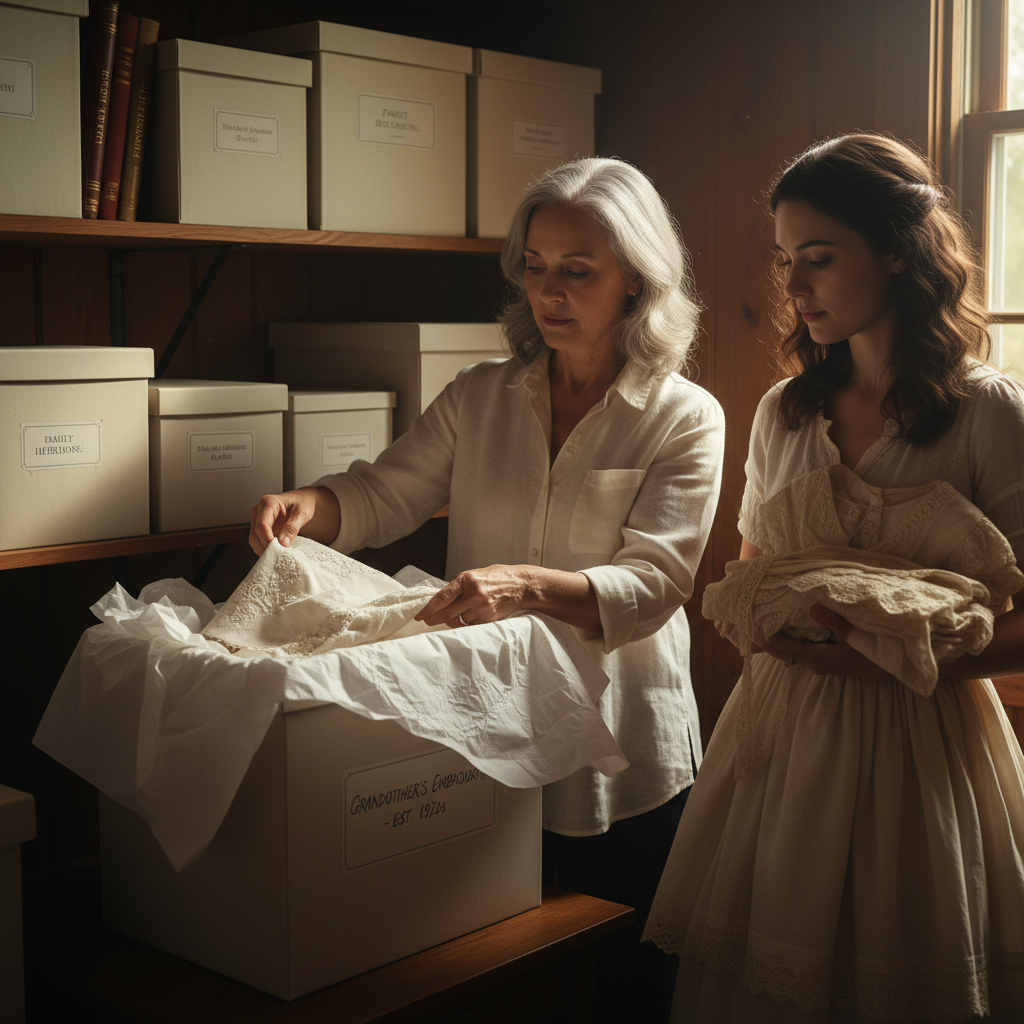
How acid-free tissue wrapping and darkness prevent fabric brittleness and yellowing in multi-generational handiwork.
 Family Heritage
QR Codes on Headstones: Permissions, Privacy and Lasting Care
A practical guide to adding a QR memorial code without assuming permission, permanence, or privacy: confirm the cemetery’s rules, separate the code from the hosted archive, and make a family handover plan.
Share the story
Family discussion cards
Take one card at a time. There are no right answers—only memories worth hearing.
What memory did this article bring to mind?
Who in the family might have a story or photograph to add?
What is one small thing we could save, share, or do next?
A quiet conversation can be a meaningful family keepsake.
Subscribe to MemContinuity Publications
Receive thoughtful reflections, local heritage guides, and slow travel stories delivered directly to your inbox. No spam, privacy respected.