Preserving Oral Dialects and Ancestral Proverbs
A practical, respectful guide to recording family expressions, dialect words, and proverbs while keeping their meanings, speakers’ choices, and living contexts attached.
A compatible device voice is not available. You can still read this article on screen.
 Family Heritage
Detailed article
Use the text-size control at the top for larger text, or switch back to Easy Read at any time.
The living rhythm of spoken heritage
A familiar saying can hold more than its literal meaning. It may carry a joke, a warning, a rhythm of speech, or a memory of the person who used it. Dialect words and family expressions can likewise point to a place, a trade, a relationship, or a way of seeing the world. UNESCO includes oral traditions such as proverbs among forms through which people pass on knowledge, social values, and collective memory. These expressions are not simply relics to collect: they continue to change as people use and reinterpret them.
Preserving this heritage can begin at home with one phrase and one willing speaker. The goal is not to prove that one version is the only correct one, nor to test anyone’s memory. It is to notice how an expression is used, record what the speaker wants remembered, and make a careful choice about who may hear or read it. A notebook may be enough for a family keepsake; a recording can preserve pronunciation, timing, and tone that spelling alone cannot show.
Start with a phrase and its setting
Choose something specific: a proverb heard at mealtimes, a local word for an everyday object, a greeting used between relatives, or a phrase that belongs to a particular family. Ask the speaker what they would like to share rather than arriving with a list of supposed “old” sayings. They may prefer to tell a story, explain a word, or simply enjoy recalling how someone spoke. Listening without correction matters. A phrase may have several forms, and people may remember it differently.
Context helps a future reader understand what a bare sentence cannot. Note who used it, if the speaker is comfortable naming them; where and when it was usually said; what situation prompted it; and whether it was affectionate, teasing, solemn, or practical. Ask whether the speaker knows where they learned it, while making clear that “I don’t know” is a complete answer. Do not turn a family recollection into a claim about the origin of a whole region’s language without reliable evidence.
Write a proverb as the speaker gives it and add their explanation. Ask how they want unfamiliar words spelled, and mark uncertainty rather than standardizing. If relatives offer different versions, keep both with their sources and contexts; variation is not necessarily an error.
Invite a conversation, not a performance
Before taking notes or pressing record, explain why you are collecting the phrase and where the notes or audio might go. Ask permission in a way that leaves room for a no, a pause, or a change of mind. Agree on whether the material is for private family use, sharing with named relatives, or broader publication. A person may agree to talk but not to be recorded, or may allow a recording while asking that a particular passage remain private. Respect those distinctions.
Try open prompts: “What does that saying mean to you?” or “When might someone use it?” Ask one question at a time, allow quiet thinking, and let the speaker skip any topic. Avoid correcting pronunciation or asking for a performance that fits your idea of a dialect. Smithsonian guidance likewise stresses explaining the project, respecting choices, listening, and avoiding fatigue. A short conversation is enough.
For a recording, choose a quiet place and test the device first. Put the phone or recorder close enough to hear clearly, without making it feel intrusive. Record a brief introduction stating the date, participants’ preferred names, place if appropriate, and purpose, but do not include sensitive details without permission. Listen to a short test together if the speaker wishes. If the room is noisy or the speaker is uncomfortable, take notes instead. A clear written record made with care is better than a recording that violates someone’s wishes.
Make a small, useful record
A simple entry can preserve the phrase and the information needed to interpret it later. Include the exact wording as heard, an explanation from the speaker, the circumstances in which it was used, and the date of the conversation. Add the speaker’s chosen name or a private identifier, the language or dialect label they prefer, and the recorder or note-taker’s name. Distinguish the speaker’s own explanation from your later interpretation. If you make a transcript, keep the original audio unchanged and label any uncertain words rather than guessing.
Afterward, thank the speaker and offer to share the notes or a copy of the recording. Give them a chance to correct a spelling, clarify meaning, or remove material before it is circulated. Store digital copies in a place the family can locate, with a clear filename and a brief note about permissions. Keep private material in a restricted location rather than a shared folder. If the speaker later changes their mind, discuss what can realistically be withdrawn from copies already shared and act on the agreed request where possible.
For a project involving a wider community—especially Indigenous language or cultural knowledge—do not assume that an individual’s permission alone settles who may record, hold, or publish the material. Ask the relevant community organization about its protocols before proceeding. The First Peoples’ Cultural Council provides sample research protocols and consent documents designed for adaptation by communities; its guidance stresses agreements about how collected knowledge will be shared and used, including that some knowledge should not be documented or shared outside the community. Such templates are starting points, not a substitute for local direction or legal advice.
Keep transmission alive without freezing it
People can continue using expressions in appropriate settings. With the speaker’s agreement, share one at a family gathering, invite a younger relative to ask about a word, or add its explanation to a notebook. Some expressions are private, sacred, or not intended for broad audiences. Respecting that boundary is part of preservation.
Digital audio can retain sound and delivery, but a file by itself does not explain a phrase or guarantee that it will remain accessible. Keep a written description with it, make a second copy in a separate location, and check occasionally that the file still opens. For any wider archive, agree in advance who can access the material, how it may be reused, and how the community or family will receive copies. UNESCO’s safeguarding framework describes documentation as one part of a broader effort that includes transmission and community participation. The living practice matters alongside the record.
There is no need to capture everything at once. One proverb, carefully attributed and shared on agreed terms, can be a worthwhile beginning. The measure of success is not the number of entries but whether the speaker is respected and the expression remains connected to the people and circumstances that give it meaning.
Sources and Further Reading

Reading path
Continue this topic
A gentle four-part start for recording voices, memories, and the stories that make a family feel like home.
Pillar guides in this path
A gentle next step
Keep a related family story
If this topic brings a family memory to mind, you can save it at your own pace.
“Thank you for sharing this quiet moment of reading with us.”
Every piece in the MemContinuity library is preserved to spark gentle conversations, honor generational memory, and support the health and comfort of our families.
MemContinuity editorial team
MC-HERITAGE-20260823-039 · Publication archive reference
Cross-device reading sync
Sign in to your MemContinuity account to optionally sync your article reading progress across your phone, tablet, and computer.
Themes & topics
Editorial guidance & care
Our publications are designed to be practical, gentle, and respectful. For specific medical, mobility, or travel arrangements, we recommend consulting local providers or relevant municipal services.
Continue with purpose
Part of a curated reading journey
Related publications
 Family Heritage
Photographing Old Family Clocktowers and Landmarks
Returning with a camera to town squares, old railway stations, and parish clocks where parents once walked to work.
 Family Heritage
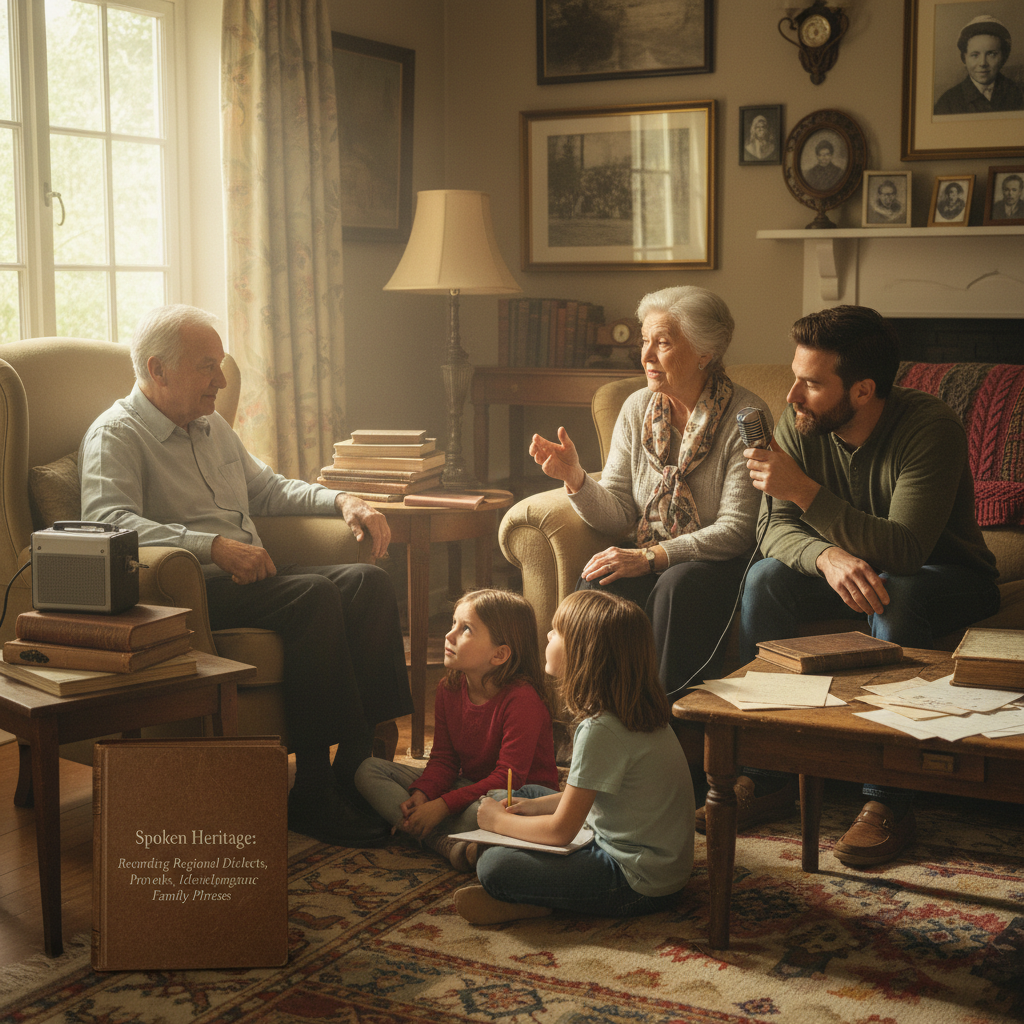
Spoken Heritage: Recording Regional Dialects, Proverbs, and Idiosyncratic Family Phrases
Why the peculiar sayings of our grandparents carry irreplaceable cultural texture that standard written histories miss.
 Family Heritage
QR Codes on Headstones: Permissions, Privacy and Lasting Care
A practical guide to adding a QR memorial code without assuming permission, permanence, or privacy: confirm the cemetery’s rules, separate the code from the hosted archive, and make a family handover plan.
Share the story
Family discussion cards
Take one card at a time. There are no right answers—only memories worth hearing.
What memory did this article bring to mind?
Who in the family might have a story or photograph to add?
What is one small thing we could save, share, or do next?
A quiet conversation can be a meaningful family keepsake.
Subscribe to MemContinuity Publications
Receive thoughtful reflections, local heritage guides, and slow travel stories delivered directly to your inbox. No spam, privacy respected.