Faces from the Past: Dating Unnamed Family Photographs by Fashion and Collar Styles
Use clothing, photographic format, studio clues, and family records together to estimate when an unnamed portrait was made—without treating fashion as proof of identity.
A compatible device voice is not available. You can still read this article on screen.
 Family Heritage
Detailed article
Use the text-size control at the top for larger text, or switch back to Easy Read at any time.
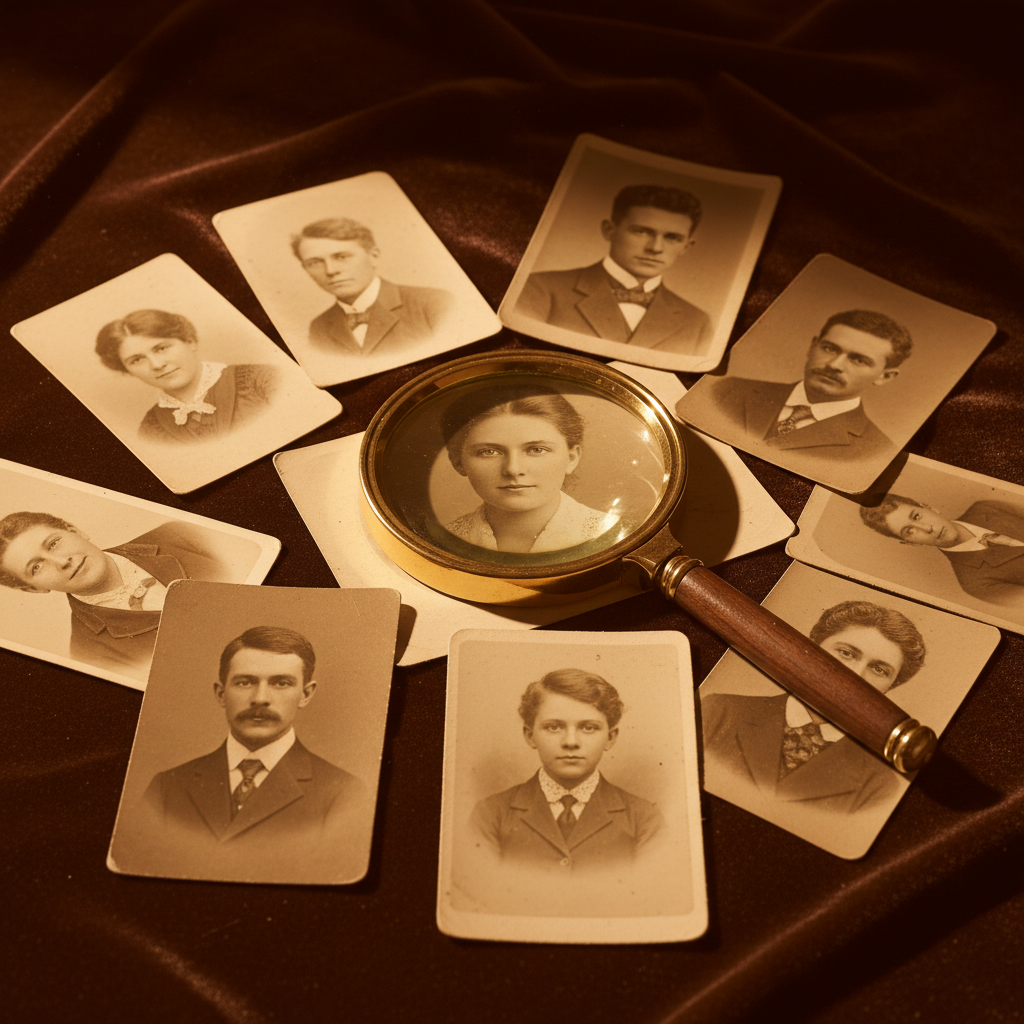
An unfamiliar face in a family album can invite two different questions: who is this person, and when was the photograph made? Clothing may help with the second question, but it cannot answer the first on its own. A careful estimate combines dress and hair with the photograph’s physical format, studio information, and evidence from family records. The result may be a range of years rather than a precise date. The Library of Congress notes that undated photographs are often assigned only a span of years or decades, using several kinds of clues together. Library of Congress
Begin with the photograph, not the guess
Before interpreting a collar, write down what can be observed without inference. Is the image a small card portrait, a print in a family album, or a later snapshot? Is there a photographer’s name, address, stamp, handwritten note, or date on the front or back? Record the image’s approximate size and any visible border or mount. These details help keep observations separate from conclusions.
Handle an original gently and avoid cleaning, flattening, or pulling it from a mount. If the item is fragile, unusually shiny, cased, or damaged, consult a photograph conservator or archive before handling further. Make a digital photograph or scan only if it can be done without pressure, heat, or risk to the object. A clear copy of both sides can help when asking an archive or specialist for an opinion; the Science and Media Museum specifically advises sending copies rather than the original. Science and Media Museum
Read clothing as a cluster of clues
A single feature is rarely a reliable clock. Look at the whole outfit: collar height and shape, shoulder line, sleeve volume, waist and skirt silhouette, hairstyle, headwear, and accessories. Notice whether garments appear formal, practical, or suited to a particular occasion. A portrait may show best clothes rather than everyday wear, and clothing could be altered, reused, inherited, or deliberately old-fashioned. Regional, class, religious, and personal choices also affected dress. A person’s clothing therefore does not automatically represent the newest fashion of the year.
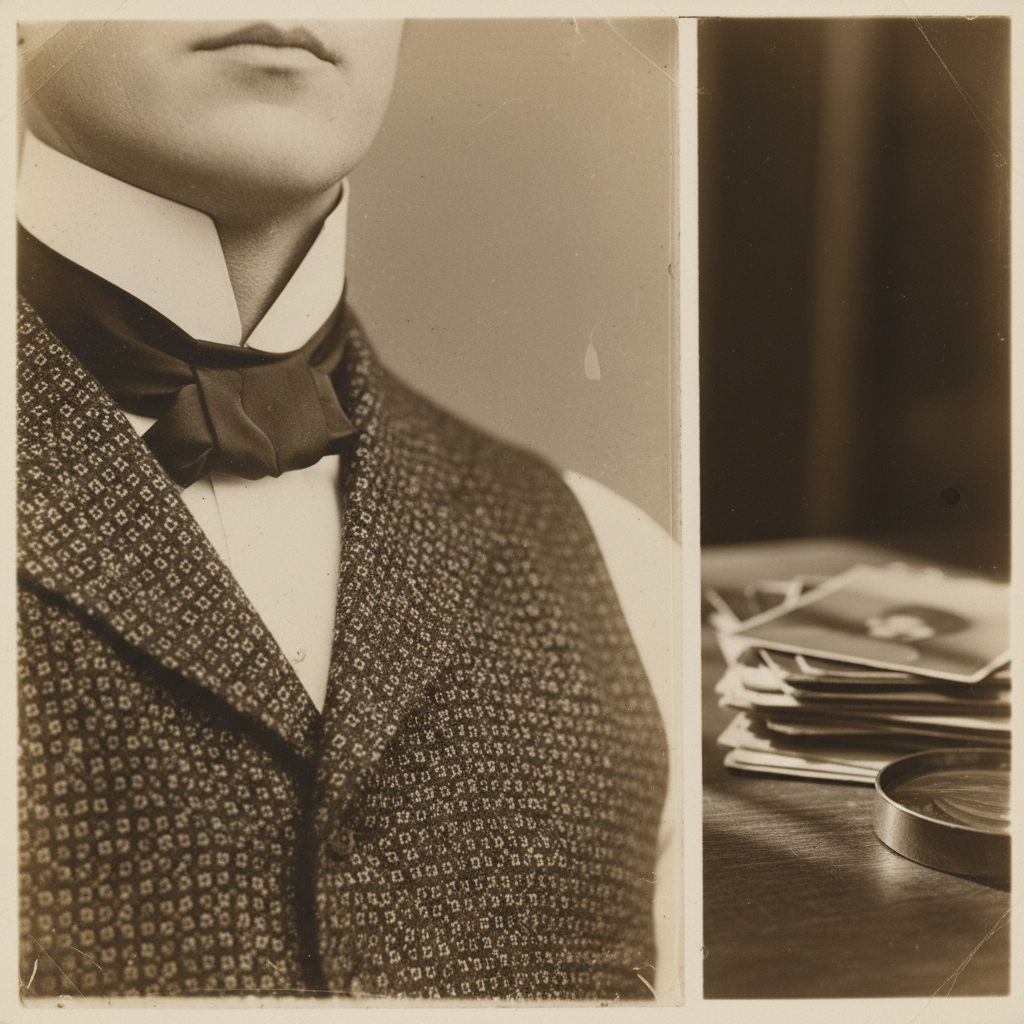
For example, high, fitted collars and structured silhouettes appear in documented 1880s women’s dress. The Frick Pittsburgh’s costume-history overview describes narrow shoulders and tight sleeves, and a bustle silhouette that changed over that decade. By the 1890s, it describes bell-shaped skirts and increasingly full sleeves. Those are useful broad comparisons when several details agree, not a rule that every high collar means “the 1880s.” The Frick Pittsburgh
Collars deserve close attention because they are prominent in portraits, but avoid reading them in isolation. A tall collar may belong to a particular fashion moment, yet it may also reflect the wearer’s age, occupation, taste, or available wardrobe. Compare the collar with sleeves, hairstyle, jacket cut, and the photographic format. A modern-looking collar in a portrait does not prove the sitter was photographed in the year that style first appeared.
Check the format and studio clues
Photographic processes and mounts can provide an independent time frame. Early portraits may be on distinctive metal or glass supports, while later nineteenth-century studio portraits commonly appear as prints mounted on cards. Formats overlapped, persisted, and varied by location, so avoid treating a process date as an exact portrait date. A digital screen image may conceal the surface and material needed to identify a process. When uncertain, describe what you see—such as “small print mounted on card”—instead of assigning a technical label.
Look closely for a studio imprint on the mount or reverse. If a photographer’s name and address are legible, search local directories, newspapers, city directories, or library and archive catalogues for the photographer’s period of activity. That can provide a useful outer boundary, but a studio could move, change hands, or reuse a printed mount. The Library of Congress explains that cataloguers may use a photographer’s active dates, fashion, and physical medium when estimating an undated image, and that the estimate is often approximate. Library of Congress
Build a range from independent evidence
Put possible clues side by side rather than choosing the most striking one. A practical note might read: “The card mount and studio address suggest a late nineteenth-century portrait; the sleeves and collar seem consistent with a broad 1880s–1890s comparison; a family letter dated 1892 mentions a studio visit.” Mark each entry as observed, sourced, or uncertain. If the clues conflict, preserve that conflict rather than forcing them to agree. The photograph could be a copy of an earlier image, or a family note could refer to another visit.
Next, look for records that can test the estimate: dated letters, album captions, birth and marriage records, census entries, newspaper notices, or other securely identified photographs of the same person. Check whether the person’s age in the proposed period is plausible, but remember that age estimates from faces are uncertain. The National Archives’ photograph guide illustrates the value of searching institutional catalogues and contextual records; archive descriptions can be incomplete, so an absent online match is not proof that no record exists. The National Archives
Avoid the common traps
Do not identify someone merely because they resemble a relative or wore a style associated with a particular decade. Similarity is a lead to investigate, not confirmation. Do not assume the year a mount or studio imprint was manufactured is the sitting date. Do not use a broad fashion label such as “Victorian” as if it were a precise date. And do not crop away the back, border, or nearby album page before recording them; those areas may contain the strongest evidence.
When sharing a scan with relatives or an online family-history group, say what is known and what remains a guess. For example: “Possibly a portrait from around 1885–1900; the estimate is based on the card mount and clothing, but the sitter is unidentified.” Keep sensitive family details private, and ask before posting images of living people or material that relatives may consider personal. No one needs to disclose a story or accept an identification to take part in the research.
A small portrait worksheet
For each image, note: what is visible on the front and reverse; the apparent format and mount; photographer and address; clothing features that can be described plainly; family documents that support or contradict a date; and the narrowest range the combined evidence permits. Keep a copy of the source for each dated clue. If the evidence only supports a broad period, record that broad period. A cautious caption such as “probably late nineteenth century; identity unknown” is more useful to future relatives than a confident but unsupported name.
Dating a portrait is a process of comparison, not a test with one decisive collar. Each modest clue can help when it agrees with other evidence. Leaving a question open is also part of preserving family history: it tells the next researcher what has been checked and where uncertainty remains.
Reading path
Continue this topic
Practical, unhurried steps for looking after photographs, letters, and treasured objects without feeling overwhelmed.
Pillar guides in this path
A gentle next step
Keep a related family story
If this topic brings a family memory to mind, you can save it at your own pace.
“Thank you for sharing this quiet moment of reading with us.”
Every piece in the MemContinuity library is preserved to spark gentle conversations, honor generational memory, and support the health and comfort of our families.
MemContinuity editorial team
MC-HERITAGE-20260323-150 · Publication archive reference
Cross-device reading sync
Sign in to your MemContinuity account to optionally sync your article reading progress across your phone, tablet, and computer.
Themes & topics
Editorial guidance & care
Our publications are designed to be practical, gentle, and respectful. For specific medical, mobility, or travel arrangements, we recommend consulting local providers or relevant municipal services.
Related publications
 Family Heritage
Unlocking the Family Attic: Safely Handling Century-Old Trunks and Boxes
How to open forgotten heirloom chests without damaging crumbling paper, dried leather, or insect-damaged albums.
 Family Heritage
The Soldier's Footlocker: Preserving Medals, Dog Tags, and War Correspondence
Acid-free display cases, gentle tarnish protection, and cataloging the military service of fathers and uncles.
 Family Heritage
Walking the Sacred Yard: Reading Weathered Gravestones Without Causing Stone Damage
Soft brush cleaning, raking light photography, and avoiding harmful chalk or acid rubbings on marble monuments.
Share the story
Family discussion cards
Take one card at a time. There are no right answers—only memories worth hearing.
What memory did this article bring to mind?
Who in the family might have a story or photograph to add?
What is one small thing we could save, share, or do next?
A quiet conversation can be a meaningful family keepsake.
Subscribe to MemContinuity Publications
Receive thoughtful reflections, local heritage guides, and slow travel stories delivered directly to your inbox. No spam, privacy respected.