Walking the Sacred Yard: Reading Weathered Gravestones Without Causing Stone Damage
A respectful cemetery walk can preserve family memory without disturbing fragile markers. Learn how to seek permission, read weathered inscriptions through light and photography, keep careful notes, and leave conservation work to trained stewards.
A compatible device voice is not available. You can still read this article on screen.
 Family Heritage
Detailed article
Use the text-size control at the top for larger text, or switch back to Easy Read at any time.
Begin with permission and care
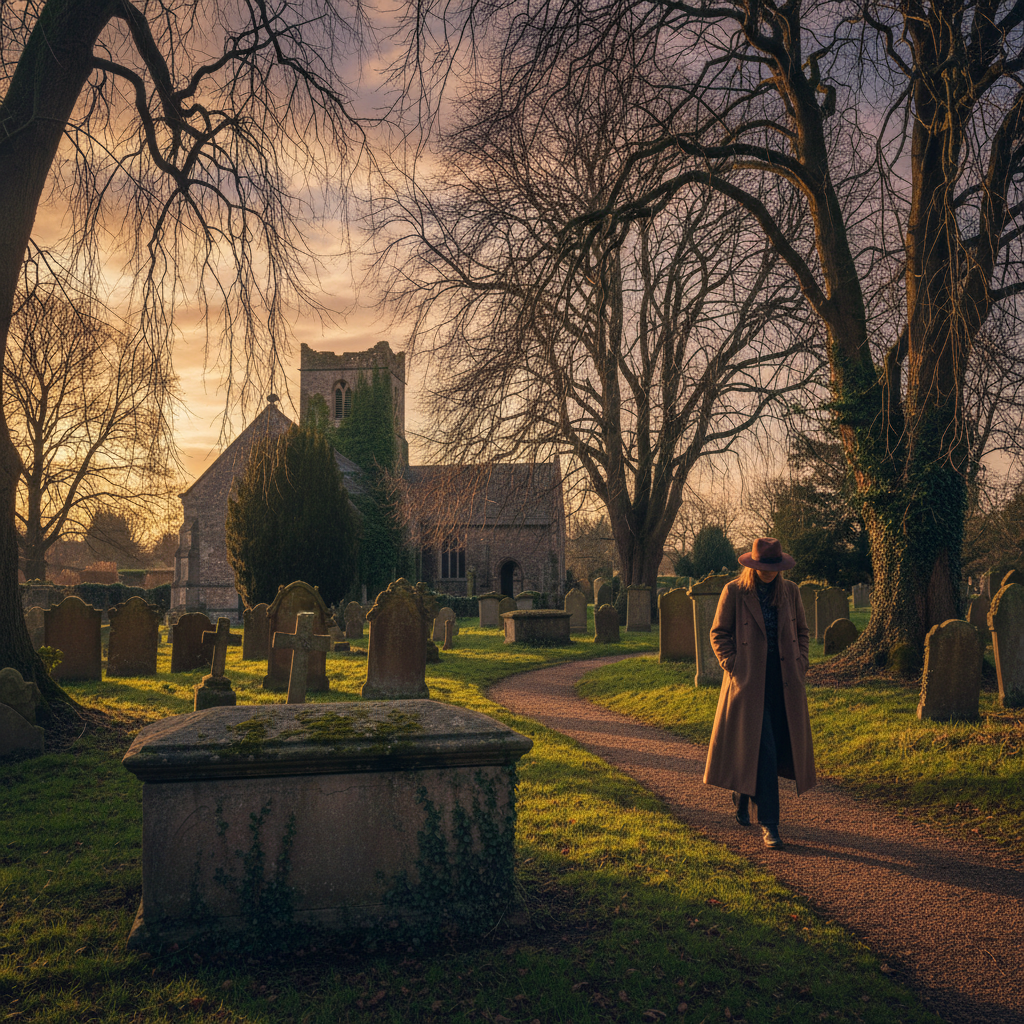
A cemetery visit can help a family connect names, dates, and stories across generations. The most respectful first step is not to clean a stone but to learn the place’s rules. Cemeteries may be privately managed, municipal, religious, or historic; each can set its own visiting hours, photography rules, and restrictions on touching markers. Check posted notices or ask the cemetery office before a planned group visit or any activity beyond quiet observation. Do not enter closed areas, step on graves, move flowers or objects, or disturb mourners.
Choose a short route that suits the group. Paths can be uneven, and older markers may lean or lie close to the ground. Stay on established paths where possible, watch for trip hazards, and do not lean on stones for balance. If someone would rather wait, sit, or participate from a path, make that an equally welcome way to take part. Visitors should leave the cemetery as they found it.
Read without touching
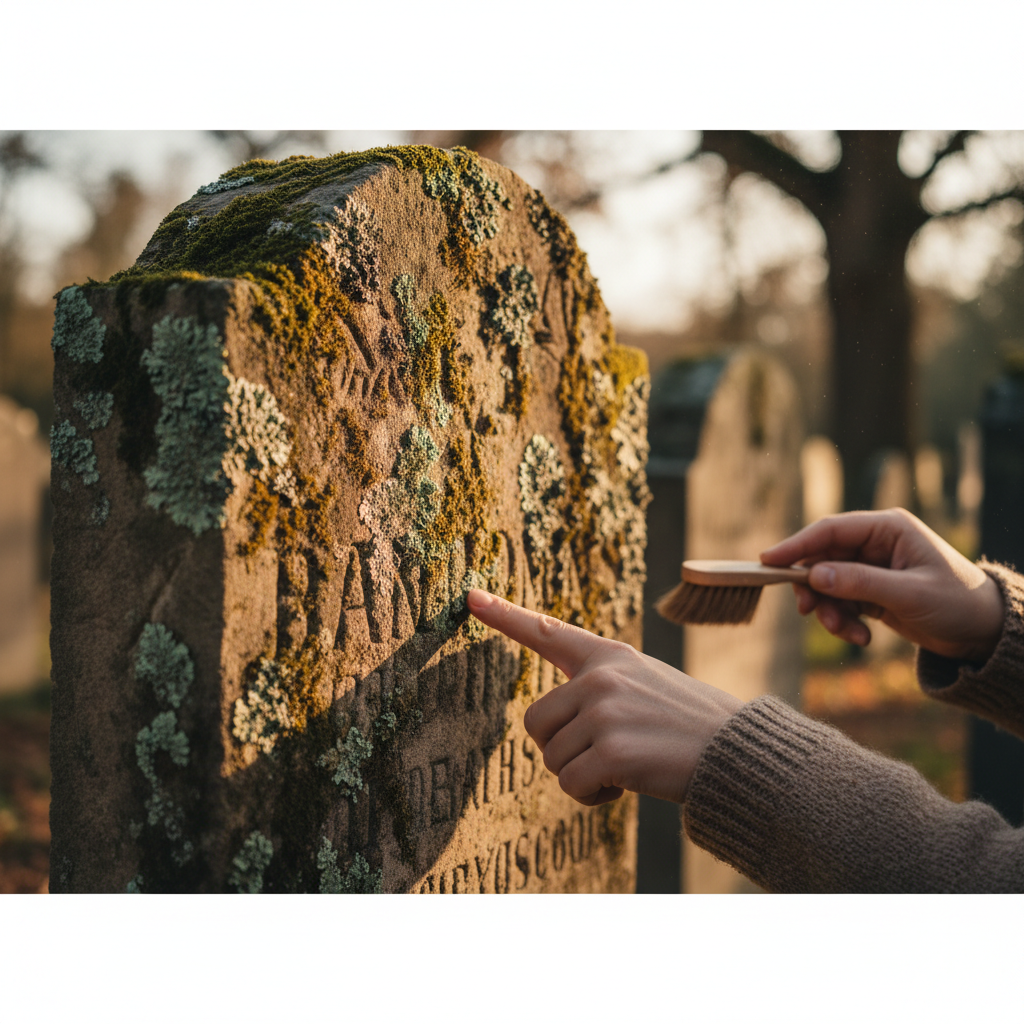
Weathering can soften carved letters, and inscriptions may be partly hidden by shadow, lichen, soil, or surface loss. Resist the urge to rub chalk, flour, shaving cream, paper, or other material over the inscription. Rubbings put pressure and friction on fragile surfaces and can catch on loose edges. Do not scrape growth, pick at lichen, or try household cleaners, acids, bleach, wire brushes, or pressure washing. The National Park Service notes that even careful cleaning can remove original stone and that cleaning can accelerate deterioration. Its cleaning guidance is for considered conservation work, not a reason for visitors to treat a marker themselves.
Instead, begin with the light. Look at the inscription from more than one angle and notice when a carved letter becomes clearer as the sun shifts. If the cemetery permits it, take photographs from a respectful distance, then try a few angles rather than touching the stone. Side-light may cast shadows into carved lettering; try again at another time if needed. Keep the camera and any accessories off the marker. Avoid flash if it would disturb a service or other visitors.
A small mirror or portable light may be useful only if site rules permit it and it can be used without contact or inconvenience. Do not place a mirror, phone, tripod, reflector, or other object on the stone. Avoid directing bright light into other visitors’ eyes. If a marker is unstable, cracked, powdery, flaking, or has a grainy surface, do not touch or attempt to clean it. Record what you can see from a safe distance and leave conservation decisions to the cemetery manager and trained conservators.
Make a careful record
Take a wide photograph first to show the marker’s position and surroundings, then a closer image of the inscription if allowed. Keep the marker upright in the frame and avoid cropping off its top, base, or neighboring context. Take another image if glare obscures a line. Note the cemetery name, section or row, visit date, and image filename. Write down the inscription exactly as visible, preserving line breaks where practical. Use brackets or a question mark in your private transcription to mark uncertain letters rather than silently guessing.
Separate observation from interpretation. “The final digit of the year is difficult to read” describes what you see; “the date must be 1883” is a conclusion that needs corroboration. Compare a photograph with the inscription later, when you can enlarge it, and check names or dates against reliable records such as cemetery registers, family documents, or civil and parish records. A matching record helps, but does not make a damaged inscription legible. Note disagreements.
If you share photographs, consider the privacy and wishes of living relatives and the cemetery’s rules. A close image may reveal details relatives prefer not to publish. Ask before posting identifiable images or personal stories, especially when other visitors appear in the frame. Keep an unaltered original photograph; if you adjust brightness on a copy for reading, label it as an edited copy so nobody mistakes the altered image for the original surface.
A simple walk plan
Before setting out, confirm opening hours, access arrangements, and any photography or group-visit rules. Bring only what you need for looking and note-taking. On arrival, pause at the entrance, orient yourself, and agree that nobody will clean, rub, move, or lean on markers. If you are visiting a particular grave, use cemetery records or staff guidance to locate it rather than wandering across burial plots.
At each marker, take time to observe before interpreting. Record visible names, dates, symbols, and the condition of the stone separately. Symbols can have different meanings across periods, cultures, and faith traditions, so do not assume that one familiar interpretation applies. If a carving raises a question, note it for later research through a local archive, cemetery office, or appropriate historical organization.
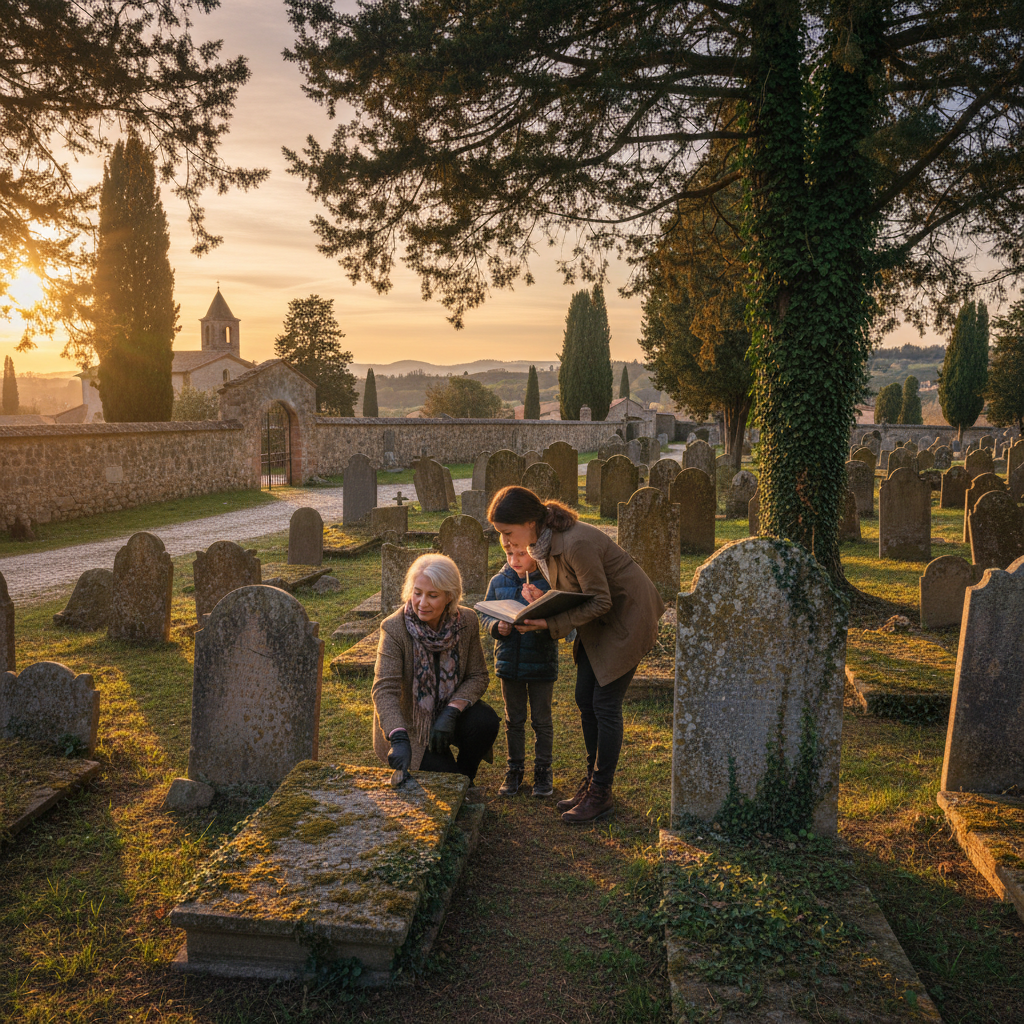
Keep the visit flexible. A few well-documented markers can be more meaningful than trying to cover a large site. Pause or leave if a funeral or private moment is underway. Children can help by noticing shapes, reading a date that is clear, or drawing the layout in a notebook, without being asked to touch stones or perform grief in a particular way.
When a stone needs attention
Finding a damaged or fallen marker is a reason to notify the cemetery manager, not to set it upright or repair it yourself. A heavy stone can injure someone, and moving it can break the marker or disturb the grave. Share the location and a photograph taken from a safe distance. If you are part of a volunteer project, ask who supervises it and whether its methods have been reviewed by a preservation professional. The National Park Service provides cemetery-conservation resources on documentation, maintenance, and treatment; the Association for Gravestone Studies also points readers toward preservation standards and cautions that recommendations evolve.
A family member may feel that cleaning is an act of care. In practice, removing deposits or biological growth is a conservation treatment that depends on the stone’s condition, material, and the cemetery’s permission. The National Park Service warns against harsh chemicals and mechanical methods and stresses minimizing interventions. A visitor cannot reliably judge from appearance alone whether a surface can safely be cleaned. When in doubt, do nothing to the stone and ask the responsible manager for advice.
Carry the story forward
After the walk, organize the photographs and notes while the location is still fresh in mind. Keep an untouched copy of each image and make a separate working copy for any adjustments. Label uncertain readings clearly. Invite relatives to add memories only if they wish; no one needs to disclose private family history or know every answer for the visit to matter.
A respectful cemetery walk is an act of attention rather than restoration. Looking closely, recording uncertainty honestly, seeking permission, and leaving fragile surfaces undisturbed can preserve both the stone and the dignity of the people remembered there.
Sources and Further Reading
Reading path
Continue this topic
A gentle four-part start for recording voices, memories, and the stories that make a family feel like home.
Pillar guides in this path
A gentle next step
Keep a related family story
If this topic brings a family memory to mind, you can save it at your own pace.
“Thank you for sharing this quiet moment of reading with us.”
Every piece in the MemContinuity library is preserved to spark gentle conversations, honor generational memory, and support the health and comfort of our families.
MemContinuity editorial team
MC-HERITAGE-20260321-152 · Publication archive reference
Cross-device reading sync
Sign in to your MemContinuity account to optionally sync your article reading progress across your phone, tablet, and computer.
Themes & topics
Editorial guidance & care
Our publications are designed to be practical, gentle, and respectful. For specific medical, mobility, or travel arrangements, we recommend consulting local providers or relevant municipal services.
Related publications
 Family Heritage
Unlocking the Family Attic: Safely Handling Century-Old Trunks and Boxes
How to open forgotten heirloom chests without damaging crumbling paper, dried leather, or insect-damaged albums.
 Family Heritage
Faces from the Past: Dating Unnamed Family Photographs by Fashion and Collar Styles
Using Victorian high collars, Edwardian hats, and mid-century fabrics to pinpoint photographic decades accurately.
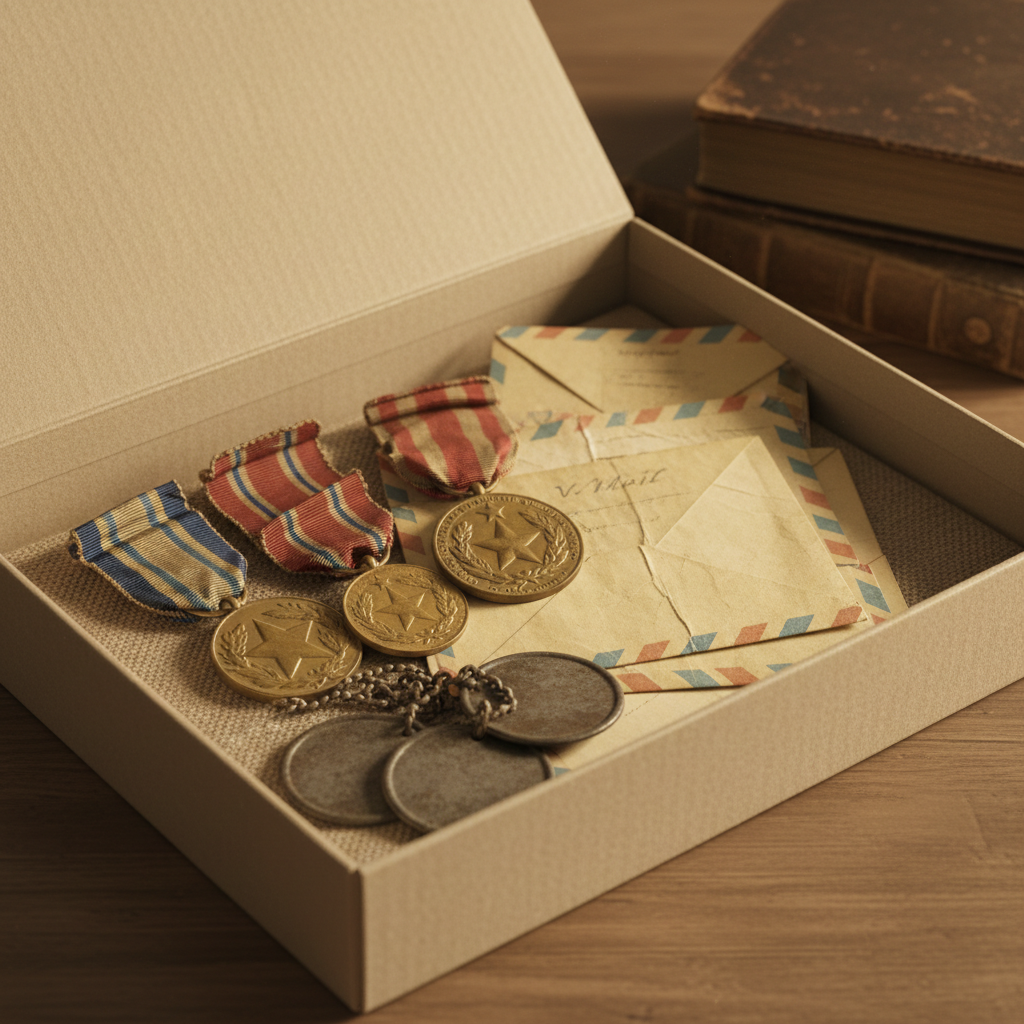 Family Heritage
The Soldier's Footlocker: Preserving Medals, Dog Tags, and War Correspondence
Acid-free display cases, gentle tarnish protection, and cataloging the military service of fathers and uncles.
Share the story
Family discussion cards
Take one card at a time. There are no right answers—only memories worth hearing.
What memory did this article bring to mind?
Who in the family might have a story or photograph to add?
What is one small thing we could save, share, or do next?
A quiet conversation can be a meaningful family keepsake.
Subscribe to MemContinuity Publications
Receive thoughtful reflections, local heritage guides, and slow travel stories delivered directly to your inbox. No spam, privacy respected.