Mapping Lost Streets: Recording Ancestral Neighborhoods and Childhood Pavement Games
A consent-first guide to tracing childhood streets, landmarks, local trades and pavement games through conversation, simple maps and careful family archiving.
A compatible device voice is not available. You can still read this article on screen.
 Family Heritage
Detailed article
Use the text-size control at the top for larger text, or switch back to Easy Read at any time.
Overview & Background
A childhood neighbourhood may be remembered through routes and landmarks: the turn toward school, a shop window, a neighbour’s doorway, or the pavement where a game began. Recording these recollections creates a family record of one person’s experience. It is not the same as producing a definitive history or survey. Streets change, memories may be incomplete, and two people can remember the same corner differently.
This guide offers a gentle way to collect place-based memories and childhood street games. The map prompts conversation, not a test; the narrator may correct it, leave blanks, or stop.
1. Prepare a Map That Invites Stories
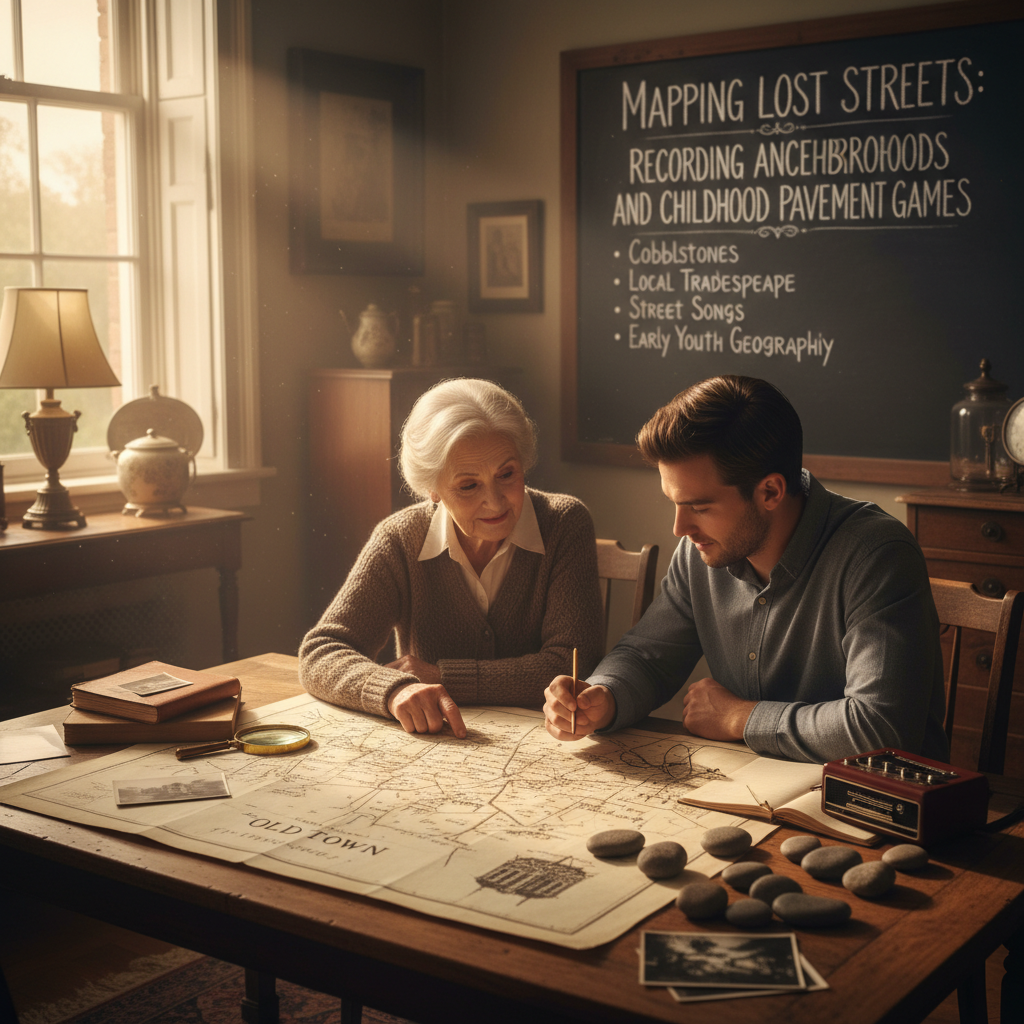
Start with a blank sheet of paper, a printed street plan, or a map from the period if one is already available. A rough sketch is enough. Mark a known starting point, such as a family home or school, only if the narrator is comfortable identifying it. Invite them to add streets, a bus stop, a park, a shop, a workshop, a place of worship, or any other landmark that matters to their account. Ask before adding a current home address or other sensitive location to a version that might be shared.
If using a historical map, note its date and source. It may help identify changed names or routes, but cannot establish what someone personally saw. Label marks as recollections, uncertain, or checked against a source.
Ask whether the narrator prefers to draw, point, describe, or have you take notes. Clear labels and a high-contrast pen may help. A digital map is optional; a private family exercise needs no public upload.
2. Invite, Explain and Agree on Use
Before recording, explain the purpose in plain language: you hope to preserve their account of a neighbourhood and the games or routines associated with it. Tell them whether you plan to make audio, video, notes, a map, or some combination; who will see the material; where it will be stored; and whether you might share it beyond the family. Ask separately about recording and any later sharing. A yes to a conversation is not automatically permission to publish it.
Participation remains voluntary: the narrator may decline questions, pause, stop recording, omit a place, or keep the material private. Silence is not consent. Consider the privacy of other identifiable people. Public or research use may carry local legal duties, so consult the relevant archive.
3. Let the Narrator Lead the Route
Prepare a short list of open questions, then follow the narrator’s sequence rather than insisting on a perfect chronology. Begin with an easy invitation such as, “Would you show me the route you remember taking most often?” Give time for thought. One question at a time usually leaves more room for a full answer than a rapid checklist. Useful prompts include:
- What could you see or hear from the front door?
- Where did you go on an ordinary errand, and who might you meet along the way?
- Which shops, tradespeople, public buildings, or gathering places stand out to you? What do you remember about their sounds, signs, smells, or opening routines?
- Where did children play? What made that spot suitable, and who decided when the game ended?
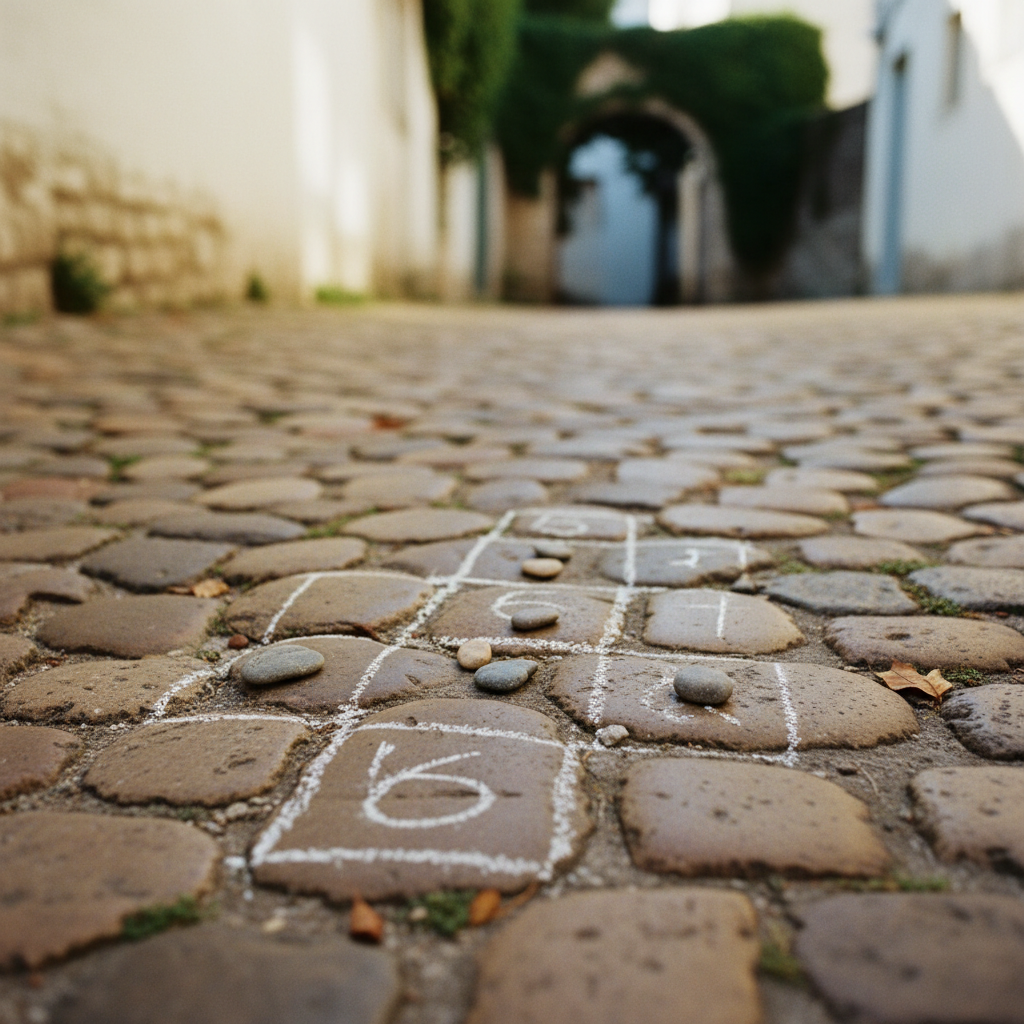
- What were the rules, names, chants, rhymes, or variations of a pavement game as you remember them?
- Did the route or game change as you grew older, or as the street itself changed?
Treat game names and rules as this narrator’s recollection, not as a universal version. Ask whether a rhyme or song may be written down or recorded, and whether the narrator is comfortable sharing it. If a memory concerns another person, invite the narrator to distinguish what they witnessed from what they heard later. Avoid supplying a suggested answer such as “Was that the old bakery?” Instead, ask what they recall, then verify spellings or business names separately if accuracy matters.
4. Record the Conversation and the Map
Choose a quiet setting and agree on a manageable session length. Test the recorder and confirm permission before starting. Note the date, participants’ names or pseudonyms, general location, and topic; avoid a private address unless necessary and agreed. Take notes instead if recording is declined.
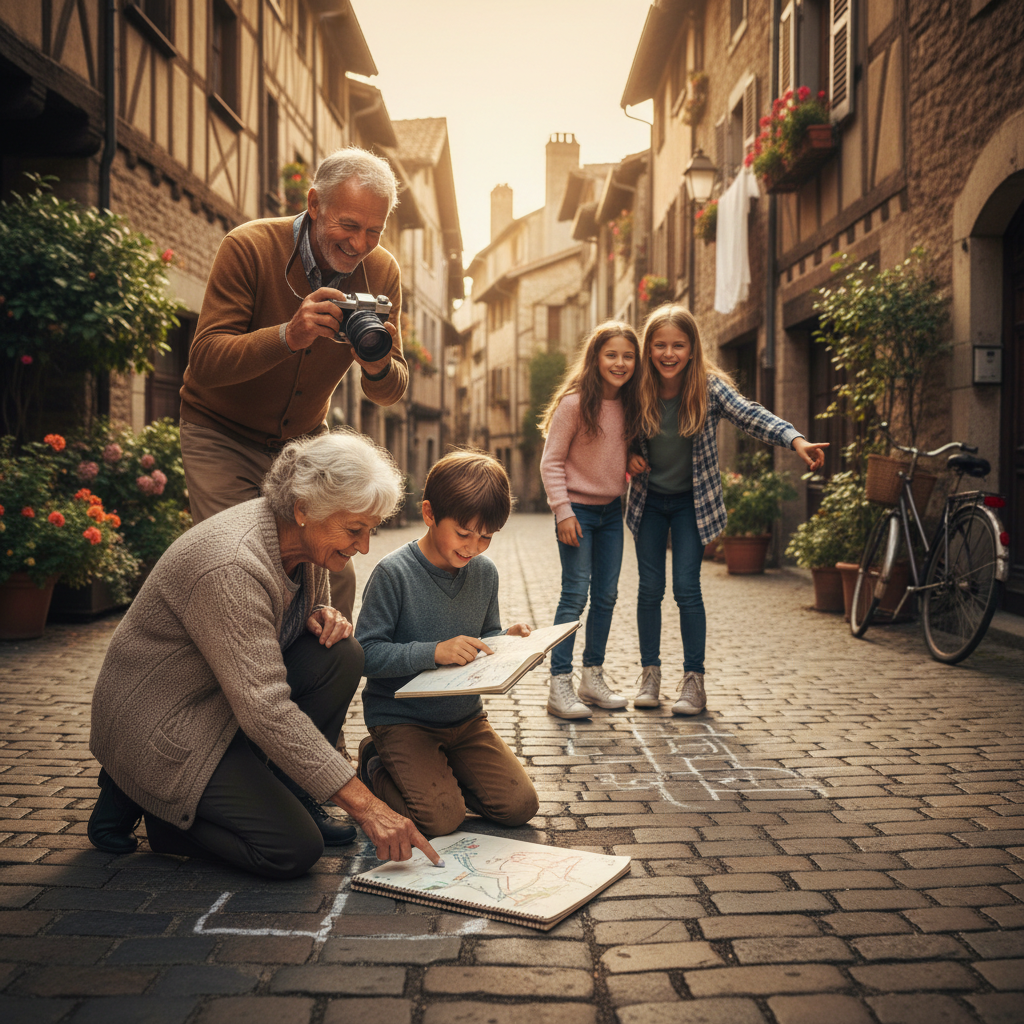
As the narrator describes a place, write labels in their words and mark uncertainty rather than silently resolving it. Add a short note beside a location about what was recalled there, for example, “shop remembered near this corner; exact position uncertain.” If the map is photographed or scanned, keep its date and context with it. Keep the conversation and map together: a mark alone may not explain its meaning, while audio without a location index can be hard to navigate.
Listen attentively and allow pauses. Follow up gently with “What happened next?” or “How do you remember that spot?” The Smithsonian’s oral-history guidance recommends open questions, attentive listening, and respectful clarification; the Oral History Association also advises that a narrator may refuse topics or limit access. A map should therefore support the narrator’s account, not pressure them to produce details or disclose difficult experiences.
5. Separate Memory from Corroboration
After the conversation, write down what the narrator identified confidently and what remained approximate. Do not “correct” their recollection simply because a modern map looks different. If you want to check a street name, business, school, or date, consult an appropriate source such as a local library collection, directory, map, photograph, or archive. Keep the source citation with the note and distinguish it from the narrator’s own memory. A source may confirm a name or location without proving that a particular event happened there.
If family members remember the same route differently, retain both versions with their speakers identified, if they agree to that. Differences can reflect different years, routes, or vantage points. They need not be forced into a single account. A short caption can say, “Two family recollections place the game on different sides of the street,” rather than presenting either as settled fact.
6. Preserve and Share with Care
Give the map a clear filename or folder label that includes the narrator’s chosen name, interview date, and a brief subject. Keep notes about the map’s symbols and any consulted sources alongside it. Keep secure copies in more than one place, limiting access to those covered by the agreement. The Oral History Association advises planning preservation and access, documenting agreements, and keeping related records together. Make a backup and tell a trusted person where it is kept.
Before sharing a map online or in a reunion booklet, review it for private addresses, sensitive routes, and identifying details about living people. Ask the narrator to review names and locations where practical, and follow any restrictions they requested. A private working map may be more detailed than a version suitable for wider circulation. If permission or a location’s sensitivity is unclear, leave it out of the shared copy.
A Small First Step
Begin with one remembered walk. Let the narrator choose the starting point, add only landmarks they want included, and note uncertainty. A modest map can preserve personal geography without claiming to settle the past.
Sources and Further Reading
Reading path
Continue this topic
Explore names, places, migrations, and the practical beginnings of a family tree—one clue at a time.
Pillar guides in this path
Family Heritage
Build a Family Tree Album With Evidence and Living-Person Privacy
Family Heritage
The Ocean Crossing: Documenting Ancestral Migration Routes, Ships, and New Beginnings
Family Heritage
Surnames and Roots: Distinguishing Authentic Regional Etymology from Commercial Heraldic Fictions
A gentle next step
Place the story in your family tree
When you are ready, add a name, relationship, or memory to your private family tree.
“Thank you for sharing this quiet moment of reading with us.”
Every piece in the MemContinuity library is preserved to spark gentle conversations, honor generational memory, and support the health and comfort of our families.
MemContinuity editorial team
MC-HERITAGE-20260527-017 · Publication archive reference
Cross-device reading sync
Sign in to your MemContinuity account to optionally sync your article reading progress across your phone, tablet, and computer.
Themes & topics
Editorial guidance & care
Our publications are designed to be practical, gentle, and respectful. For specific medical, mobility, or travel arrangements, we recommend consulting local providers or relevant municipal services.
Continue with purpose
Part of a curated reading journey
Related publications
 Family Heritage
The Village Classroom: Remembering Slate Boards, Inkwells, and Schoolyard Friendships
A nostalgic oral interview roadmap exploring early education, walking barefoot to school, and childhood academic triumphs.
 Family Heritage
Unlocking the Family Attic: Safely Handling Century-Old Trunks and Boxes
How to open forgotten heirloom chests without damaging crumbling paper, dried leather, or insect-damaged albums.
 Family Heritage
Faces from the Past: Dating Unnamed Family Photographs by Fashion and Collar Styles
Using Victorian high collars, Edwardian hats, and mid-century fabrics to pinpoint photographic decades accurately.
Share the story
Family discussion cards
Take one card at a time. There are no right answers—only memories worth hearing.
What memory did this article bring to mind?
Who in the family might have a story or photograph to add?
What is one small thing we could save, share, or do next?
A quiet conversation can be a meaningful family keepsake.
Subscribe to MemContinuity Publications
Receive thoughtful reflections, local heritage guides, and slow travel stories delivered directly to your inbox. No spam, privacy respected.