Surnames and Roots: Distinguishing Authentic Regional Etymology from Commercial Heraldic Fictions
Learn what a surname can—and cannot—tell you, how to investigate its changing forms through records, and why a shared name does not establish a right to a coat of arms.
A compatible device voice is not available. You can still read this article on screen.
 Family Heritage
Detailed article
Use the text-size control at the top for larger text, or switch back to Easy Read at any time.
How geographic surnames, patronymics, and occupational names can open a careful investigation into family history—and why a name alone cannot prove descent or heraldic entitlement.
What a surname can tell you
A surname is a useful clue, not a complete family history. Names may have developed from a place or landscape, an occupation, a parent’s given name, or a nickname. These broad categories are a starting point for asking questions, not a formula that identifies one particular ancestor.
Specialist surname dictionaries do more than assign a short meaning. The Oxford Dictionary of Family Names in Britain and Ireland, for example, describes entries built from variant spellings, etymological explanations, early bearers, geographical distribution, and genealogical or bibliographical notes. That combination illustrates why an origin claim is stronger when it is supported by dated examples and documented context rather than by a modern surname list alone. Its geographic coverage is Britain and Ireland, however; its entries should not be treated as a universal authority for names from other regions.
A place-associated name may point toward a settlement, feature, or former residence, but it does not establish that every bearer came from the same place. A patronymic may reflect a parent’s name or a naming convention; it does not by itself produce a complete, documented chain of descent. An occupational name may preserve a word for work, but it cannot prove that every person who later carried it practised that trade. Meaning and ancestry are related questions, but they are not interchangeable.
Research the person before the name
Begin with a known relative and work backward one generation at a time. Record what you already know, including approximate dates and places, then look for records that connect each person to the next. Depending on the country and period, useful records may include censuses, civil or parish registrations, immigration and naturalization documents, military files, land records, wills, or other local registers. The U.S. National Archives’ genealogy guidance highlights census, military, immigration, naturalization, and land records among commonly used materials in its holdings. Record availability and access rules vary by jurisdiction.
For each document, note who created it, when it was made, and whether the information was direct or reported by someone else. A birth entry made close to an event may answer a different question from a census statement supplied years later. Compare several records rather than treating one spelling or one index result as decisive. An index is a finding aid; where possible, consult the record image or original register and capture its archive, collection, or page reference so another person can find it again.
Keep variant spellings visible
Historical spelling was not always fixed. Clerks might write what they heard, people might use different forms in different settings, and a family may adopt a new spelling after migration or a change of language. Search for likely variants, initials, phonetic forms, and given names alongside the surname. Do not silently standardize every record to the modern spelling: preserve the form actually written and add a separate note explaining why you think it refers to the same person.
A small research log can prevent a tempting guess from becoming a fact. For each candidate record, note the date and place, the name as written, the relationship it appears to support, and any conflicting evidence. If two people with the same name lived nearby, keep them as separate candidates until records distinguish them. A family tree should show uncertainty honestly, using a question mark or a note such as “possible match,” rather than filling gaps with a plausible-looking ancestor.
Regional origin is a hypothesis to test
Surname maps and distribution lists can suggest where a form was recorded, but a concentration is not proof that a particular family began there. Migration, population change, spelling variation, and the coverage of the underlying records all affect what appears on a map. Use a distribution as a lead: ask whether documents for your own documented ancestors point to that area, then test the connection with records. Do not leap from a modern cluster of people with the same surname to a medieval origin story.
When consulting a surname dictionary, check which region, language, and historical period it covers. Look for the evidence behind the proposed meaning: early recorded forms, variant spellings, and the source trail. If the entry gives multiple explanations, keep them open until evidence narrows the possibilities. A qualified “possibly derived from” is more accurate than claiming certainty that the sources do not provide.
A surname does not grant a coat of arms
Commercial “surname crest” products often make a simple name-to-emblem connection that heraldic authorities warn is misleading. The Society of Genealogists explains that arms identify a particular person or family, not everyone bearing a surname; a printed armorial listing a name is a lead for investigation, not proof of entitlement. The Canadian Heraldic Authority likewise states that a coat of arms does not belong to every person with the same surname. Rules and inheritance practices differ among heraldic jurisdictions, so no single country’s rules should be assumed to apply everywhere.
If you want to investigate a possible inherited right, identify the relevant country and heraldic authority first. Then document the descent from the named armiger—the person to whom the arms were granted or officially recorded—and ask the authority what evidence and inheritance rules apply. A surname match, a decorative certificate, or long-standing family use alone does not establish a documented connection. In England, Scotland, Ireland, Canada, and elsewhere, authorities and procedures are not identical; consult the appropriate office for that jurisdiction rather than relying on a generic online claim.
Before buying a product that promises “your family crest,” ask whether it identifies a documented grant to a named ancestor and explains the evidence connecting that person to you. If it only matches a surname to an illustration, treat it as decorative merchandise, not proof of lineage.
A practical checklist for the next step
Choose one person whose name and life details you can verify. Write down the exact spelling in each record, then search for sensible variants. Follow records backward one relationship at a time and cite where each document came from. Consult a regionally appropriate surname reference only after you know which historical place and language are relevant. Separate what the surname may mean from what the records show about your own family. For any heraldic claim, verify the grant and the descent through the authority responsible for the place and period involved.
Family history is often most rewarding when a question remains open long enough for evidence to answer it. A surname can preserve traces of language, landscape, work, or naming customs, while a documented family story depends on people and records linked across generations. Treat the name as an invitation to investigate—not as a shortcut to a royal, regional, or heraldic pedigree.
Sources and Further Reading
Reading path
Continue this topic
Explore names, places, migrations, and the practical beginnings of a family tree—one clue at a time.
Pillar guides in this path
Family Heritage
Build a Family Tree Album With Evidence and Living-Person Privacy
Family Heritage
The Ocean Crossing: Documenting Ancestral Migration Routes, Ships, and New Beginnings
Family Heritage
Mapping Lost Streets: Recording Ancestral Neighborhoods and Childhood Pavement Games
A gentle next step
Place the story in your family tree
When you are ready, add a name, relationship, or memory to your private family tree.
“Thank you for sharing this quiet moment of reading with us.”
Every piece in the MemContinuity library is preserved to spark gentle conversations, honor generational memory, and support the health and comfort of our families.
MemContinuity editorial team
MC-HERITAGE-20260514-030 · Publication archive reference
Cross-device reading sync
Sign in to your MemContinuity account to optionally sync your article reading progress across your phone, tablet, and computer.
Themes & topics
Editorial guidance & care
Our publications are designed to be practical, gentle, and respectful. For specific medical, mobility, or travel arrangements, we recommend consulting local providers or relevant municipal services.
Continue with purpose
Part of a curated reading journey
Related publications
 Family Heritage
The Living Family Tree: Engaging Children and Grandchildren with Tactile Ancestral Lore
Moving beyond dry genealogical charts to share character anecdotes, physical likenesses, and enduring virtues with youth.
 Family Heritage
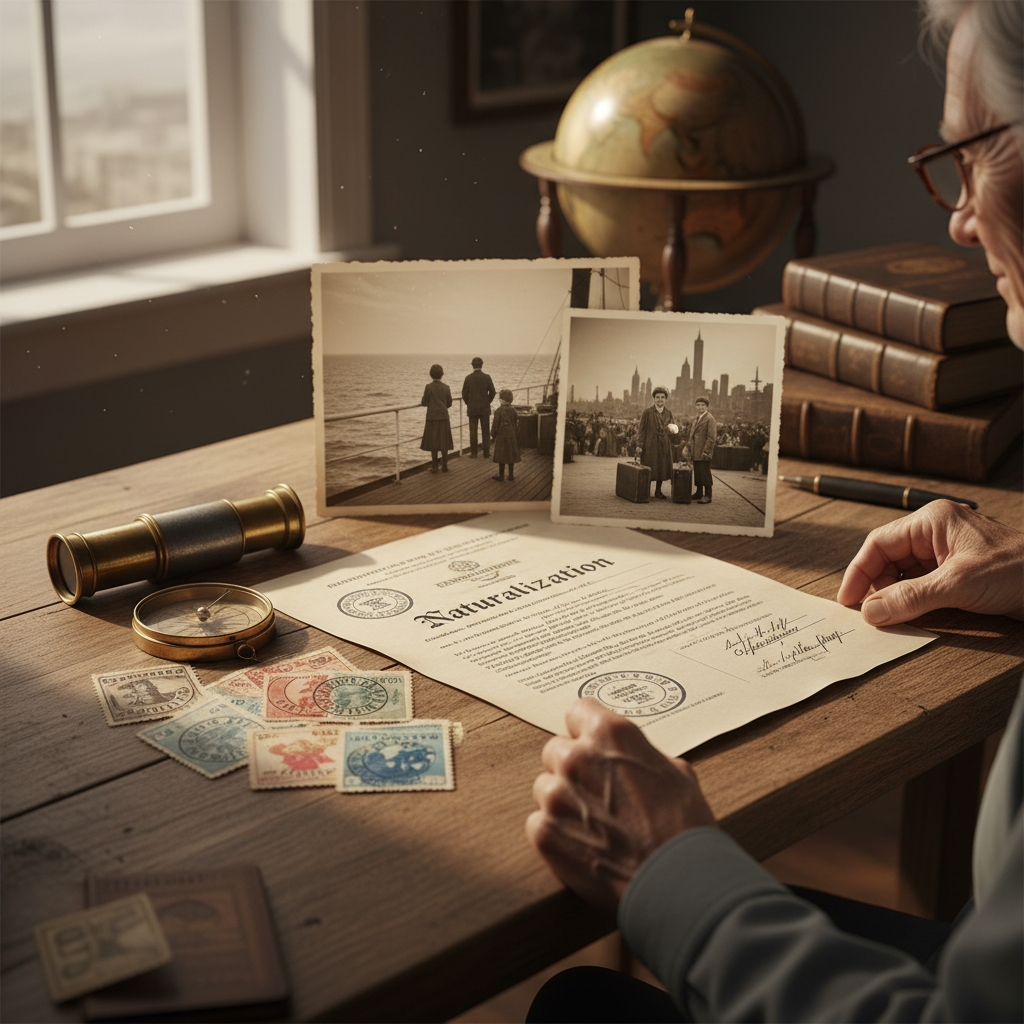
The Ocean Crossing: Documenting Ancestral Migration Routes, Ships, and New Beginnings
Preserving naturalization certificates, passport stamps, and the brave leaps of faith that brought our families to new shores.
 Family Heritage
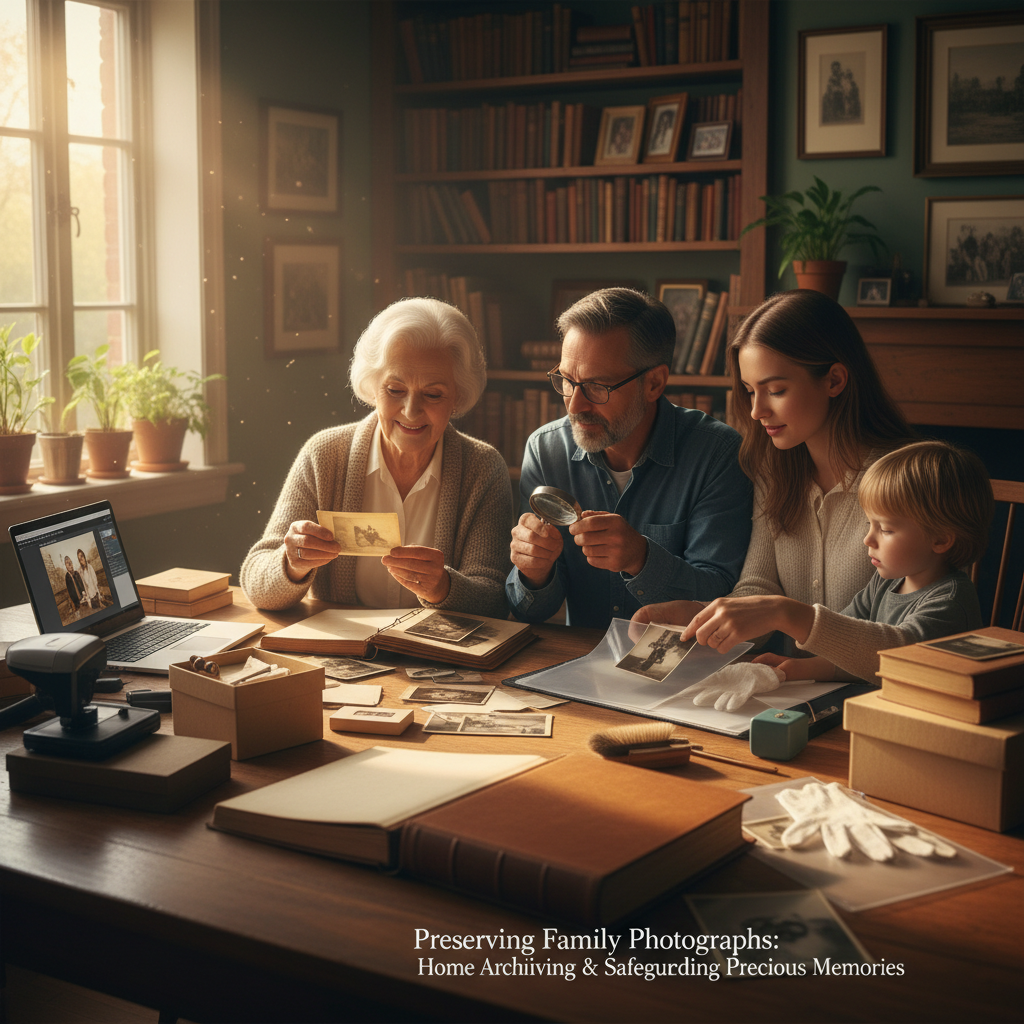
Preserve Old Family Photos: Safe Storage, Scanning and Backups
Protect old family photographs at home with safer handling, photo-safe storage, non-destructive scanning, clear metadata, and reliable backups—without risky cleaning or DIY restoration.
Share the story
Family discussion cards
Take one card at a time. There are no right answers—only memories worth hearing.
What memory did this article bring to mind?
Who in the family might have a story or photograph to add?
What is one small thing we could save, share, or do next?
A quiet conversation can be a meaningful family keepsake.
Subscribe to MemContinuity Publications
Receive thoughtful reflections, local heritage guides, and slow travel stories delivered directly to your inbox. No spam, privacy respected.