The Ocean Crossing: Documenting Ancestral Migration Routes, Ships, and New Beginnings
A practical, respectful guide to tracing an ancestor’s migration through passenger lists, ports, ship records, and related family documents.
A compatible device voice is not available. You can still read this article on screen.
 Family Heritage
Detailed article
Use the text-size control at the top for larger text, or switch back to Easy Read at any time.
Preserving a migration story means bringing together records and family memories without assuming that any single document tells the whole journey. A passenger list, a naturalization paper, a passport stamp, or a pencilled note may each offer a clue. Together, carefully compared, they can help a family describe what is known, what is likely, and what remains uncertain.
Begin with what the family already knows
Start with a person’s full name and known variants, approximate birth year, places lived, relatives, and a broad date range for departure or arrival. Ask relatives, with permission, whether they remember a port, ship, route, language, or family story. A conversation need not become an interview: someone can pass, pause, or share only what feels comfortable. Record who supplied a memory and when, and distinguish recollection from a dated document.
Collect copies or photographs of documents already in the family: naturalization papers, passports, letters, travel tickets, certificates, photographs, and address books. Keep the originals safe and note where each copy came from. Do not write on fragile records. A name on a document may appear in a different spelling or script from the one used later, so list alternatives rather than silently “correcting” them.
Search for the arrival record
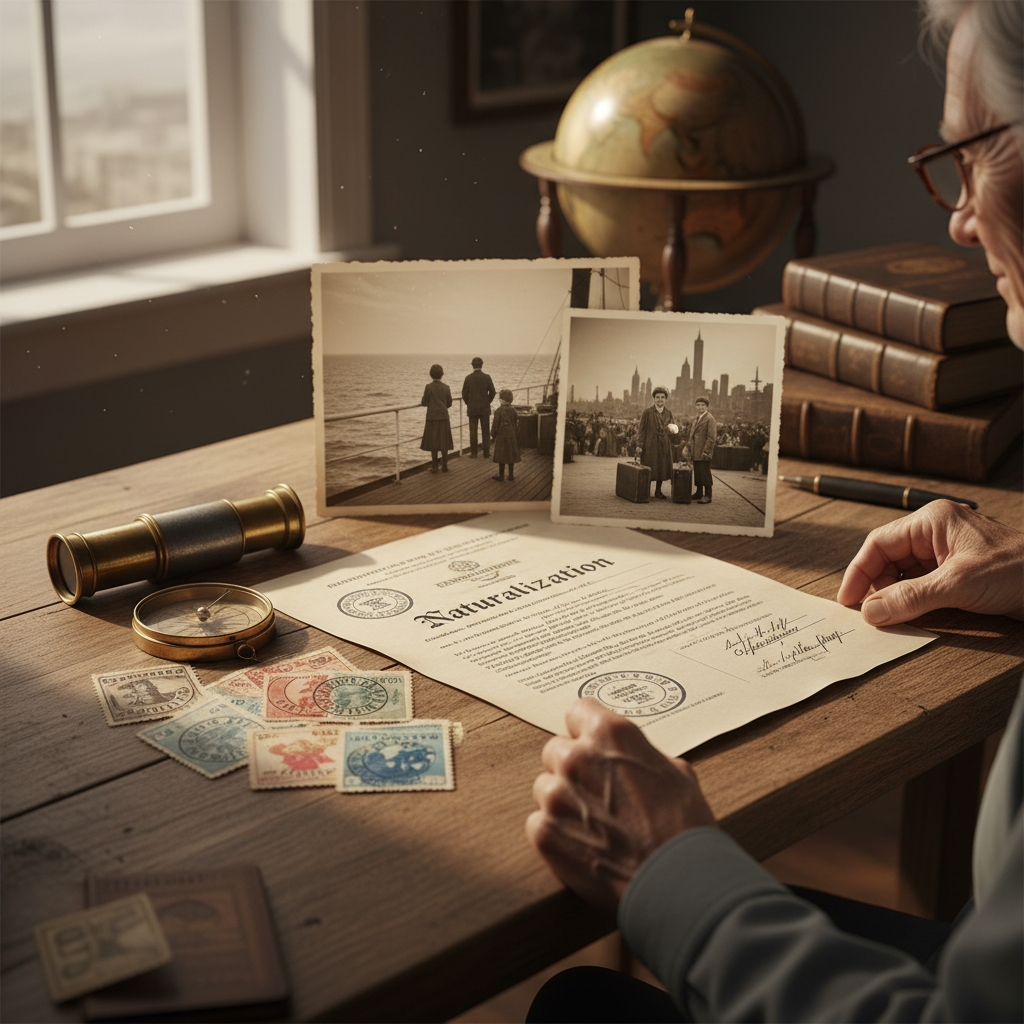
Passenger arrival lists, often called manifests, are a useful starting point, but their coverage depends on the country, port, period, and type of travel. For the United States, the National Archives describes federal arrival records from foreign ports from about 1820 through December 1982, with gaps; records are generally arranged by arrival port. Many older records are available through digitized collections, including partner websites. The National Archives’ passenger-arrival guide explains the broad date coverage, access options, and limits.
Search with a range of years rather than one exact date. Try alternate spellings, initials, a shortened given name, and the names of travelling relatives. If an index returns a possible match, open the image of the original manifest when available. An index is a finding aid, not proof by itself: handwriting may be misread, names may be common, and an indexed detail can be transcribed incorrectly. Compare age, birthplace, last residence, occupation, travelling companions, and the relative or contact named at destination with independent family information.
A manifest may include a vessel name, arrival date, last residence, nationality or birthplace, occupation, and a destination contact. Which details appear varies by time and record form. Treat each entry as a clue about what officials recorded, not as a complete account of the person’s identity or motives. Historical categories and place names may differ from current usage; quote or transcribe the document faithfully, then explain any modern identification separately.
Follow ports and ships carefully
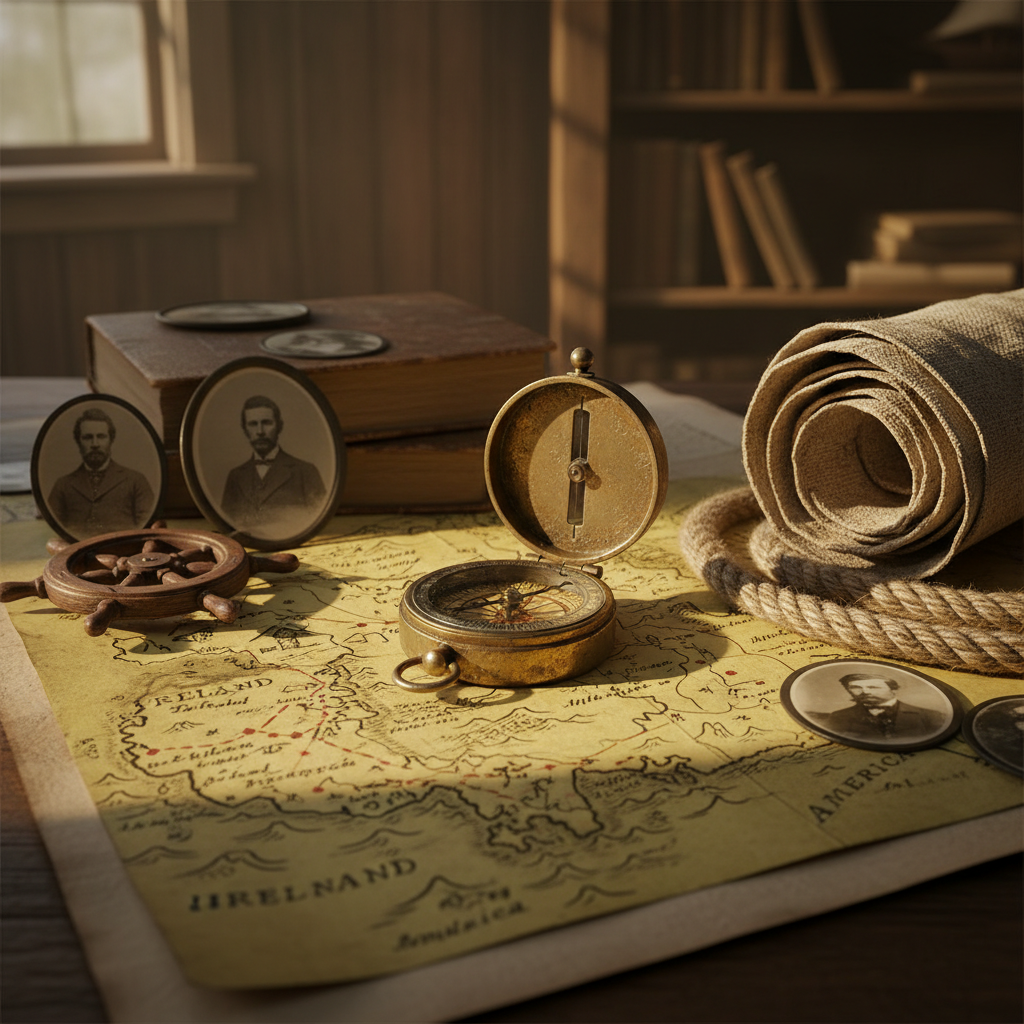
Do not assume that the best-known port was the only possible arrival point. Search the likely destination’s records and consider nearby or intermediate ports, land crossings, and onward travel. The National Archives’ port-of-entry listings show that record sets vary substantially by location and date. If you know a ship or approximate arrival date, searching by vessel and browsing the surrounding manifest pages may reveal relatives travelling together or clarify an entry that a name search missed.
A crossed-out name is not automatically evidence that a person was refused entry or never migrated. The National Archives notes that names could be crossed off because a booked passenger did not sail, because an entry duplicated another, or because the person disembarked at a later port. Its guide to manifest annotations explains these possibilities. Read marginal notes and nearby entries before drawing a conclusion. If a person’s name is absent, consider gaps in coverage, a different port, a border crossing, changed spelling, or a later journey; absence from one database is not proof that the journey did not happen.
Connect the voyage to other records
Look for evidence on both sides of the crossing. Departure lists, where they survive, can name an intended destination or travelling group. Census entries, city directories, church or civil records, naturalization files, family letters, and newspaper notices may help confirm where the person settled or whether the timeline fits. A naturalization record can supply dates or places to check, but it documents a legal process rather than every detail of the sea voyage. The UK National Archives, for example, describes digitized UK passenger lists for arrivals in 1878–1960 and departures in 1890–1960, with access through partner sites; its passenger-list guide makes clear that coverage is defined by record series and direction of travel. Other countries maintain different collections, so identify the relevant national or regional archive before assuming a database is comprehensive.
Build a small timeline with separate columns in a notebook or spreadsheet for date, place, event, source, and confidence. Mark a date copied directly from a record differently from an estimated year recalled decades later. When two sources disagree, keep both readings and explain the conflict rather than choosing the more dramatic version. A brief note such as “possibly the same person; age and destination match, but birthplace differs” is more responsible than a confident identification unsupported by evidence.
Make a useful family record
For every digital copy, save the full record image where permitted, the archive or collection name, the item or page reference, the access date, and the web address. Keep a separate transcription so future readers can distinguish the document’s wording from your notes. Preserve spelling as shown, use brackets sparingly to explain a difficult reading, and mark illegible text instead of guessing. Store an unedited master scan separately from any cropped or enhanced reading copy.
A compact research note might say: “Possible arrival: New York, about 1907. A manifest image gives a matching name and age and lists a destination relative. The indexed spelling differs from later records. Identification is probable, not confirmed.” This records both the discovery and its limits. If a record is restricted, contains living people’s personal details, or comes from a commercial database, check the archive’s access and reuse conditions before sharing an image publicly. A family copy can be useful without being posted online.
Keep the story humane and open
Migration may involve opportunity, separation, coercion, hardship, or several experiences at once. Do not assume that an ancestor felt one way, or that a family’s later success explains the original decision. Invite relatives to contribute context, but do not demand disclosure or ask someone to settle a painful disagreement. Where memories differ, attribute each account to its teller and leave room for uncertainty.
The aim is not to turn a ship name into a complete biography. It is to make a careful, revisable account: a route supported by records, family recollections identified as recollections, and unanswered questions left visible. Even a modest timeline can help descendants see how a person’s movement connects places and generations, while respecting the complexity of a life that cannot be reduced to a manifest.
Reading path
Continue this topic
Explore names, places, migrations, and the practical beginnings of a family tree—one clue at a time.
Pillar guides in this path
Family Heritage
Build a Family Tree Album With Evidence and Living-Person Privacy
Family Heritage
Surnames and Roots: Distinguishing Authentic Regional Etymology from Commercial Heraldic Fictions
Family Heritage
Mapping Lost Streets: Recording Ancestral Neighborhoods and Childhood Pavement Games
A gentle next step
Place the story in your family tree
When you are ready, add a name, relationship, or memory to your private family tree.
“Thank you for sharing this quiet moment of reading with us.”
Every piece in the MemContinuity library is preserved to spark gentle conversations, honor generational memory, and support the health and comfort of our families.
MemContinuity editorial team
MC-HERITAGE-20260517-027 · Publication archive reference
Cross-device reading sync
Sign in to your MemContinuity account to optionally sync your article reading progress across your phone, tablet, and computer.
Themes & topics
Editorial guidance & care
Our publications are designed to be practical, gentle, and respectful. For specific medical, mobility, or travel arrangements, we recommend consulting local providers or relevant municipal services.
Continue with purpose
Part of a curated reading journey
Related publications
 Family Heritage
The Living Family Tree: Engaging Children and Grandchildren with Tactile Ancestral Lore
Moving beyond dry genealogical charts to share character anecdotes, physical likenesses, and enduring virtues with youth.
 Family Heritage
Surnames and Roots: Distinguishing Authentic Regional Etymology from Commercial Heraldic Fictions
How geographic topograms, patronymics, and occupational descriptors unveil the genuine medieval origins of family names.
 Family Heritage
Preserve Old Family Photos: Safe Storage, Scanning and Backups
Protect old family photographs at home with safer handling, photo-safe storage, non-destructive scanning, clear metadata, and reliable backups—without risky cleaning or DIY restoration.
Share the story
Family discussion cards
Take one card at a time. There are no right answers—only memories worth hearing.
What memory did this article bring to mind?
Who in the family might have a story or photograph to add?
What is one small thing we could save, share, or do next?
A quiet conversation can be a meaningful family keepsake.
Subscribe to MemContinuity Publications
Receive thoughtful reflections, local heritage guides, and slow travel stories delivered directly to your inbox. No spam, privacy respected.