Thriving Together: Finding Connection Through Later-Life Clubs
A practical, welcoming guide to choosing and joining later-life clubs, from first visits and accessibility questions to shared activities, flexible participation and consent-led memory keeping.
A compatible device voice is not available. You can still read this article on screen.
 Community & Connection
Detailed article
Use the text-size control at the top for larger text, or switch back to Easy Read at any time.
The Timeless Rhythm of Thriving Together: Finding Connection Through Later-Life Clubs
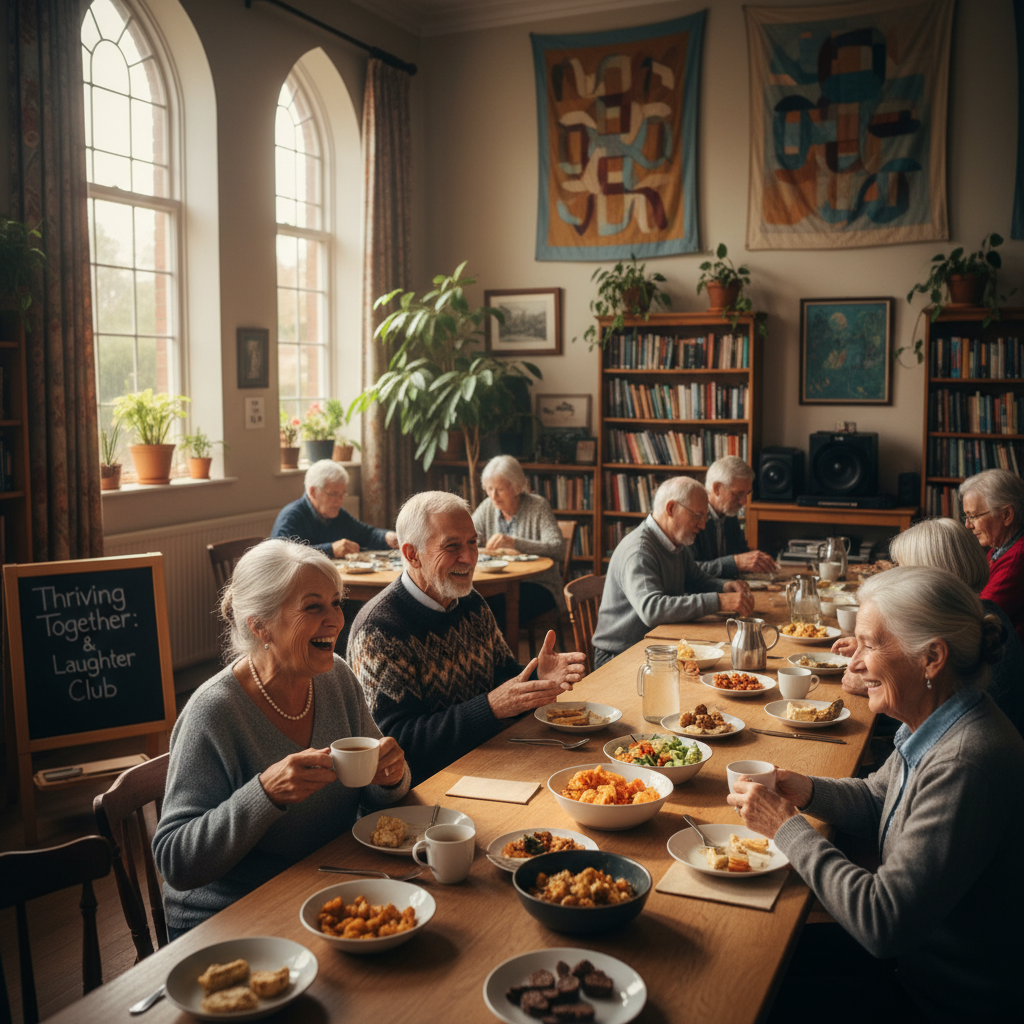
Across neighbourhoods, libraries, community rooms and family living rooms, clubs offer a simple way to make room for shared time. A lunch club, craft circle, walking group, choir, card table or coffee morning can bring people together around something they already enjoy—or a curiosity they would like to explore. The activity gives conversation a natural starting point. No one needs to arrive with a polished story or perform a particular version of sociability.
Retirement, bereavement, a move, changing health or a shift in family routines can alter the shape of an ordinary week. A regular gathering may give the calendar a pleasant point of anticipation and create chances to meet familiar faces. It is not a cure for loneliness, and joining a group will not suit everyone. Some people prefer one-to-one visits, telephone calls, online contact or quiet time. The useful question is not whether everyone ought to join a club, but whether a particular gathering feels meaningful and manageable to the person considering it.
Loneliness is a distressing feeling of disconnection; social isolation describes having few social contacts. They can overlap, but they are not the same. A person may live alone and feel content, or be among people and still feel lonely. Public-health guidance links disconnection with health risks, but those associations do not mean that attending a club guarantees better health.
Why a shared activity can help
A common task can make a first conversation easier. People can talk while sorting photographs, tending plants, singing, playing a game or sharing lunch, and pauses do not have to feel like failure. Returning to the same place may let recognition and trust develop gradually.
Intergenerational projects have also been studied as a way to support connection between older adults and younger people. A review of nine varied programmes identified shared purpose, supportive facilitation and community settings as promising features, while noting gaps in the evidence.
Local offerings vary. Examples listed by older-adult organizations include arts and crafts, coffee mornings, friendship clubs, photography, quizzes, lunch clubs and men’s sheds. A local library, community centre, faith community, older-adult service or neighbourhood noticeboard may know what is available. Some groups require booking or charge a fee; schedules and arrangements differ by place, so check directly before travelling.
Choosing a group that fits
Begin with the person’s interests, not a generic idea of what older people should enjoy. Ask: Would I rather talk over a meal, make something, listen, learn, move gently, or help with a shared task? Is a small group, a larger room, or a one-to-one introduction more comfortable? Would I like to attend alone, or ask someone I trust to come along the first time? These questions can turn an overwhelming directory into a short list of realistic options.
Before committing, contact the organizer with practical questions. Is the entrance step-free, and is an accessible toilet available? Is there seating with back or arm support, space for a mobility aid, and a quieter corner? How long does a typical session last, and may someone arrive late or leave early? Ask about transport, parking, cost, refreshments, booking, language, and whether a companion or support person may attend.
If the group is new, try a single visit before making a commitment. Ask whether you can observe first, meet a host at the entrance, or attend a taster session. Notice whether people are greeted kindly, whether instructions are easy to hear and follow, and whether newcomers are given room to settle in.
Make participation comfortable and flexible
A gathering can be adapted without changing its purpose. A craft participant may choose a simpler task or watch; someone who tires easily may attend for only part of a session. Large-print materials, good lighting, clear speech, reduced background noise or written instructions can help people take part. If hearing is difficult, face-to-face conversation and one speaker at a time may make discussion easier.
The original suggestion of an unhurried session remains useful as a principle, but there is no single ideal duration for everyone. Let participants and organizers agree on a length that fits the activity and the group. Build in breaks if wanted. For food-based gatherings, ask about ingredients and dietary needs, and never assume everyone wants tea, coffee or refreshments. A glass of water or no food at all may be preferred. Hospitality is most welcoming when people can accept, decline or request an alternative without explanation.
If an outing involves a venue, check access, toilets, seating and the route from public transport or parking in advance. Weather, lighting and noise can affect comfort, so have a simple alternative if conditions change.
Help a group grow without pressure
A relative, neighbour or volunteer can offer practical help: look up a few options, make an introductory call together, arrange a lift if both people agree, or accompany someone on the first visit. A quiet conversation at home, a telephone friendship service or an online class may suit better.
For anyone organizing a small gathering, keep the invitation clear: what happens, where, when, how much it costs, and whom to contact about access needs. Welcome people by name if they wish, explain the activity briefly, and let them choose whether to join in, watch or leave. Rotate simple tasks only when people want them.
Preserve stories with consent
Conversation sometimes turns to childhood, work, songs, neighbourhood changes or family objects. These memories can be a lovely part of shared time, but no one owes the group a personal account. A gentle prompt such as “Would you like to tell us about that?” leaves room to say no or change the subject. Avoid treating reminiscence as a test of memory or asking someone to disclose painful experiences in public.
If a story seems worth keeping, a notebook may be enough. Ask before writing down a person’s words, and let them review or correct the note if they wish. Recording a voice message requires clear, specific permission from the speaker; explain who will keep it, where it may be shared, and that they can decline.
A small first-step plan
Choose one activity that genuinely interests you, then find a nearby group through a library, community centre, local older-adult organization or trusted neighbour. Call or write to ask about access, timing, cost and whether a first visit can be informal. Decide what would make the visit comfortable—perhaps a companion, transport plan, shorter stay or a quiet seat. Afterward, ask yourself what felt welcoming and what you would change. You may return, try another group, or decide that a different form of connection fits better.
Later-life clubs are not valuable because they promise a particular result. Their value is in the ordinary possibility of showing up as oneself, sharing an activity, and meeting others at a chosen pace. A cup of tea, a card game, a class or a community project can open a door; each person remains free to decide whether and how to step through it.
Sources and Further Reading
- Loneliness and Social Isolation — Tips for Staying Connected
- Circumstances that promote social connectedness in older adults participating in intergenerational programs with adolescents: a realist review
- Social groups, clubs and activities for older people
- Social connection linked to improved health and reduced risk of early death


Reading path
Continue this topic
A supportive route for families navigating care, connection, and gentler everyday routines together.
Pillar guides in this path
A gentle next step
Keep a related family story
If this topic brings a family memory to mind, you can save it at your own pace.
“Thank you for sharing this quiet moment of reading with us.”
Every piece in the MemContinuity library is preserved to spark gentle conversations, honor generational memory, and support the health and comfort of our families.
MemContinuity editorial team
MC-COMMUNITY-20260816-046 · Publication archive reference
Cross-device reading sync
Sign in to your MemContinuity account to optionally sync your article reading progress across your phone, tablet, and computer.
Themes & topics
Editorial guidance & care
Our publications are designed to be practical, gentle, and respectful. For specific medical, mobility, or travel arrangements, we recommend consulting local providers or relevant municipal services.
Continue with purpose
Part of a curated reading journey
Related publications
 Community & Connection
A Table, a Game, a New Conversation
Why board-game afternoons and quiet community spaces are quietly reshaping companionship for older adults across local neighbourhoods.
 Community & Connection
Neighbourhood Walking Groups: Steps and Stories
Regular morning strolls that turn ordinary streets into a shared chronicle of local history, blooming gardens, and warm check-ins.
 Community & Connection
Men's Sheds and Creative Woodworking Meetups
Community workshops where older adults fix chairs, build bird boxes, and converse shoulder-to-shoulder with steady camaraderie.
Share the story
Family discussion cards
Take one card at a time. There are no right answers—only memories worth hearing.
What memory did this article bring to mind?
Who in the family might have a story or photograph to add?
What is one small thing we could save, share, or do next?
A quiet conversation can be a meaningful family keepsake.
Subscribe to MemContinuity Publications
Receive thoughtful reflections, local heritage guides, and slow travel stories delivered directly to your inbox. No spam, privacy respected.