Caring for a Parent with Dementia: A Practical and Gentle Guide
Practical, person-centred ways to communicate, shape calmer routines, respond to distress and find support while caring for a parent with dementia.
A compatible device voice is not available. You can still read this article on screen.
 Family Heritage
Detailed article
Use the text-size control at the top for larger text, or switch back to Easy Read at any time.
Meeting Loved Ones Where They Are
When memory, language or judgement changes, family roles can feel unfamiliar. A parent may need more help with a task they once managed easily, yet remain an adult with preferences, relationships and a lifetime of experience. Dementia affects people differently. Notice what helps your parent feel respected, safe and involved, then adapt.
The aim is to understand what your parent may be expressing and respond to the feeling or practical need beneath the words. Person-centred care takes account of a person's history, abilities, culture, interests and preferences, not only their diagnosis. Include your parent in choices as far as possible, and ask permission before stepping in.
Communicating with patience and respect
Choose a quieter moment and approach from the front so your parent can see you. Say their name if that feels natural, make eye contact without demanding it, and use a warm, ordinary tone. Speak clearly in short sentences, ask one question at a time, and allow extra time for an answer.
Offer two manageable choices rather than a string of open questions: “Would you like tea or water?” can be easier to answer than “What do you want?” Keep choices real. If neither works, try later or use gestures, pointing or familiar objects. If speech is difficult, listen for meaning and acknowledge what you heard, even when the answer does not match the question. Avoid ridicule, talking over your parent, or correcting every mistaken detail.
If your parent speaks about an earlier time or believes they need to go somewhere, first consider what the moment means to them. They may be seeking purpose, reassurance or a familiar person. You might say, “You want to make sure everything is ready,” then gently ask what would help now. Reassurance is not the same as agreeing to something unsafe or making a promise you cannot keep. If a practical risk is involved, respond calmly to that risk and offer a clear alternative.
Touch is not automatically comforting. Ask or watch for signs of ease, and respect a withdrawal or refusal. Reduce competing noise when it makes conversation hard, but do not assume every person prefers silence; a familiar radio programme or music may be welcome.
Make ordinary routines easier
A predictable rhythm can make everyday tasks more manageable, but it should serve the person rather than become a timetable imposed on them. Notice when your parent is usually most comfortable for meals, dressing, appointments or a short visit. Give advance cues for transitions, such as explaining that lunch is nearly ready. Keep familiar items in consistent places when that helps, while checking that pathways and frequently used areas remain safe and well lit.
Break a task into one step at a time. For washing or dressing, explain what you are doing before helping, offer privacy, and let your parent do the parts they can. Comfortable, familiar clothing may be easier than garments with difficult fasteners. If a task leads to distress, stop if it is safe to do so. Consider whether the timing, instructions, temperature, fatigue, pain or need for privacy might be part of the difficulty. Try a different moment or ask a health or care professional for advice if the problem persists.
Activities that offer comfort and purpose
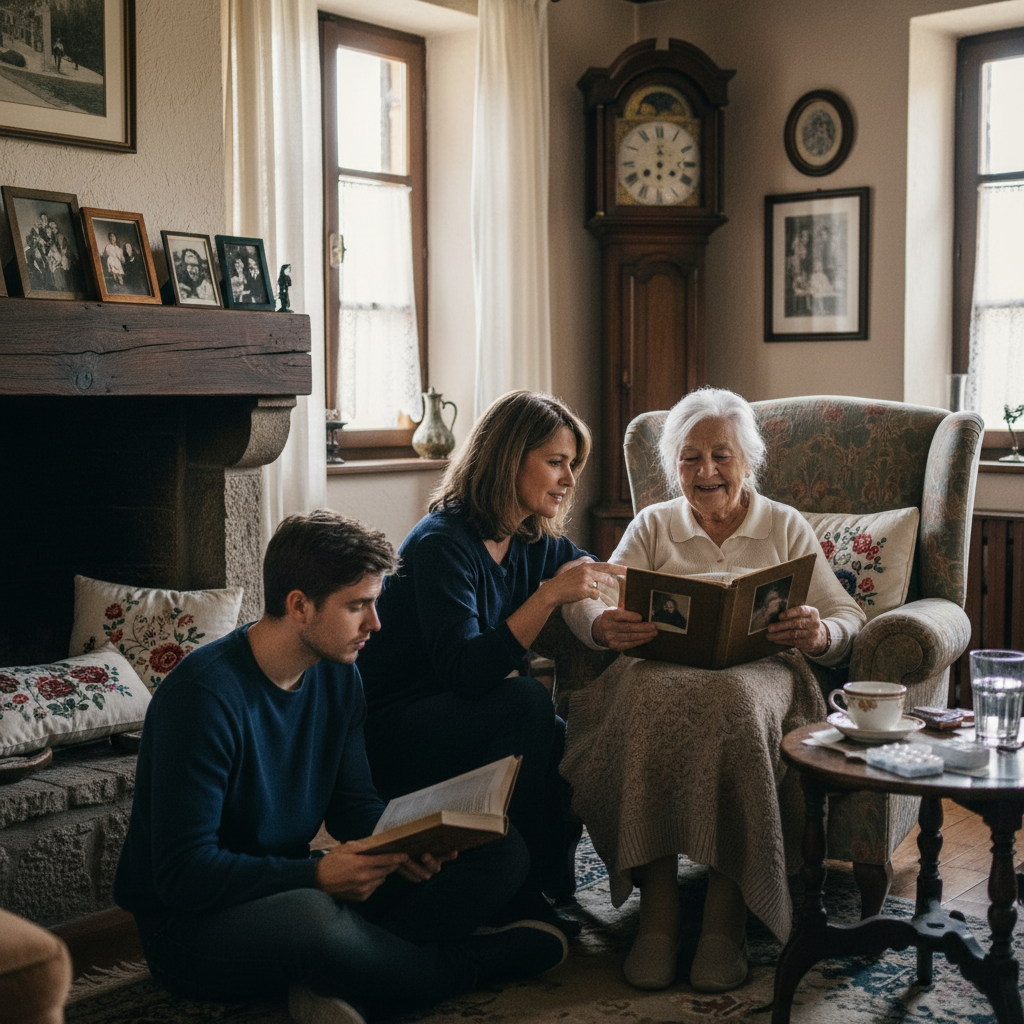
An activity need not produce a finished result. Folding warm, dry towels, sorting a small box of familiar objects, watering a plant, listening to a well-loved song or looking through photographs may offer a pleasant shared moment when it fits the person's interests and abilities. Ask whether your parent wants to join, offer help without taking over, and let them stop or simply watch.
Use materials that are safe for the person and setting. Stay nearby if an activity involves hot water, sharp tools, small items that could be swallowed, or movement around obstacles. Choose a comfortable, well-lit place. If the activity frustrates, tires or unsettles your parent, change it or leave it for another day. There is no need to quiz them about names, dates or the “right” memory; enjoying a photograph together matters more than recalling its details.
When distress or behaviour changes
Restlessness, refusal or repeated questions can be difficult for both of you. Treat the behaviour as information rather than deliberate defiance. Pause, lower the pressure, and check what may be happening: is your parent tired, hungry, uncomfortable, worried, in pain, overwhelmed by noise, or struggling to understand the request? A simpler explanation, quieter space or different time may help. Notice patterns and share concerns with the care team.
Do not label every difficult evening “sundowning” or assume it can be solved by removing clutter. Needs and causes vary. If distress is recurring, severe, or difficult to manage, contact the GP, dementia or memory service, or another professional involved in care. NICE recommends assessing possible reasons for distress and checking for clinical or environmental causes such as pain or delirium before deciding on an intervention.
A sudden change is different from a gradual pattern. If your parent suddenly becomes confused or markedly unlike themselves, seek urgent medical help rather than assuming the dementia has progressed. NHS guidance in England says sudden confusion needs immediate assessment because causes can include infection, stroke, head injury or medicines. Use local emergency services if this happens; do not try to diagnose the cause at home.
Support for the person and the caregiver
Care is rarely sustainable as a one-person responsibility. Ask relatives or friends for specific help, such as accompanying your parent to an appointment or sitting with them while you rest. With your parent's agreement, share the information helpers need to respect familiar preferences.
In England, you can ask the local council's adult social services team for a free carer's assessment. It considers how caring affects your health, work, relationships and free time, and may identify support. Your parent can also have a separate care needs assessment. Respite may take different forms, including a sitting service, day provision or a short stay, but availability, eligibility and costs vary. Ask the council or a local carers' organisation what is available where you live. Scotland, Wales, Northern Ireland and EU countries have different local systems, so check the relevant authority rather than assuming the England pathway applies.
Taking a break is not a measure of how much you love your parent. If you feel exhausted or isolated, tell someone you trust or a health professional. Peer support can give you a place to discuss difficult feelings. Where possible, plan regular pauses and identify someone who could step in during an emergency.
A gentle check-in for today
Before a visit or task, consider what your parent seems to want, whether one clear choice and more time might help, and what support you can share. These are prompts, not a test; needs shift from day to day.
The most helpful moments may be small: a conversation without rushing, a familiar song, or being together without demanding an answer. Respect for your parent's choices and attention to your own limits can coexist. You do not have to manage every difficulty alone.
Sources and Further Reading

Reading path
Continue this topic
A supportive route for families navigating care, connection, and gentler everyday routines together.
Pillar guides in this path
A gentle next step
Keep a related family story
If this topic brings a family memory to mind, you can save it at your own pace.
“Thank you for sharing this quiet moment of reading with us.”
Every piece in the MemContinuity library is preserved to spark gentle conversations, honor generational memory, and support the health and comfort of our families.
MemContinuity editorial team
MC-HERITAGE-20260710-058 · Publication archive reference
Cross-device reading sync
Sign in to your MemContinuity account to optionally sync your article reading progress across your phone, tablet, and computer.
Themes & topics
Editorial guidance & care
Our publications are designed to be practical, gentle, and respectful. For specific medical, mobility, or travel arrangements, we recommend consulting local providers or relevant municipal services.
Continue with purpose
Part of a curated reading journey
Related publications
 Family Heritage
Choosing a Care Home: A Compassionate Guide for Families
Practical checklists and psychological reassurance for evaluating French and European care facilities, ensuring comfort, respect, and seamless family involvement.
 Family Heritage
Preserve Old Family Photos: Safe Storage, Scanning and Backups
Protect old family photographs at home with safer handling, photo-safe storage, non-destructive scanning, clear metadata, and reliable backups—without risky cleaning or DIY restoration.
 Family Heritage
QR Code Headstones: Bringing Digital Memorials to the Graveside
Explaining the growth of physical-to-digital gravestone integration, allowing visitors to scan respectful QR plaques and revisit cherished photo archives, voice memories, and family histories right at the memorial stone.
Share the story
Family discussion cards
Take one card at a time. There are no right answers—only memories worth hearing.
What memory did this article bring to mind?
Who in the family might have a story or photograph to add?
What is one small thing we could save, share, or do next?
A quiet conversation can be a meaningful family keepsake.
Subscribe to MemContinuity Publications
Receive thoughtful reflections, local heritage guides, and slow travel stories delivered directly to your inbox. No spam, privacy respected.