The Communal Table: How Community Soups Melt Loneliness on Cold Afternoons
A practical, welcoming guide to planning or joining a neighborhood soup gathering, with simple ways to make conversation, access and participation comfortable for everyone.
A compatible device voice is not available. You can still read this article on screen.
 Community & Connection
Detailed article
Use the text-size control at the top for larger text, or switch back to Easy Read at any time.
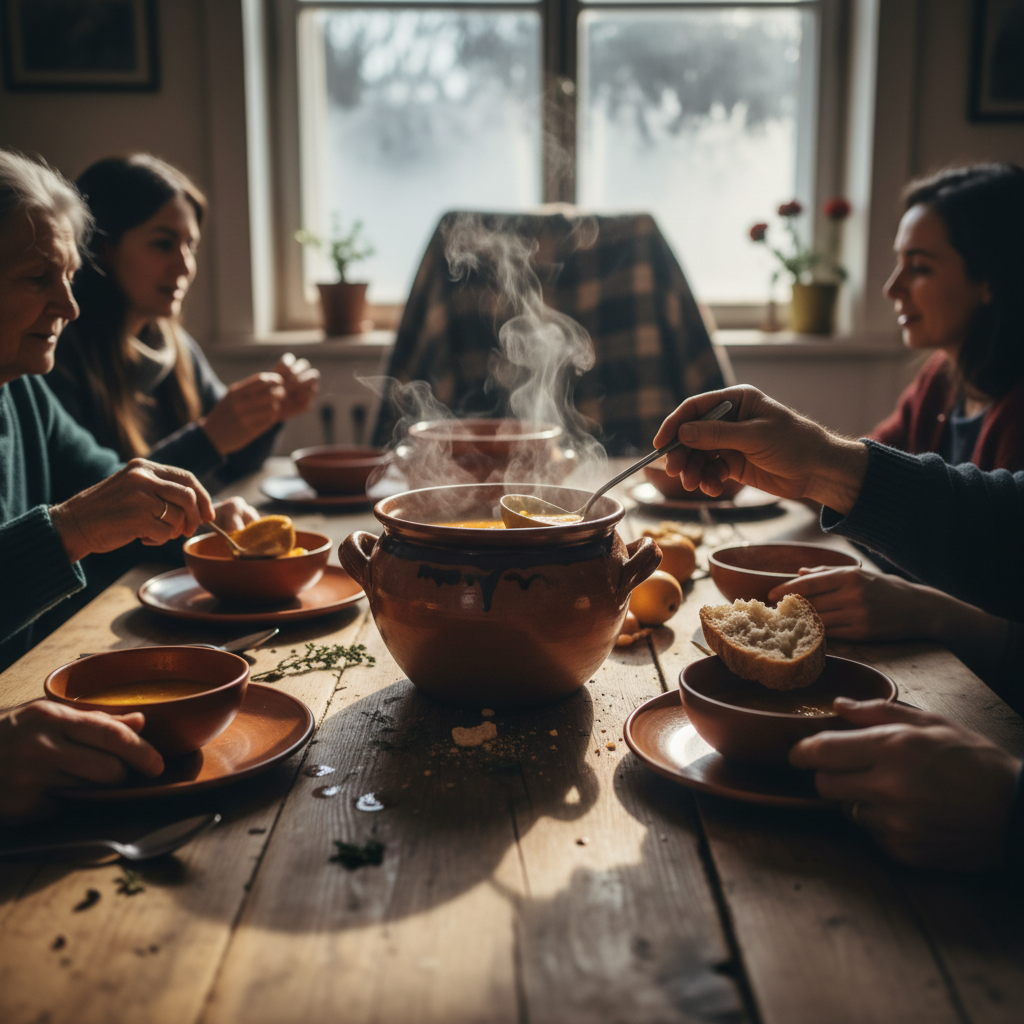
Gathering around a pot of soup can offer neighbors a warm place to meet, share a meal, and take part at their own pace.
A shared meal is one small, ordinary way to make room for connection. It need not be elaborate: a bowl, a seat, and an unhurried welcome may be enough.
Why a shared bowl can matter
Soup gatherings are less about a perfect recipe than a reason to be together. A community meal creates a shared activity and a natural opening for conversation. People may talk while serving, ask what is in the pot, or simply enjoy the company without needing to tell a story. That flexibility matters: connection can mean listening quietly as much as speaking.
Research on structured shared-meal programs for older adults describes opportunities for social contact and reports positive self-reported wellbeing in many of the studies that measured it. The review also notes important limits: much of the evidence is observational, measures vary, and it cannot show that attending a meal by itself causes better health or ends loneliness. A gathering can offer an opening, not a promise. The U.S. Administration for Community Living describes congregate nutrition programs as combining meals with socialization and links to other community supports. Those organized services are not the same as a one-off neighborhood lunch, but they show how a meal can sit within a broader network of care. Research review Administration for Community Living
Start with a gathering that feels manageable
Ask a few neighbors or a local community group whether they would enjoy a soup lunch, tea, or another low-key gathering. A modest first meeting in an accessible, permitted room can help organizers learn what works before making a regular commitment.
Decide whether the event is a meal, a drop-in hour, or both. State the start and finish times so guests can plan. If recurring, choose a frequency hosts can sustain; a monthly gathering is better than an ambitious plan that becomes a burden. Make clear whether people should bring anything; “come as you are” should mean that food, money, and volunteer labor are not unspoken conditions of welcome.
A community centre, faith venue, library room, or other shared space may work. Ask about booking, kitchen access, accessibility, cleanup, and rules before advertising. Keep a contact method available for questions, but do not publish anyone’s private details without permission.
Make the welcome practical
Think about the whole visit. Is there a step-free entrance, nearby toilet, supportive seating, and room to move between tables? Can guests hear conversation, read signs, and find the room? A quiet corner, clear signs, good lighting, and a greeter may help first-time visitors. Ask what would help instead of guessing what a person can or cannot do.
Offer more than one way to participate. Guests can help choose a date, set napkins, welcome people, bring a dish if they wish, or simply sit and eat. Do not make conversation, sharing a personal history, or helping in the kitchen a condition of attendance. Some people prefer a short visit or a quiet seat near the edge; respect that without drawing attention to it. A companion or support person may be welcome, and hosts can ask about access needs privately in advance.
Conversation can stay light and optional. A host might offer a gentle prompt such as, “What is a comforting meal you enjoy?” or “Which season do you look forward to?” Let people pass, change the subject, or talk about something else. Avoid quizzing anyone about memory or family, and do not treat a gathering as a place to diagnose, counsel, or solve another person’s circumstances. If someone shares something sensitive, listen respectfully and do not repeat it outside the group without consent.
Plan food with care
A soup pot can accommodate many preferences, but there is no single recipe that suits everyone. Ask guests in advance about ingredients they need to avoid, dietary preferences, and texture or serving needs. Do not promise that a dish is allergen-free unless the ingredients and preparation can genuinely support that assurance. Keep packaging or a written ingredient list where possible, use clean serving utensils, and avoid letting utensils move between dishes. Labeling the main ingredients helps guests make their own choices.
If cooking for a group feels too demanding, keep the menu simple or ask a local organization about its food-handling requirements. A gathering can also be a tea-and-conversation afternoon where each person brings their own refreshment, if that is practical and clearly explained. Do not leave perishable food sitting out for long periods; follow the food-safety directions that apply locally, and plan how leftovers will be handled before the event. A neighbor should never have to disclose a medical reason to decline a dish.
Helping a first visit feel easier
A personal invitation can be more reassuring than a general notice. Explain the event, entrance, any cost, and whether people may attend alone. Offer to meet a guest or introduce them, but let them decide. If a person cannot travel or would rather not join a group, ask whether a phone call, doorstep hello, or another form of contact would suit them; do not assume that everyone wants a meal delivered or a visit at home.
Local senior nutrition services may offer group meals, transport information, or home-delivered options for eligible residents. Availability and eligibility vary by location. In the United States, the Administration for Community Living suggests contacting a local Area Agency on Aging or using its Eldercare Locator to find services; elsewhere, a council, community centre, or local older-adult organization may be a better starting point. A noticeboard or community group can help share an invitation, but use only information the person has agreed to make public.
A small plan to take forward
Before setting a date, write down three decisions: who will welcome guests, what accessible place is available, and what simple food or refreshment is realistic. Then add the practical details—time, cost if any, ingredients, contact person, and how guests can ask for access adjustments. Afterward, invite brief feedback: what felt comfortable, what could be easier, and whether people would like another gathering. Feedback is an invitation, not a vote that obliges anyone to return.
The original guide recommends beginning with one small, enjoyable change and sharing thoughts with neighbors; those remain useful principles when the change is a communal table. A regular gathering may become a familiar point in the week, but it cannot guarantee that loneliness disappears. Its value can be humbler and still real: a seat offered without pressure, a name remembered, or a warm bowl shared on a cold afternoon.
For community announcements, the MemContinuity Community Noticeboard is one available place to share information. Keep the invitation specific, welcoming, and honest about what the event can offer.
Sources and Further Reading

Reading path
Continue this topic
A supportive route for families navigating care, connection, and gentler everyday routines together.
Pillar guides in this path
A gentle next step
Keep a related family story
If this topic brings a family memory to mind, you can save it at your own pace.
“Thank you for sharing this quiet moment of reading with us.”
Every piece in the MemContinuity library is preserved to spark gentle conversations, honor generational memory, and support the health and comfort of our families.
MemContinuity editorial team
MC-COMMUNITY-20260131-201 · Publication archive reference
Cross-device reading sync
Sign in to your MemContinuity account to optionally sync your article reading progress across your phone, tablet, and computer.
Themes & topics
Editorial guidance & care
Our publications are designed to be practical, gentle, and respectful. For specific medical, mobility, or travel arrangements, we recommend consulting local providers or relevant municipal services.
Related publications
 Community & Connection
The Intergenerational Café: Pairing Teenagers and Seniors for Story Exchanges
How youthful digital confidence and elder life wisdom complement each other in relaxed community spaces.
 Community & Connection
The Repair Workshop: Fixing Broken Radios and Cherished Household Keepsakes
Volunteering retired mechanics and electricians to mend small appliances while forging warm local ties.
 Community & Connection
Reading Buddies: The Mutual Joy of Seniors Listening to Schoolchildren Read
How thirty minutes of gentle patience boosts a child's reading fluency and fills an elder's week with joy.
Share the story
Family discussion cards
Take one card at a time. There are no right answers—only memories worth hearing.
What memory did this article bring to mind?
Who in the family might have a story or photograph to add?
What is one small thing we could save, share, or do next?
A quiet conversation can be a meaningful family keepsake.
Subscribe to MemContinuity Publications
Receive thoughtful reflections, local heritage guides, and slow travel stories delivered directly to your inbox. No spam, privacy respected.