The Repair Workshop: Fixing Broken Radios and Cherished Household Keepsakes
A community repair workshop brings neighbours together to examine small household objects, share skills and decide what can be safely mended.
A compatible device voice is not available. You can still read this article on screen.
 Community & Connection
Detailed article
Use the text-size control at the top for larger text, or switch back to Easy Read at any time.
What happens at a repair workshop?
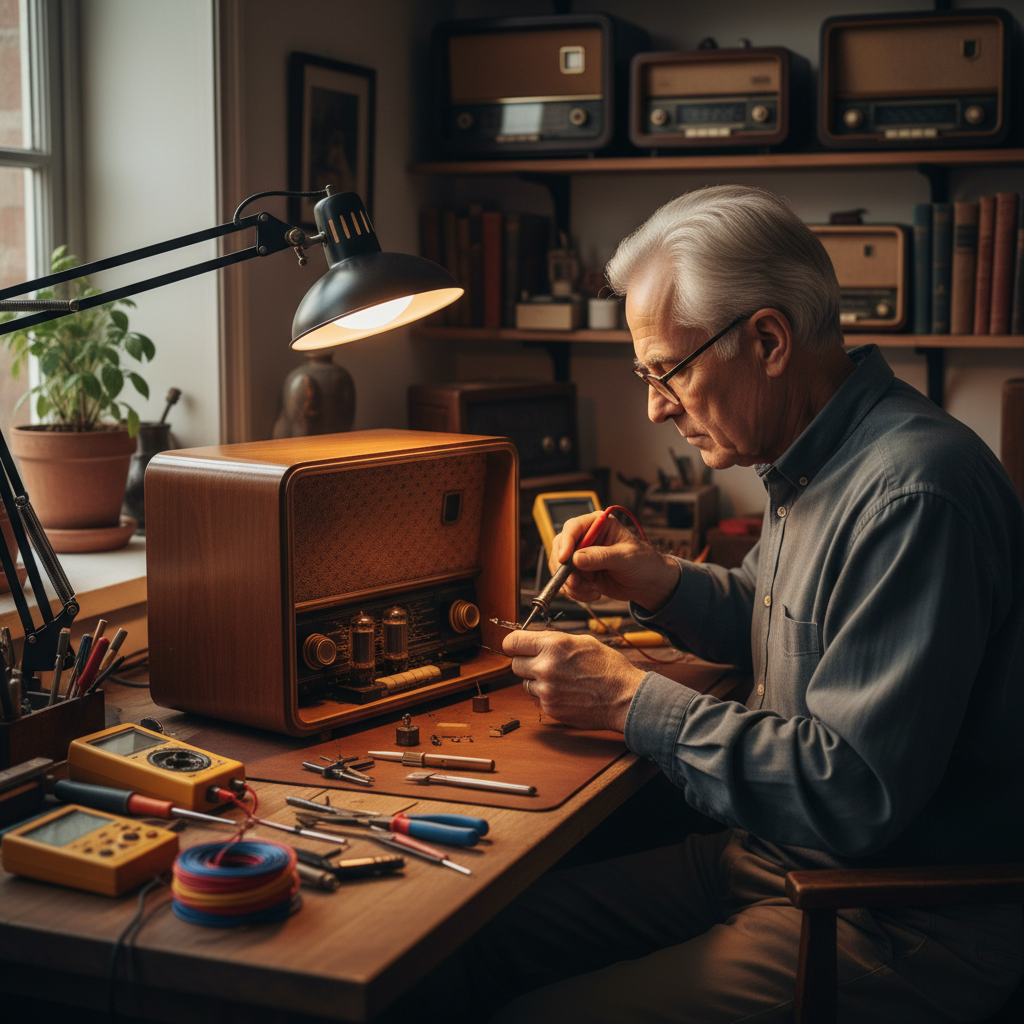
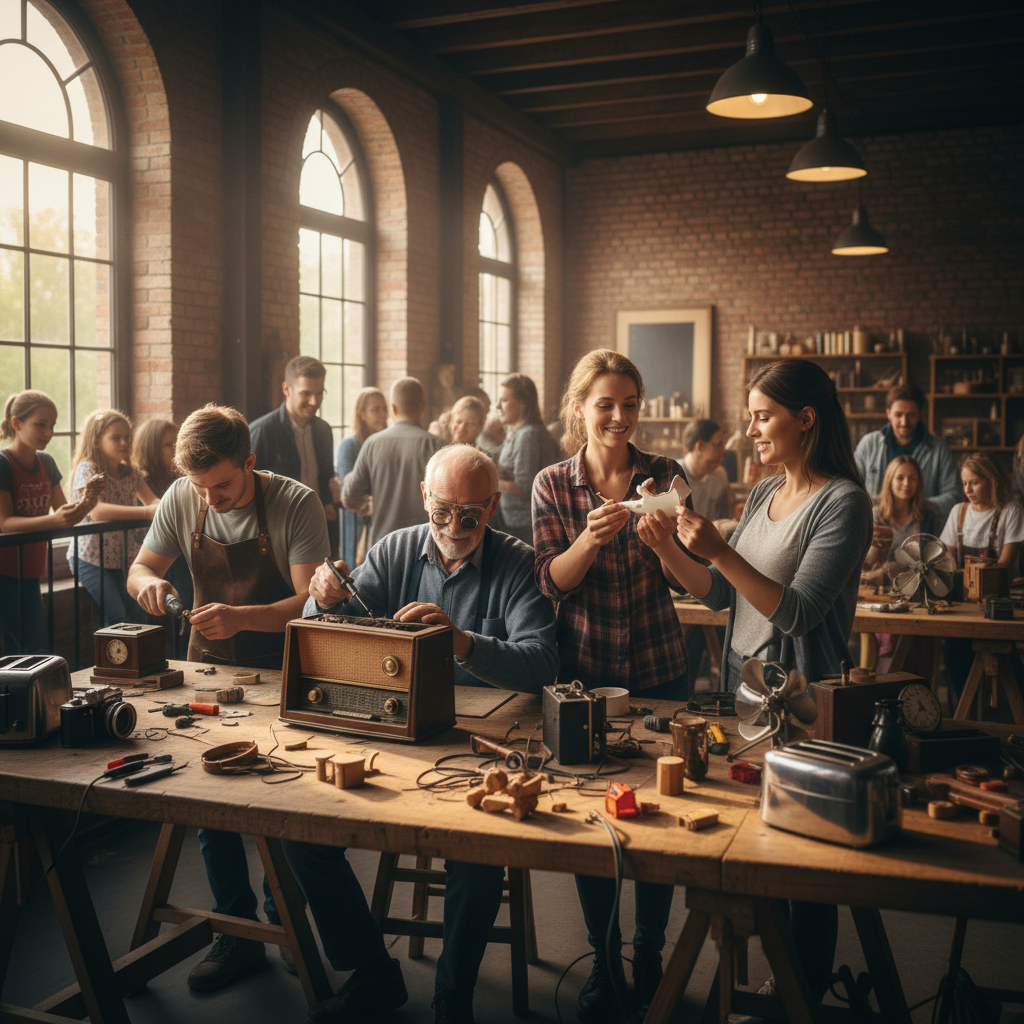
A repair café or community repair workshop is a place where people bring an object that has stopped working and work alongside a volunteer with relevant repair skills. Depending on the event, the table may welcome clothing, furniture, toys, bicycles, small appliances or other household goods. The purpose is not simply to hand an object over and collect a finished product: visitors can watch, ask questions and learn what the fault might be. Organisers may also welcome people who come to help with greeting, sorting, refreshments or basic tasks rather than bringing an item. Repair Café International describes these gatherings as free meetings where visitors and specialists repair together, and notes that professional repairers may be recommended when a job needs a different level of service.
The word “café” suggests an unhurried social space, but the work still needs care. A volunteer may be able to identify a loose connection, worn part or simple mechanical problem; another object may prove difficult to diagnose, lack an available part, or be unsafe to open. A workshop is not a promise that every item can be fixed. Its useful outcome might be a repair, a clearer understanding of the problem, or advice about the next appropriate step.
Before you set out
Check the local organiser’s current notice for the date, venue, booking arrangements, item limits and accessibility details. These are local choices, not universal rules. Some events manage demand in arrival order; the City of Portland, for example, describes its Repair Café events as first-come, first-served. That does not mean another workshop uses the same system. If you are unsure whether a radio, lamp or clock is accepted, ask before carrying it there. A photograph and a short description can help an organiser answer.
Choose an item that you can transport without straining yourself or risking damage. Remove loose personal belongings from bags or cases, but do not dismantle the object at home just to make it easier to carry. Bring only the parts or accessories the organiser requests. For a radio, that might mean noting whether the fault concerns power, sound or a control; for a lamp, you can say whether the bulb, switch or cord appears involved without trying to diagnose it yourself. If the object has sentimental value, say so plainly. That gives everyone a chance to agree on what handling or testing feels acceptable.
At the table: make the repair collaborative
When you arrive, tell the volunteer what the item means to you and what you hope to achieve. “I would like to know whether this can be repaired” is a reasonable request. So is “Please ask me before opening the case” or “I would rather not risk cosmetic changes.” Agree on a simple boundary before work begins: who will handle the object, what inspection is acceptable, and whether you want to stay and observe.
If you can, remain nearby while the volunteer examines it. Ask what they are checking and whether they can explain the likely cause in everyday terms. A repairer may need to decline a job because the fault is beyond their experience, the right part or tool is unavailable, the event is closing, or safe testing is not possible in that setting. A respectful “not today” is useful information, not a failure of the workshop. Repair Café International explicitly describes referral to professional specialists as part of the movement’s role, rather than treating community events as competitors to repair businesses.
Do not pressure a volunteer to continue if they raise a safety concern, and do not assume that someone who can mend one type of object is qualified for every device. Electrical equipment can present hazards even when its outer case looks ordinary. Do not open plugged-in equipment, bypass a safety feature, or try a repair that the volunteer has declined. If the item needs specialist electrical work, ask what kind of qualified service to seek and whether the organiser can suggest a local referral. Rules and legal requirements differ by location, so the local organiser’s safety policy matters.
When an object cannot be repaired
Some objects cannot be restored economically or safely. Parts may be unavailable, damage may be extensive, or a previous repair may have changed the construction. Before leaving, ask what the volunteer learned, whether the item should remain unplugged or unused, and whether there is a sensible next step. If a specialist is recommended, ask what information to bring: the model number, a description of the fault, or any paperwork you already have. Do not discard a valuable or historically important object solely on the basis of a brief event-table inspection; if its significance is substantial, consider a specialist conservator or repairer appropriate to the material.
A repair attempt can also change an object’s appearance. For a keepsake, a visible repair may be welcome, while a replacement finish or altered component may not be. Decide whether function, appearance, originality or minimal intervention matters most to you, and share that preference before work starts. If the object is fragile, irreplaceable or tied to a difficult memory, you can choose not to proceed. Taking it home unchanged is a valid result.
Take part even without a broken object
If you are helping with a cherished object, ask permission before taking photographs or telling its story to others. Keep the owner involved in decisions, and do not treat the item as a prop or a test of someone’s memory. Visitors should be able to say no, pause, or leave without having to justify that choice. For older adults or anyone with limited mobility, check whether there is seating, a clear route through the room and help available for carrying an item. These are sensible questions for the host, not assumptions about what a participant can do.
A small plan for your next visit
Before leaving home, write down the item’s name, the problem you noticed and one question you want answered. Check the event’s instructions and ask about anything unclear. At the table, explain your priorities and agree on handling before inspection begins. If the repair is not suitable for the event, request a plain-language explanation and a safe next step. Afterward, note what you learned; that small record can help if you consult a professional or decide how to care for the object in future.
A shared repair table cannot promise that every radio will play again or every lamp will be safe to use. It can make space for careful attention, practical knowledge and neighbourly conversation. Sometimes a keepsake returns to service. Sometimes its owner leaves with a better understanding of its limits. Both outcomes honour the value of asking before throwing something away—and of treating people, objects and volunteer expertise with care.
Concluding Editorial Reflection
A repair workshop is at its best when skill is shared without pressure and safety comes before a successful fix. Whether an object is repaired, referred onward or simply understood more clearly, the encounter can offer a modest but meaningful way to connect with others and value the things that have accompanied everyday life.
MemContinuity Editorial Team
Sources and Further Reading
Reading path
Continue this topic
Practical, unhurried steps for looking after photographs, letters, and treasured objects without feeling overwhelmed.
Pillar guides in this path
A gentle next step
Keep a related family story
If this topic brings a family memory to mind, you can save it at your own pace.
“Thank you for sharing this quiet moment of reading with us.”
Every piece in the MemContinuity library is preserved to spark gentle conversations, honor generational memory, and support the health and comfort of our families.
MemContinuity editorial team
MC-COMMUNITY-20260201-200 · Publication archive reference
Cross-device reading sync
Sign in to your MemContinuity account to optionally sync your article reading progress across your phone, tablet, and computer.
Themes & topics
Editorial guidance & care
Our publications are designed to be practical, gentle, and respectful. For specific medical, mobility, or travel arrangements, we recommend consulting local providers or relevant municipal services.
Related publications
 Community & Connection
The Intergenerational Café: Pairing Teenagers and Seniors for Story Exchanges
How youthful digital confidence and elder life wisdom complement each other in relaxed community spaces.
 Community & Connection
The Communal Table: How Community Soups Melt Loneliness on Cold Afternoons
Gathering around steaming stockpots in parish halls where everyone has a seat and a friendly smile.
 Community & Connection
Reading Buddies: The Mutual Joy of Seniors Listening to Schoolchildren Read
How thirty minutes of gentle patience boosts a child's reading fluency and fills an elder's week with joy.
Share the story
Family discussion cards
Take one card at a time. There are no right answers—only memories worth hearing.
What memory did this article bring to mind?
Who in the family might have a story or photograph to add?
What is one small thing we could save, share, or do next?
A quiet conversation can be a meaningful family keepsake.
Subscribe to MemContinuity Publications
Receive thoughtful reflections, local heritage guides, and slow travel stories delivered directly to your inbox. No spam, privacy respected.