Simplicity in the Kitchen: Seasonal Soups and Broths
A practical, flexible guide to choosing seasonal ingredients, building a simple soup, sharing kitchen tasks, and safely storing leftovers.
A compatible device voice is not available. You can still read this article on screen.
 Everyday Living
Detailed article
Use the text-size control at the top for larger text, or switch back to Easy Read at any time.
A simple pot, shaped by the season
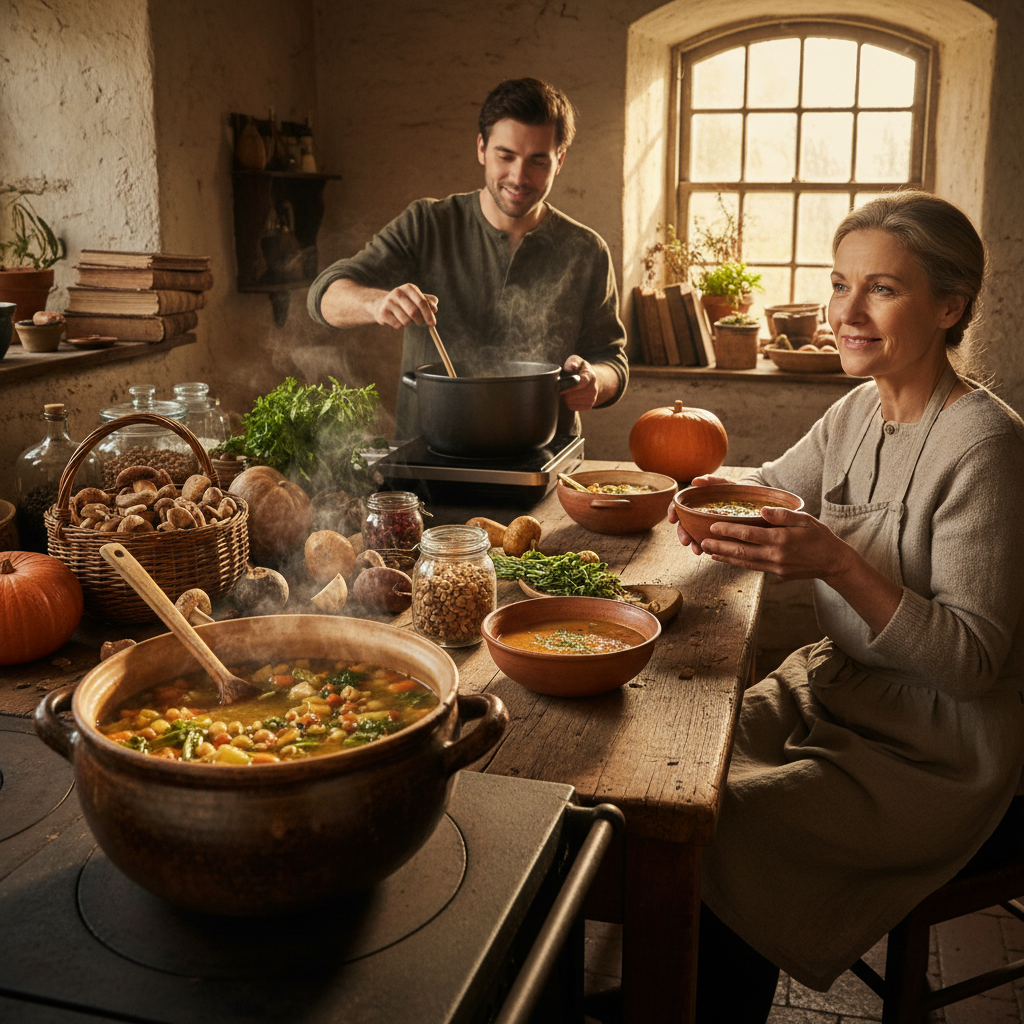
Soup can be a quiet way to make a meal from familiar ingredients, not a project that requires a long recipe or hours of standing. A pot of vegetable soup can begin with an onion, a few vegetables, water or stock, and a little time. Beans, lentils, grains, herbs, or a spoonful of yogurt can make it more substantial according to taste and what is on hand. There is no single correct seasonal soup: the useful principle is to choose ingredients that cook at a similar pace and add them in stages.
This approach leaves room for household traditions and changing appetites. In cooler months, carrots, squash, leeks, cabbage, or root vegetables can form a warming base. In warmer weather, tomatoes, courgettes, peas, or leafy greens may suit a lighter broth. Frozen and canned produce can also be practical choices. The NHS notes that fruit and vegetables in soups and other dishes can count toward portions, and advises choosing canned produce in water or natural juice without added salt or sugar where available.1
Build a soup without a complicated recipe
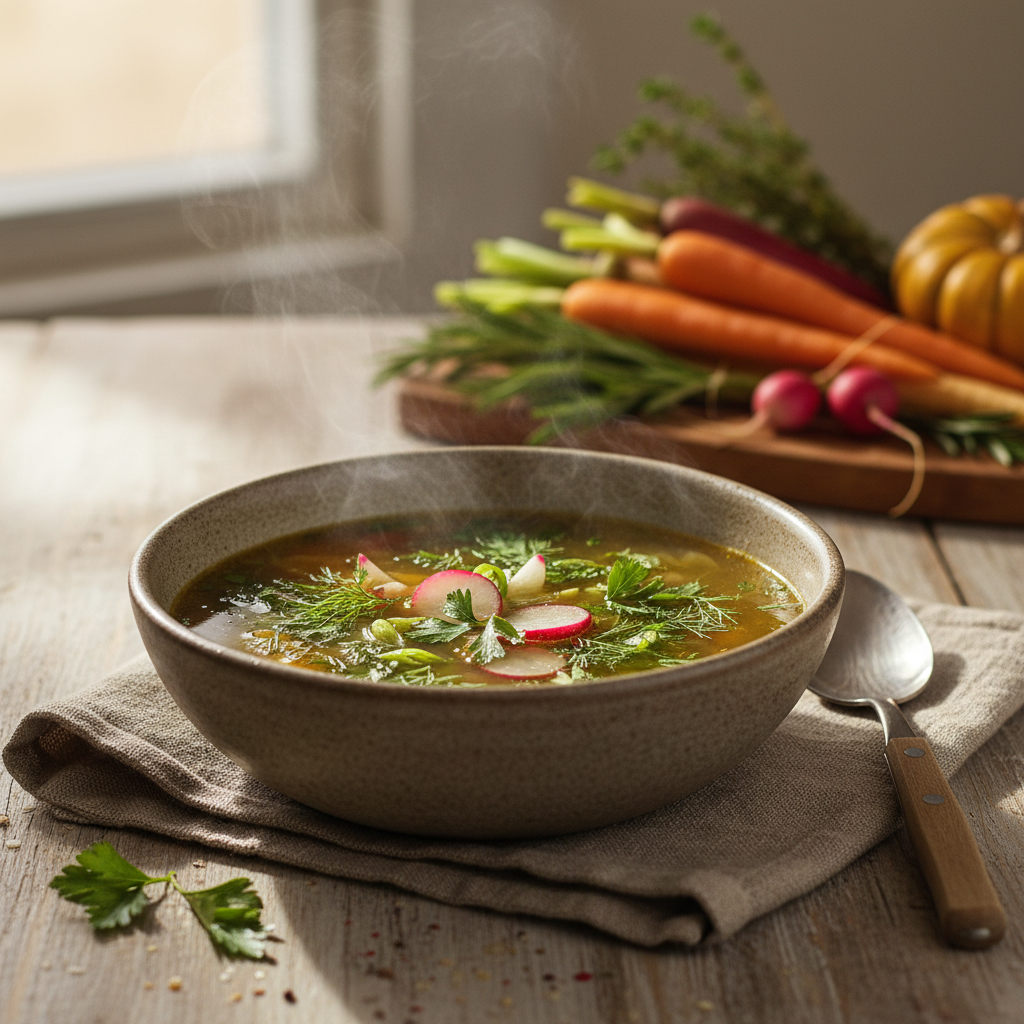
Start by deciding what sort of bowl would be welcome: a clear broth with tender pieces, a thicker bean soup, or a smooth vegetable purée. Then choose one or two vegetables to lead, one flavour base, and an optional filling addition. A small amount of oil can soften chopped onion, celery, carrot, or leek in a saucepan; this step develops flavour, but it can be skipped when convenience matters. Add garlic, dried herbs, or spices if they suit the dish, then pour in water or stock. If using packaged stock, taste before adding salt because it may already be seasoned.
Cut ingredients into similarly sized pieces so they cook more evenly. Add firm vegetables first and quicker-cooking ingredients later. Keep the liquid at a gentle simmer rather than a vigorous boil; check pieces with a fork and continue until they are tender to your preference. Cooking time depends on the ingredient, cut size, and equipment, so use texture rather than a promised number of minutes. If the pot becomes too thick, add water or stock. If it tastes thin, allow it to simmer uncovered briefly, or blend a portion of the cooked vegetables back into the pot.
A flexible combination might be onion, carrot, and lentils with cumin, or squash with a little ginger and a broth. These are starting points, not nutritional prescriptions. For beans or lentils, use products and preparation instructions appropriate to the ingredient: dried pulses may require soaking or longer cooking, while canned varieties are already cooked and can be rinsed if desired. Add canned beans near the end so they warm through without breaking down too much. Add tender greens near the end as well. A handful of cooked rice, barley, or small pasta can make soup more filling; if preparing ahead, store it separately when possible so it does not absorb as much broth.
Make the work comfortable and shared
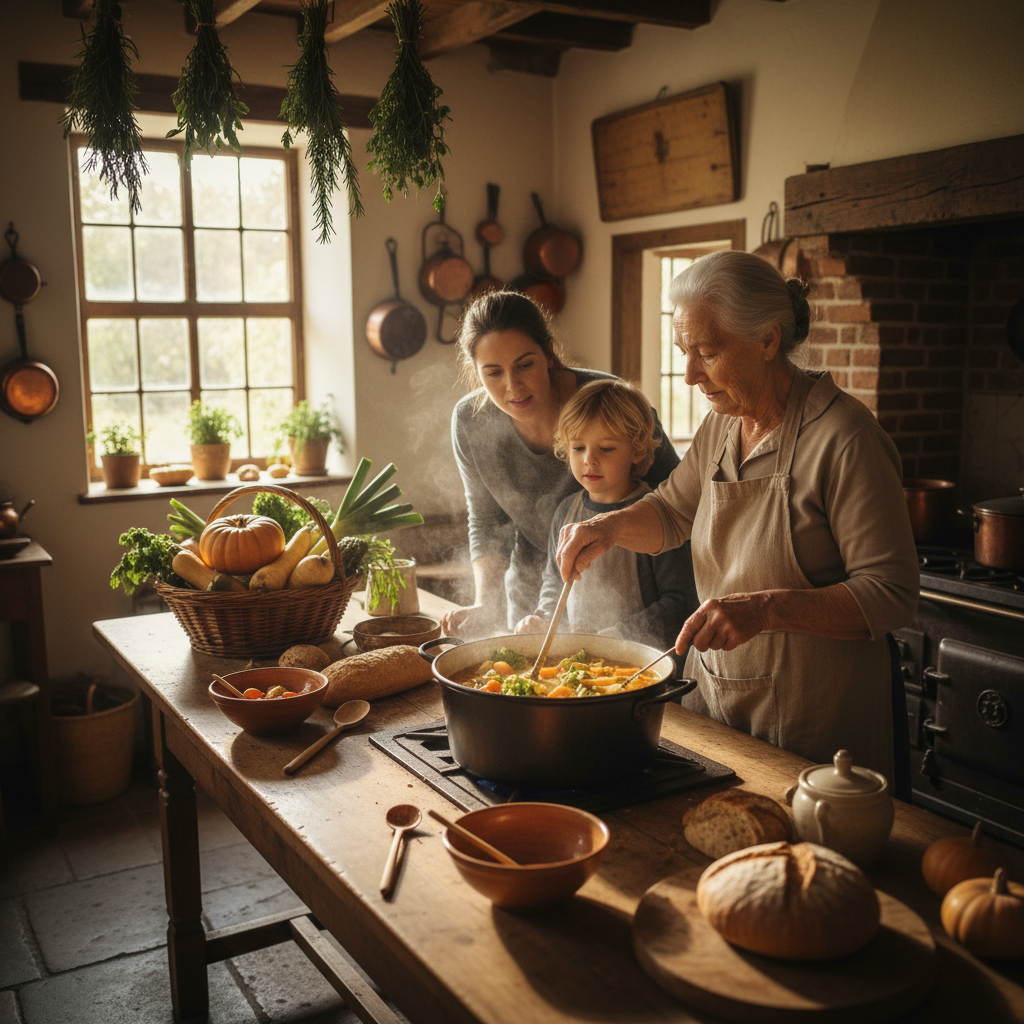
A nourishing kitchen ritual need not depend on one person doing every task. Before starting, clear a stable work surface and gather the ingredients, a cutting board, a sharp knife that feels manageable, and a saucepan with a secure handle. Choose a pot size that will not be awkward to lift when full. Set out a heat-safe spoon and a ladle within easy reach. If standing for a long time is tiring, sit for washing or sorting vegetables, ask someone else to lift or drain a heavy pot, or use pre-cut produce. A stable chair nearby and good task lighting can make preparation less demanding.
Give each person a task they actually want to do: rinsing vegetables, measuring lentils, stirring, choosing herbs, setting the table, or simply keeping company. Tasks can be shared without turning the meal into a test of skill or memory. A family recipe may prompt conversation, but nobody needs to explain its history or disclose a personal story. Ask before recording someone or writing down a family variation, and respect a no.
Season gently as the pot cooks. Taste a spoonful after the ingredients have softened, then adjust with herbs, pepper, lemon, or a small amount of salt if appropriate. A squeeze of citrus or chopped fresh herbs added at the table can brighten a mild soup. Keep add-ins separate when people prefer different flavours. For anyone managing a medical diet, allergy, swallowing difficulty, or other food restriction, use their established advice rather than assuming that a general recipe is suitable.
Broth, texture, and serving choices
For a thicker texture, blend part or all of a cooked soup with an immersion blender, following the appliance instructions and keeping the blade submerged to reduce splashes. Alternatively, mash some beans or vegetables with a fork. Let very hot liquid settle before blending, and transfer it in batches if using a countertop blender; follow its manufacturer’s directions because steam can build pressure. If someone has swallowing concerns, a texture that seems smooth may still not meet their specific needs, so follow guidance from their clinician or swallowing specialist.
Serve a modest bowl first, with bread or another accompaniment if wanted. People can add more, choose toppings, or decline. Soup can be made for one or for a group; scaling up is not necessary to make the ritual worthwhile. A shared pot may simply create an easy reason to sit together, talk about the ingredients, or enjoy a quiet meal.
Cool, store, and reheat leftovers safely
Plan storage before cooking a large batch. Perishable leftovers should be refrigerated within two hours, or within one hour if the surroundings are above 90°F (32°C). Divide a large pot of soup into shallow containers so it cools more quickly rather than leaving the full pot on the counter. The USDA says leftovers can generally be kept refrigerated for three to four days or frozen for three to four months; label containers with the date so they are easy to track.2 Freezing can be useful when only a small portion is needed later.
When reheating soup, bring it to a rolling boil, as USDA guidance recommends, and reheat only the portion needed. Stir carefully and check that it is hot throughout, especially if using a microwave. Avoid repeatedly warming and cooling the whole batch. If the soup has been left out too long or its storage history is uncertain, do not rely on smell or taste to determine safety; discard it.
A seasonal soup does not need an elaborate recipe, special equipment, or a perfect result. Begin with what is available, adjust the texture and seasoning to the people at the table, and make the work manageable. The lasting pleasure may be a familiar flavour, a useful meal from leftover vegetables, or an unhurried conversation beside the stove.
Footnotes
Reading path
Continue this topic
Use familiar dishes, recipe notes, and shared meals to bring family stories naturally into the conversation.
Pillar guides in this path
A gentle next step
Keep a related family story
If this topic brings a family memory to mind, you can save it at your own pace.
“Thank you for sharing this quiet moment of reading with us.”
Every piece in the MemContinuity library is preserved to spark gentle conversations, honor generational memory, and support the health and comfort of our families.
MemContinuity editorial team
MC-LIVING-20260904-027 · Publication archive reference
Cross-device reading sync
Sign in to your MemContinuity account to optionally sync your article reading progress across your phone, tablet, and computer.
Themes & topics
Editorial guidance & care
Our publications are designed to be practical, gentle, and respectful. For specific medical, mobility, or travel arrangements, we recommend consulting local providers or relevant municipal services.
Related publications
 Everyday Living
Indoor Herb Gardening on a Sunny Windowsill
Cultivating basil, thyme, and rosemary pots brings fresh greenery, fragrant aromas, and garden joy into any apartment kitchen.
 Everyday Living
A Calm Start to Staying Connected Online
Removing frustration from tablets and smartphones, focusing on video calls, family photos, and clear digital routines.
 Everyday Living
The Art of Quiet Baking and Shared Loaves
The meditative rhythm of kneading dough, waiting for fermentation, and placing a warm loaf on a neighbour's table.
Share the story
Family discussion cards
Take one card at a time. There are no right answers—only memories worth hearing.
What memory did this article bring to mind?
Who in the family might have a story or photograph to add?
What is one small thing we could save, share, or do next?
A quiet conversation can be a meaningful family keepsake.
Subscribe to MemContinuity Publications
Receive thoughtful reflections, local heritage guides, and slow travel stories delivered directly to your inbox. No spam, privacy respected.