Indoor Herb Gardening on a Sunny Windowsill
A practical guide to choosing herbs, pots, light and watering routines for a small indoor garden, with simple ways to harvest and enjoy fresh leaves.
A compatible device voice is not available. You can still read this article on screen.
 Everyday Living
Detailed article
Use the text-size control at the top for larger text, or switch back to Easy Read at any time.
A small garden with a practical purpose
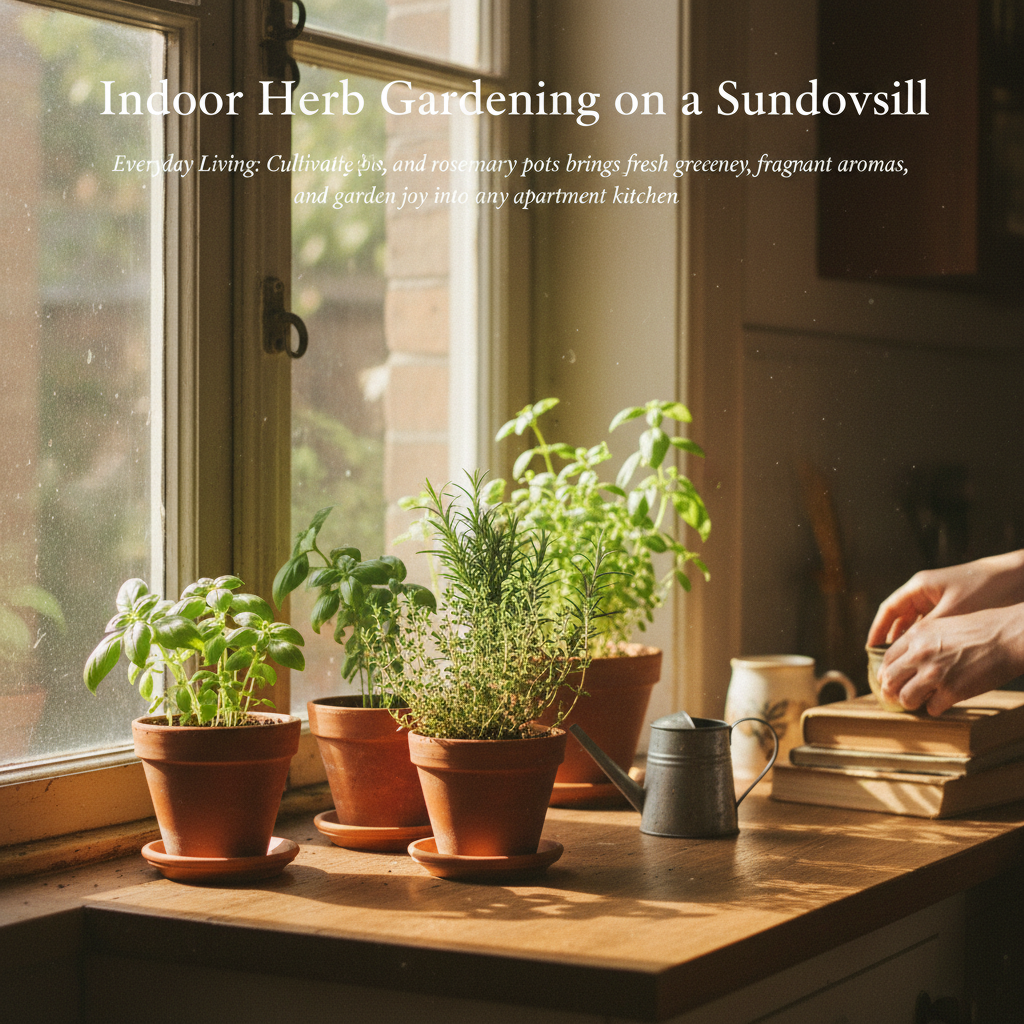
A few pots of herbs can bring fresh leaves, fragrance and a little daily tending into an apartment kitchen. Indoor growing is not exactly the same as outdoor gardening: light is often the limiting factor, and warmth, watering and room to grow all vary from one home to another. Start with one or two plants you genuinely use in cooking, then learn how they respond to your particular window. Penn State Extension notes that herbs can be grown indoors year-round, while University of Maryland Extension cautions that indoor conditions can make them more challenging than outdoor growing. Penn State Extension University of Maryland Extension
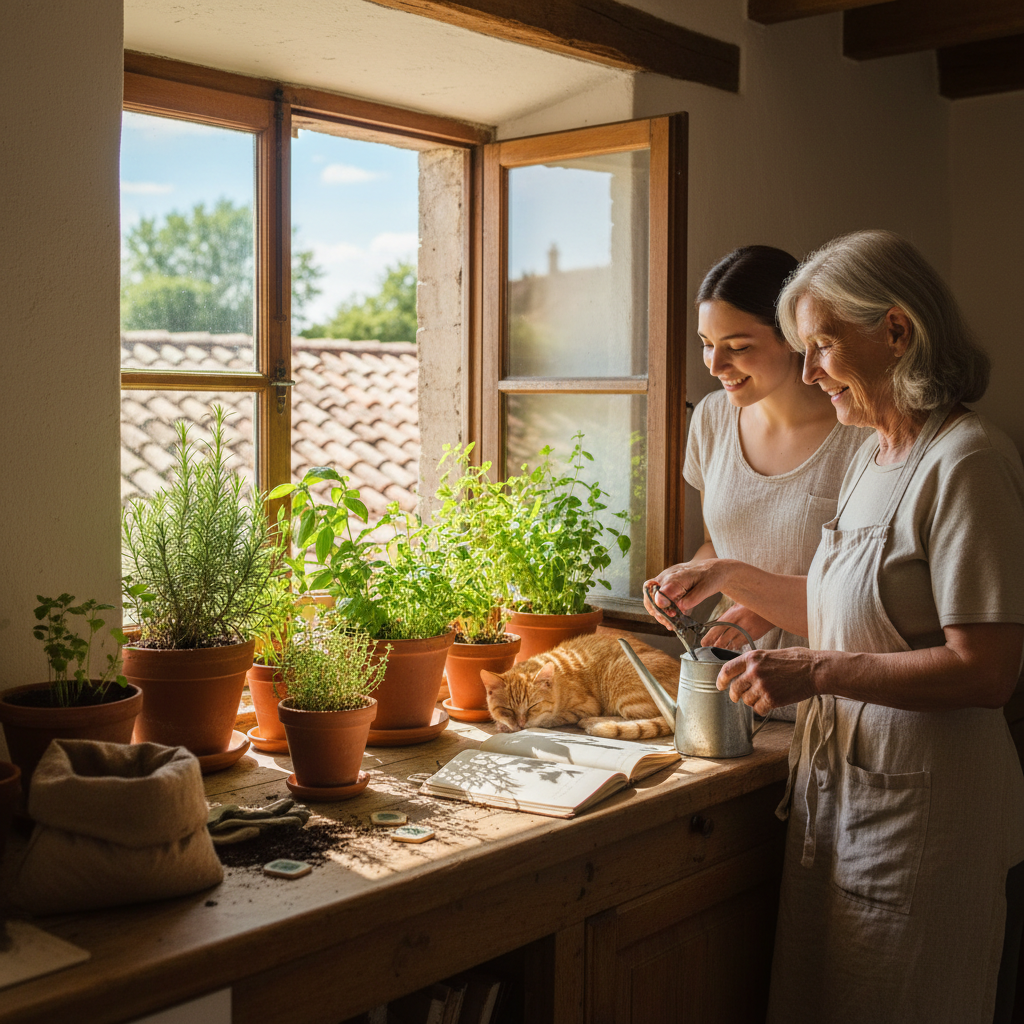
A windowsill garden can be a pleasant shared task, but it is equally fine to enjoy the plants quietly; nobody needs to take part in a particular way.
Choose herbs and a place that fit
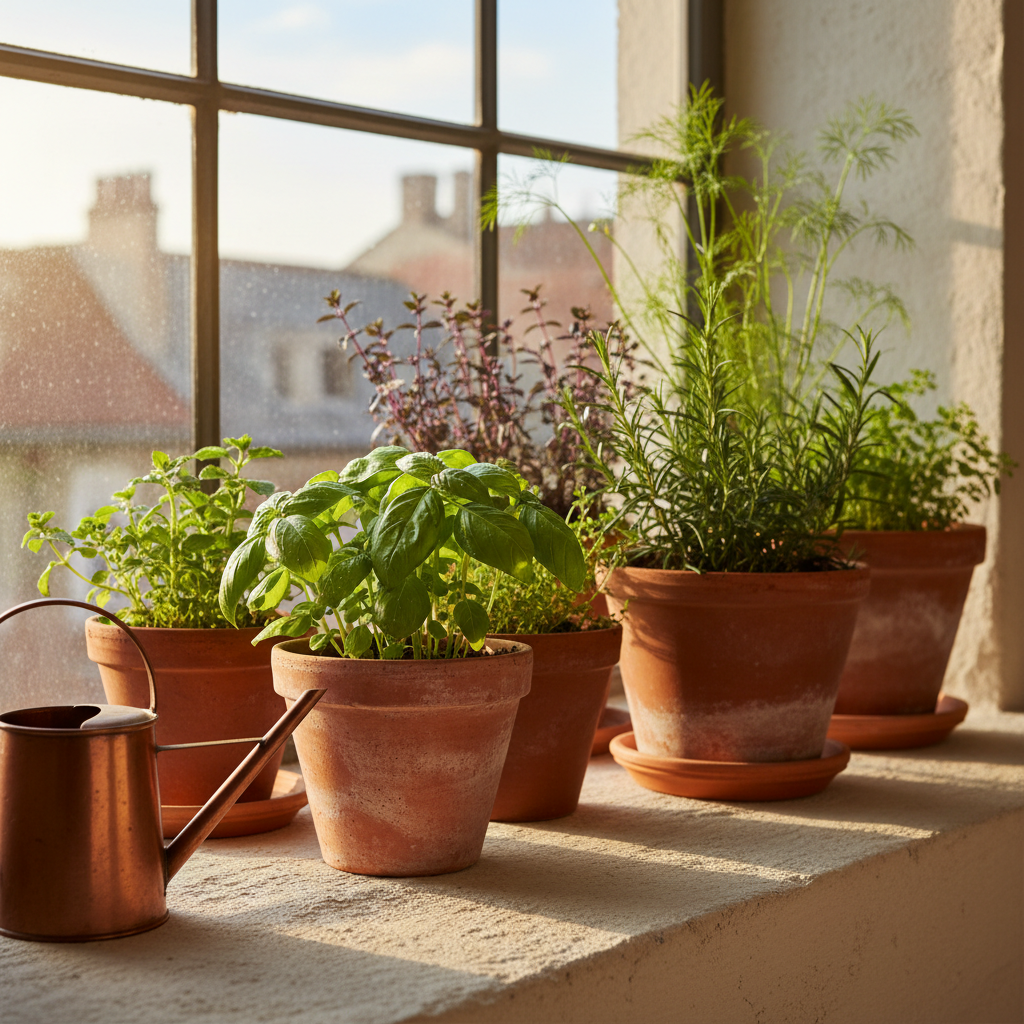
Basil, chives and cilantro are among Penn State Extension’s suggested indoor options. Thyme and rosemary are also familiar kitchen herbs, but they need strong light and careful watering. If you are new to growing indoors, buy a small healthy plant rather than starting several kinds from seed at once. A nursery pot lets you see how the plant behaves before you decide whether to repot it.
Look for the brightest available window. University of Maryland Extension recommends a south- or west-facing window with at least five hours of sun; Iowa State University Extension says most herbs need about eight hours of direct light indoors. The difference reflects that requirements vary by plant and conditions. A bright east- or west-facing window may still work, but growth can be slower. Turn pots periodically so stems do not lean strongly toward one side. If winter days are short or plants become thin and leggy, consider a grow light. Iowa State suggests positioning lights close to foliage according to the fixture and using a timer; follow the manufacturer’s instructions rather than assuming every bulb has the same output. University of Maryland Extension Iowa State University Extension
Check whether the sill is cold, exposed to heater air, or unstable. Basil is especially sensitive to cold: Penn State advises not keeping it on a winter windowsill where temperatures may fall below 50°F. Move tender pots if needed and keep them secure when opening the window.
Pots, mix and watering
Use a container with drainage holes and a saucer to catch runoff. A decorative outer pot is fine, but empty standing water after it drains. Choose a commercial, lightweight potting mix intended for containers rather than dense garden soil. University of Maryland Extension emphasizes a well-draining mix and drainage holes; these help prevent roots from sitting in water. Individual pots are a forgiving choice because basil, thyme and rosemary do not necessarily want identical moisture conditions.
Check the mix with a fingertip instead of watering by the calendar. Iowa State advises allowing the soil to dry between waterings for most herbs, while Penn State notes that basil should not be allowed to dry out completely. Thyme and rosemary generally need the mix to dry somewhat between drinks. Water thoroughly when appropriate, then let excess drain away; a pot that stays wet for days may be too large, poorly drained or receiving more water than the plant uses. In cooler, darker months, growth often slows, so reassess before watering.
If leaves droop, check the soil before watering: dryness and persistent sogginess call for different responses. Review drainage, water and light before adding fertilizer; change one condition at a time.
A simple start-up routine
- Pick a manageable pair. Choose herbs you cook with and that fit the light you have. Two separate pots are easier to learn than a crowded mixed planter.
- Set up the surface. Use a stable sill or nearby shelf, a tray or saucer, and a watering can that is comfortable to lift. Keep the arrangement clear of food-preparation surfaces and household traffic.
- Check light and temperature. Notice direct sun at different times of day. Turn the pots occasionally and move them if cold glass or hot dry air is affecting them.
- Learn each plant’s rhythm. Check moisture before watering, look for new growth, and make a brief note if helpful. Avoid rigid schedules because indoor light and room temperature change with the season.
- Harvest modestly. Snip a few healthy leaves with clean scissors, leaving enough foliage for continued growth. Iowa State Extension recommends cutting leafy herbs above a leaf or pair of leaves and avoiding an overly severe cut on perennial herbs.
A short check during meal preparation may be enough. If tending the pots is tiring, sit or use a smaller watering container; ask before rearranging another person’s plants or taking cuttings.
Harvest, pests and everyday care
Harvest only what you can use, and wash leaves before adding them to food. Regular light snipping gives you a reason to enjoy the garden and can encourage branching in some herbs, but the right method depends on the plant. Avoid cutting a small plant back heavily. Iowa State describes more substantial cutting for leafy annuals such as basil than for perennial herbs such as thyme; when uncertain, take a little at a time and let the plant recover.
Inspect the undersides of leaves when watering. If you notice insects or damaged growth, isolate the pot from other plants and identify the problem before treating it. Penn State advises cultural and mechanical approaches for common indoor pests and cautions that pesticide use needs care on herbs intended for eating. If using any product, check that its label permits use on edible plants and follow the label exactly; washing leaves does not make an incorrectly used product safe.
Indoor air can be dry, especially near heating vents, but frequent misting is not a substitute for good watering and drainage. Keep plants away from direct blasts of hot air and allow some air movement. Penn State recommends light, not heavy, fertilizing and warns that overfertilizing can affect aroma and taste. Follow a suitable product’s label and do not feed a struggling plant before checking its light, roots and moisture.
When a sunny window is not enough
Slow winter growth is common where days are short or sills are cool. A grow light may help; otherwise, treat the garden as seasonal. Some herbs suit indoor conditions better than others, so changing plants can be sensible.
A brief note of window exposure, watering checks and growth can help you adjust one condition at a time. A few leaves for a meal or a green corner are worthwhile outcomes. Choose a garden that suits the space and its caretakers.
Reading path
Continue this topic
Use familiar dishes, recipe notes, and shared meals to bring family stories naturally into the conversation.
Pillar guides in this path
A gentle next step
Keep a related family story
If this topic brings a family memory to mind, you can save it at your own pace.
“Thank you for sharing this quiet moment of reading with us.”
Every piece in the MemContinuity library is preserved to spark gentle conversations, honor generational memory, and support the health and comfort of our families.
MemContinuity editorial team
MC-LIVING-20260911-020 · Publication archive reference
Cross-device reading sync
Sign in to your MemContinuity account to optionally sync your article reading progress across your phone, tablet, and computer.
Themes & topics
Editorial guidance & care
Our publications are designed to be practical, gentle, and respectful. For specific medical, mobility, or travel arrangements, we recommend consulting local providers or relevant municipal services.
Related publications
 Everyday Living
Simplicity in the Kitchen: Seasonal Soups and Broths
Slow-simmered vegetable stocks and comforting legume broths that nourish the body gently without demanding hours on your feet.
 Everyday Living
A Calm Start to Staying Connected Online
Removing frustration from tablets and smartphones, focusing on video calls, family photos, and clear digital routines.
 Everyday Living
The Art of Quiet Baking and Shared Loaves
The meditative rhythm of kneading dough, waiting for fermentation, and placing a warm loaf on a neighbour's table.
Share the story
Family discussion cards
Take one card at a time. There are no right answers—only memories worth hearing.
What memory did this article bring to mind?
Who in the family might have a story or photograph to add?
What is one small thing we could save, share, or do next?
A quiet conversation can be a meaningful family keepsake.
Subscribe to MemContinuity Publications
Receive thoughtful reflections, local heritage guides, and slow travel stories delivered directly to your inbox. No spam, privacy respected.