Humanist and Celebrant-Led Funerals: A Guide for Non-Religious Farewells
Understand what humanist and celebrant-led funerals can include, how to plan a personal non-religious farewell, and how to make choices that respect the person and everyone attending.
A compatible device voice is not available. You can still read this article on screen.
 Family Heritage
Detailed article
Use the text-size control at the top for larger text, or switch back to Easy Read at any time.
Honoring a Unique Life in Its Own Voice
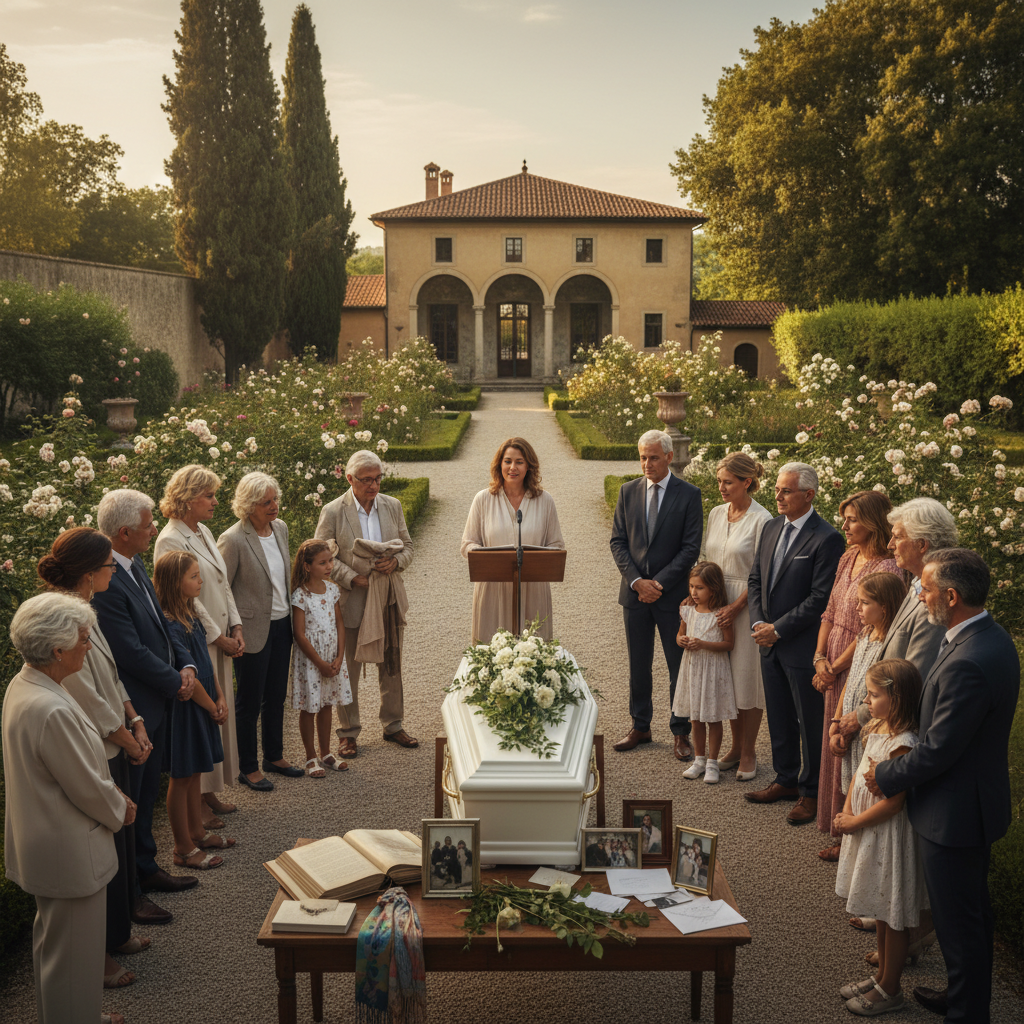
A non-religious funeral offers a way to say goodbye without following a religious service. It may be led by a humanist or another celebrant, or arranged by family and friends. The central question is whether its choices feel truthful to the person and considerate of those gathering.
A humanist funeral is one kind of non-religious ceremony. Humanists UK describes it as a personal, dignified farewell focused on the person’s life, relationships and legacy. A celebrant-led service is a broader description: celebrants may have different approaches, so ask what they offer and whether their outlook fits the wishes of the deceased and family. No one needs to adopt a particular label or belief to plan a respectful ceremony. Humanists UK
Some families prefer a quiet, solemn gathering; others want warmth, laughter and music. A ceremony can hold both grief and gratitude. There is no requirement to make it relentlessly cheerful, or to present a life as flawless. Gentle honesty often feels more personal than a polished but generic tribute.
Begin with the person’s wishes
If the person left written funeral preferences, a prepaid plan or other arrangements, find and read them before making assumptions. Where no clear plan exists, invite close family or friends to share what they know, while recognising that one person may not know every part of another’s life. In England and Wales, GOV.UK advises checking for arrangements the person made and notes that a funeral may be organised through a funeral director or by the family themselves; local procedures differ elsewhere. GOV.UK
A conversation can clarify the basics: Would the person have wanted a religious, non-religious or no ceremony? Did they name a celebrant, venue, music, readings or preferred name? Are there people they wanted included, or private matters they did not want discussed? These are prompts, not a demand for certainty. Where wishes are unclear, do not attribute a preference that cannot be verified.
It can help to separate ceremony choices from arrangements for burial or cremation. The venue, timing and available facilities may shape what is possible. A funeral director, crematorium, cemetery or venue can explain its practical requirements. Costs can involve professional services and third-party venue or burial/cremation fees, so ask for a written, itemised estimate before agreeing to optional elements. GOV.UK describes these arrangements for England and Wales; readers elsewhere should check local guidance. GOV.UK
What a celebrant can help with
A celebrant can help shape the order of service, listen to stories, prepare a tribute and guide the ceremony on the day. Humanists UK says its celebrants work with family or close friends to create a personal ceremony and can include music, readings and time for reflection. The process and services vary, so ask directly what is included, how the draft will be reviewed, and who will deliver readings if a chosen speaker later feels unable to do so. Humanists UK
When choosing someone, you might ask how they learn about the person, how they handle differing family views, whether they will share a draft for factual corrections, and what their fee covers. You can ask whether they are comfortable with a quiet or more celebratory tone, a particular cultural context, or a ceremony that includes a moment of silence without spoken prayer. These questions help establish fit; they are not a test of anyone’s grief or beliefs.
Shape a ceremony with a few meaningful elements
A welcome and an outline. A brief opening can tell guests what will happen and whether there will be a moment of silence, music or contributions. This is especially helpful when attendees have different religious or non-religious beliefs.
A personal tribute. Rather than listing every achievement, choose a few details that help people recognise the person: a value they tried to live by, a familiar expression, a friendship, a skill, or an ordinary pleasure. Check names, dates and sensitive details with someone who knows them. A tribute need not resolve every disagreement or disclose private family history.
Music, poems and readings. Choose material that genuinely mattered to the person or offers comfort to those present. Check that the venue can play the selected music and that readings fit the time available. Ask the venue about any permissions needed for recorded or projected music; do not assume it can be reproduced freely.
Participation by choice. A relative might read a poem, a friend might share a memory, or the celebrant can read on someone’s behalf. Nobody should be pressed into public speaking. Silence is also a complete contribution. If a slide display or photographs are included, check that images are suitable to share and that the equipment, visibility and sound work in the room.
A closing and gathering. The ceremony can end with a farewell, a moment of reflection or an invitation to meet afterwards. A memorial gathering may take place at a later date if travel, timing or family circumstances make that more manageable. Humanists UK notes that a memorial following a direct cremation can be held later, offering flexibility for people who cannot gather immediately. Humanists UK
Make participation accessible and considerate
Ask the venue about step-free access, seating, toilets, hearing assistance, parking or nearby public transport, and whether the service can be heard clearly from all seats. Share the address and access details in advance. For remote attendance, check venue rules and agree who may view any recording; not everyone will want a sensitive occasion circulated.
Offer more than one way to take part. Guests can listen, sit quietly, speak, or remember privately. Avoid asking anyone to prove how well they knew the person or to produce a happy story. Children and adults alike can choose whether to contribute. A calm explanation of what to expect can be reassuring without dictating how anyone should feel.
A simple planning worksheet
Before meeting a celebrant or venue, jot down whatever you know under these headings: the person’s own wishes; the tone that feels appropriate; two or three stories or qualities to include; music or readings; possible speakers; access needs; and practical limits such as time, budget or travel. Mark uncertain items as questions rather than facts. Decide who will confirm names and details, and who has authority to approve the final wording.
If family members disagree, first identify what is essential and what is optional. A shared aim—such as a non-religious format or a brief service—may make room for different interpretations. A celebrant or funeral professional may help clarify options without bringing private conflict into the service.
A farewell that feels true
The most personal ceremony is not necessarily elaborate. A carefully chosen piece of music, a few specific memories, and room for quiet can be enough. Keep the person’s known wishes at the centre, correct details before they are read aloud, and leave space for guests to respond in their own way. A farewell can honour a life without pretending grief is simple or requiring everyone to remember in the same way.
Sources and Further Reading

Reading path
Continue this topic
Six gentle starting points for sharing condolences, planning a personal memorial, inviting people across distance, and returning to memory in your own time.
Pillar guides in this path
A gentle next step
Create a memorial when the time is right
A private memorial can hold a life story, photographs, and messages from the people who care.
“Thank you for sharing this quiet moment of reading with us.”
Every piece in the MemContinuity library is preserved to spark gentle conversations, honor generational memory, and support the health and comfort of our families.
MemContinuity editorial team
MC-HERITAGE-20260715-057 · Publication archive reference
Cross-device reading sync
Sign in to your MemContinuity account to optionally sync your article reading progress across your phone, tablet, and computer.
Themes & topics
Editorial guidance & care
Our publications are designed to be practical, gentle, and respectful. For specific medical, mobility, or travel arrangements, we recommend consulting local providers or relevant municipal services.
Related publications
 Family Heritage
Preserve Old Family Photos: Safe Storage, Scanning and Backups
Protect old family photographs at home with safer handling, photo-safe storage, non-destructive scanning, clear metadata, and reliable backups—without risky cleaning or DIY restoration.
 Family Heritage
QR Code Headstones: Bringing Digital Memorials to the Graveside
Explaining the growth of physical-to-digital gravestone integration, allowing visitors to scan respectful QR plaques and revisit cherished photo archives, voice memories, and family histories right at the memorial stone.
 Family Heritage
Caring for a Parent with Dementia: A Practical and Gentle Guide
Caregiving strategies for dealing with cognitive decline, preserving dignity, establishing calm daily routines, and supporting caregiver emotional wellbeing across Europe.
Share the story
Family discussion cards
Take one card at a time. There are no right answers—only memories worth hearing.
What memory did this article bring to mind?
Who in the family might have a story or photograph to add?
What is one small thing we could save, share, or do next?
A quiet conversation can be a meaningful family keepsake.
Subscribe to MemContinuity Publications
Receive thoughtful reflections, local heritage guides, and slow travel stories delivered directly to your inbox. No spam, privacy respected.